Beijing Advanced Innovation Center for Food Nutrition and Human Health, College of Food Science & Nutritional Engineering, China Agricultural University, Key Laboratory of Functional Dairy, Ministry of Education, 100083, Beijing, China.
Center of Biomedical Analysis, Tsinghua University, 100084, Beijing, China.
Nat Commun. 2019 Feb 15;10(1):778. doi: 10.1038/s41467-019-08788-9.
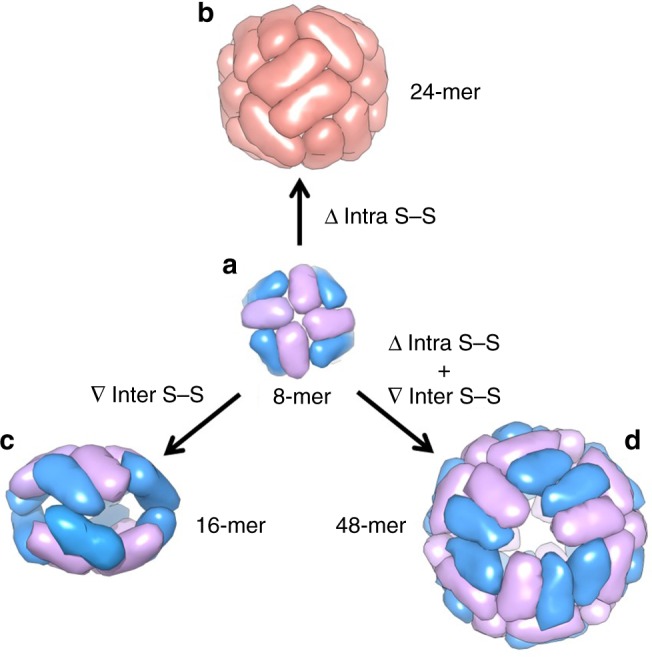
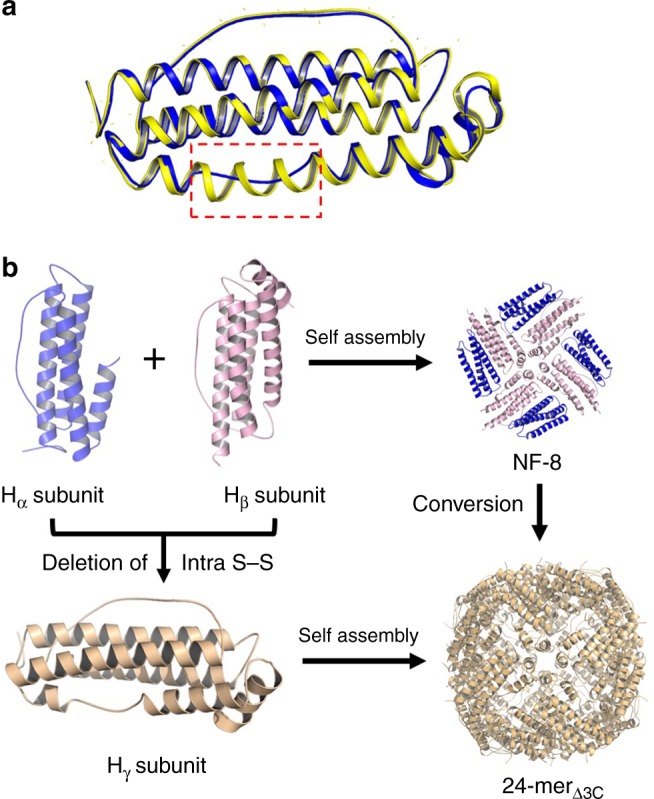
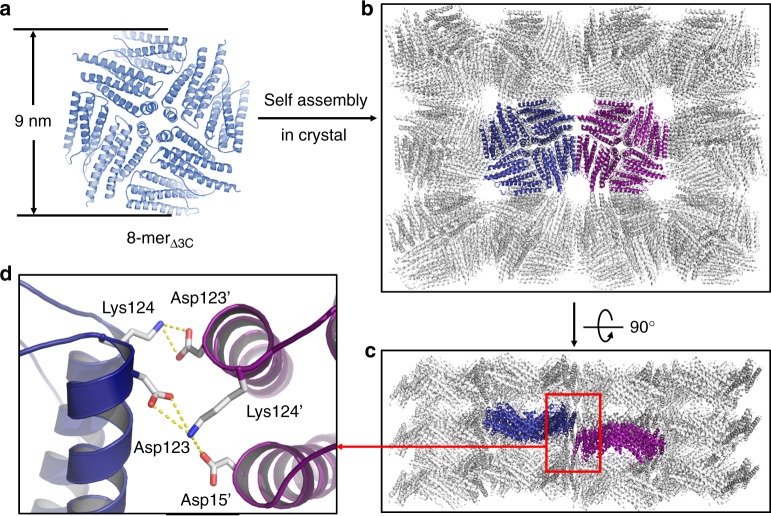
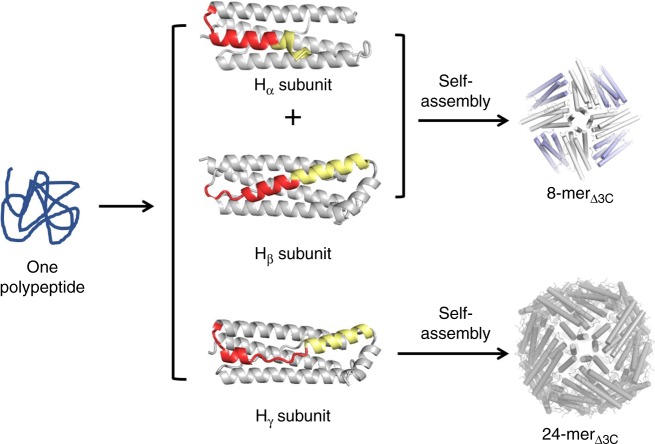
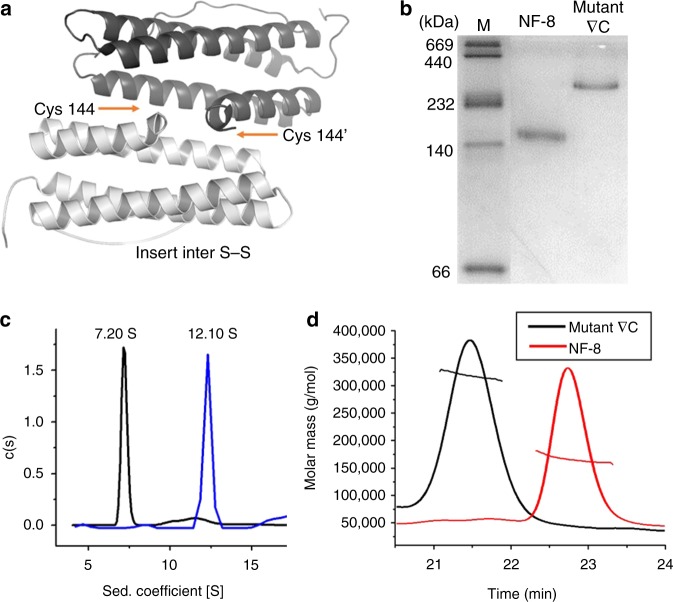
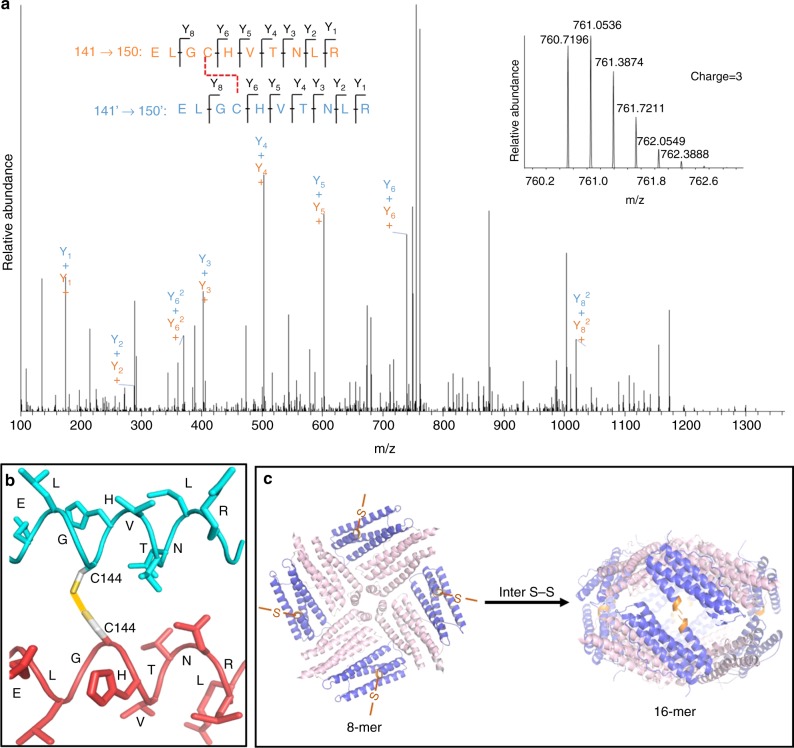
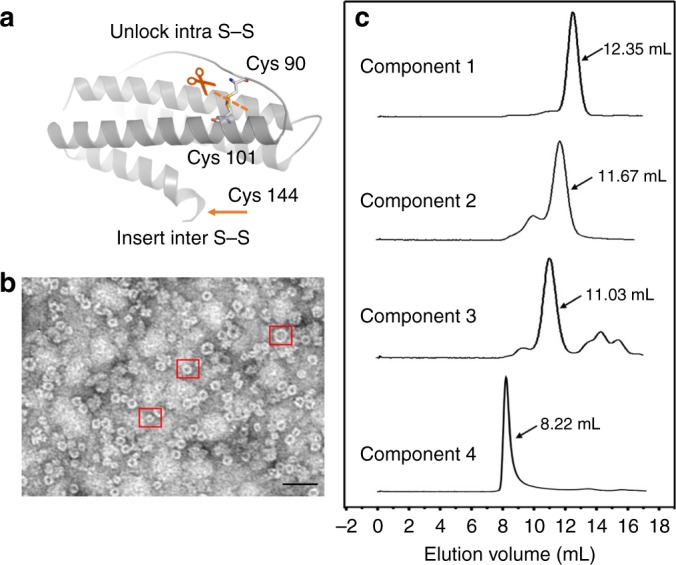
Constructing different protein nanostructures with high-order discrete architectures by using one single building block remains a challenge. Here, we present a simple, effective disulfide-mediated approach to prepare a set of protein nanocages with different geometries from single building block. By genetically deleting an inherent intra-subunit disulfide bond, we can render the conversion of an 8-mer bowl-like protein architecture (NF-8) into a 24-mer ferritin-like nanocage in solution, while selective insertion of an inter-subunit disulfide bond into NF-8 triggers its conversion into a 16-mer lenticular nanocage. Deletion of the same intra-subunit disulfide bond and insertion of the inter-subunit disulfide bond results in the conversion of NF-8 into a 48-mer protein nanocage in solution. Thus, in the laboratory, simple mutation of one protein building block can generate three different protein nanocages in a manner that is highly reminiscent of natural pentamer building block originating from viral capsids that self-assemble into protein assemblies with different symmetries.
利用单一结构单元构建具有高阶离散结构的不同蛋白质纳米结构仍然是一个挑战。在这里,我们提出了一种简单有效的基于二硫键的方法,从单个结构单元制备了一组具有不同几何形状的蛋白质纳米笼。通过遗传删除一个内在的亚单位二硫键,我们可以使 8 聚体碗状蛋白质结构(NF-8)在溶液中转化为 24 聚体铁蛋白样纳米笼,而选择性地在 NF-8 中插入亚单位二硫键会触发其转化为 16 聚体透镜形纳米笼。删除相同的亚单位二硫键并插入亚单位二硫键会导致 NF-8 在溶液中转化为 48 聚体蛋白质纳米笼。因此,在实验室中,通过简单地突变一个蛋白质结构单元,可以以类似于源自病毒衣壳的五聚体结构单元的方式生成三种不同的蛋白质纳米笼,这些结构单元可以自我组装成具有不同对称性的蛋白质组装体。