Babić Leko Mirjana, Župunski Vera, Kirincich Jason, Smilović Dinko, Hortobágyi Tibor, Hof Patrick R, Šimić Goran
Department of Neuroscience, Croatian Institute for Brain Research, University of Zagreb School of Medicine, Zagreb, Croatia.
Department of Biochemistry, Faculty of Chemistry and Chemical Technology, University of Ljubljana, Ljubljana, Slovenia.
Behav Neurol. 2019 Jan 15;2019:2909168. doi: 10.1155/2019/2909168. eCollection 2019.
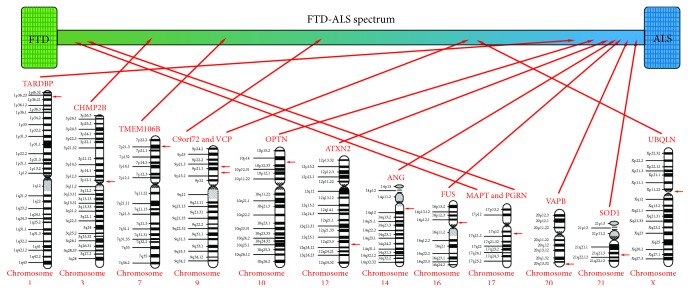
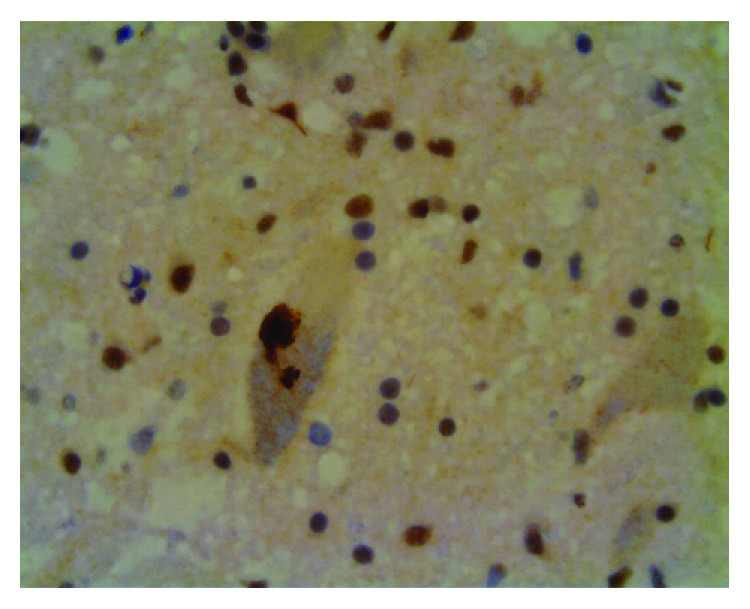
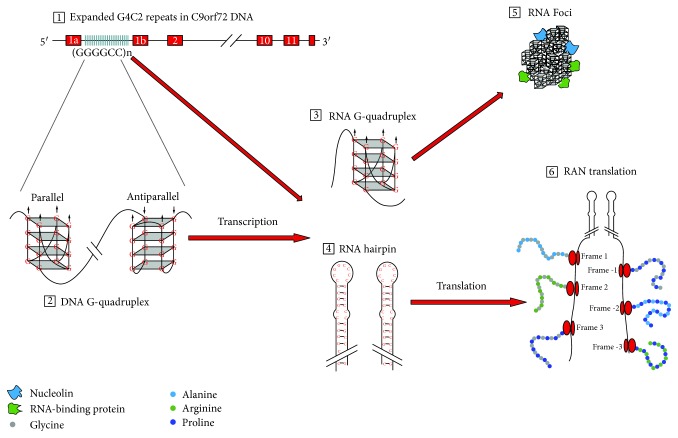
Two clinically distinct diseases, amyotrophic lateral sclerosis (ALS) and frontotemporal dementia (FTD), have recently been classified as two extremes of the FTD/ALS spectrum. The neuropathological correlate of FTD is frontotemporal lobar degeneration (FTLD), characterized by tau-, TDP-43-, and FUS-immunoreactive neuronal inclusions. An earlier discovery that a hexanucleotide repeat expansion mutation in chromosome 9 open reading frame 72 () gene causes ALS and FTD established a special subtype of ALS and FTLD with TDP-43 pathology (C9FTD/ALS). Normal individuals carry 2-10 hexanucleotide GGGGCC repeats in the gene, while more than a few hundred repeats represent a risk for ALS and FTD. The proposed molecular mechanisms by which repeat expansions induce neurodegenerative changes are C9orf72 loss-of-function through haploinsufficiency, RNA toxic gain-of-function, and gain-of-function through the accumulation of toxic dipeptide repeat proteins. However, many more cellular processes are affected by pathological processes in C9FTD/ALS, including nucleocytoplasmic transport, RNA processing, normal function of nucleolus, formation of membraneless organelles, translation, ubiquitin proteasome system, Notch signalling pathway, granule transport, and normal function of TAR DNA-binding protein 43 (TDP-43). Although the exact molecular mechanisms through which repeat expansions account for neurodegeneration have not been elucidated, some potential therapeutics, such as antisense oligonucleotides targeting hexanucleotide GGGGCC repeats in mRNA, were successful in preclinical trials and are awaiting phase 1 clinical trials. In this review, we critically discuss each proposed mechanism and provide insight into the most recent studies aiming to elucidate the molecular underpinnings of C9FTD/ALS.
两种临床特征不同的疾病,肌萎缩侧索硬化症(ALS)和额颞叶痴呆(FTD),最近被归类为FTD/ALS疾病谱的两个极端。FTD的神经病理学相关病变是额颞叶变性(FTLD),其特征为tau、TDP-43和FUS免疫反应性神经元包涵体。早期发现9号染色体开放阅读框72(C9orf72)基因中的六核苷酸重复扩增突变会导致ALS和FTD,从而确定了一种具有TDP-43病理学特征的ALS和FTLD特殊亚型(C9FTD/ALS)。正常个体在该基因中携带2至10个六核苷酸GGGGCC重复序列,而超过几百个重复序列则代表患ALS和FTD的风险。关于C9orf72重复扩增诱导神经退行性变化的分子机制,目前有几种假说,包括单倍剂量不足导致的C9orf72功能丧失、RNA毒性功能获得以及毒性二肽重复蛋白积累导致的功能获得。然而,C9FTD/ALS的病理过程还会影响更多的细胞过程,包括核质运输、RNA加工、核仁正常功能、无膜细胞器形成、翻译、泛素蛋白酶体系统、Notch信号通路、颗粒运输以及TAR DNA结合蛋白43(TDP-43)的正常功能。尽管C9orf72重复扩增导致神经退行性变的确切分子机制尚未阐明,但一些潜在的治疗方法,如针对mRNA中六核苷酸GGGGCC重复序列的反义寡核苷酸,在临床前试验中取得了成功,正在等待1期临床试验。在这篇综述中,我们批判性地讨论了每种提出的机制,并深入探讨了旨在阐明C9FTD/ALS分子基础的最新研究。