Shambrook Philip, Kingsley Michael, Taylor Nicholas, Gordon Brett
Discipline of Exercise Physiology, La Trobe Rural Health School, La Trobe University, Bendigo, Victoria, Australia.
Department of Rehabilitation, Nutrition and Sport, La Trobe University, Bundoora, Victoria, Australia.
BMJ Open Sport Exerc Med. 2018 Dec 17;4(1):e000470. doi: 10.1136/bmjsem-2018-000470. eCollection 2018.
To compare the effectiveness of accumulating exercise in multiple bouts of at least 10 min throughout a day with exercise completed in a single bout (continuous or interval), or no exercise, on glycaemic control and regulation in inactive people without diagnosed glycaemic dysfunction.
Systematic review and meta-analysis.
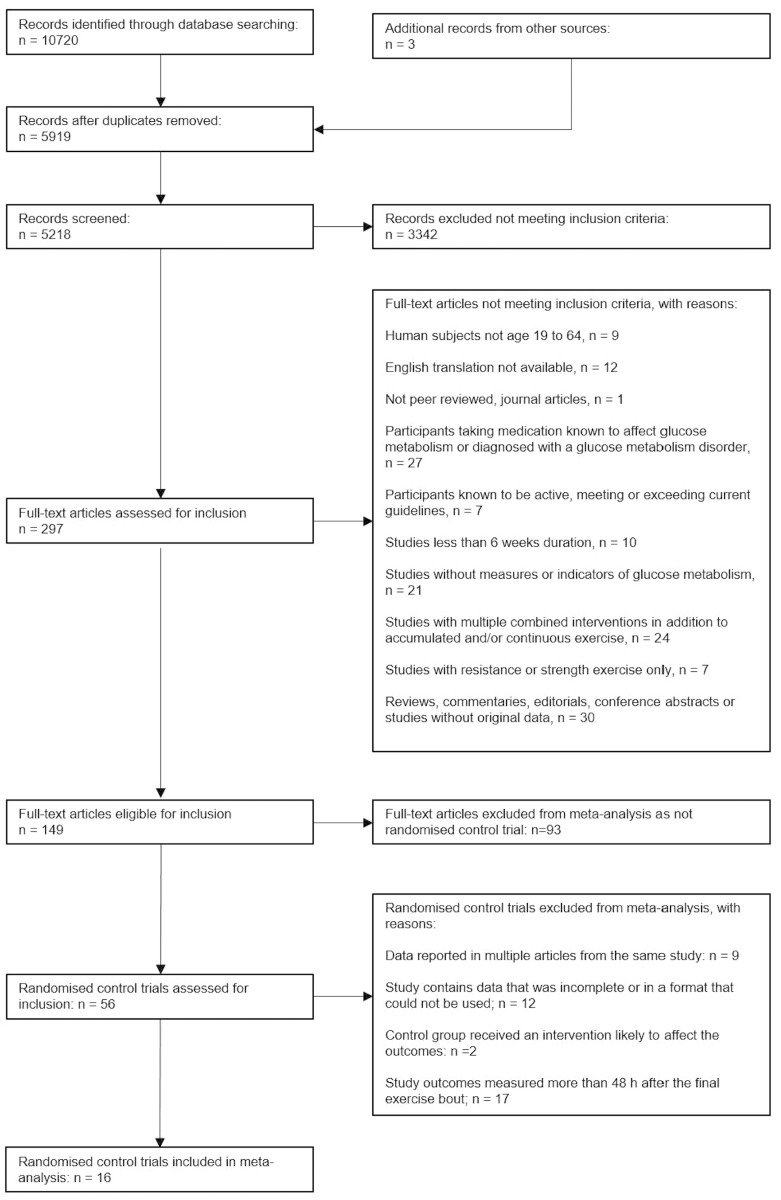
Seven electronic databases were searched: CINAHL (EBSCO), Cochrane Library, EMBASE (Ovid), MEDLINE 1948-(Ovid), SCOPUS (Elsevier), SPORTDiscus (EBSCO) and Web of Science (ISI) with no restrictions on date and included all titles indexed up to February 2018.
Articles reporting insufficiently active adults (19 to 64 years) without metabolic dysfunction, measuring glycaemic control or regulation following at least 6 weeks of aerobic exercise.
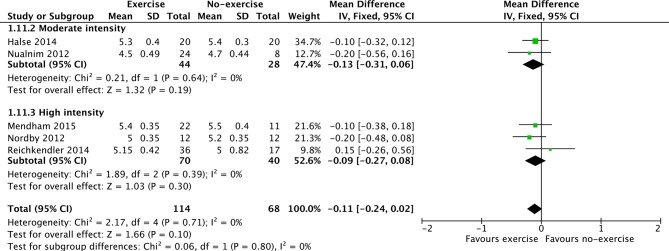
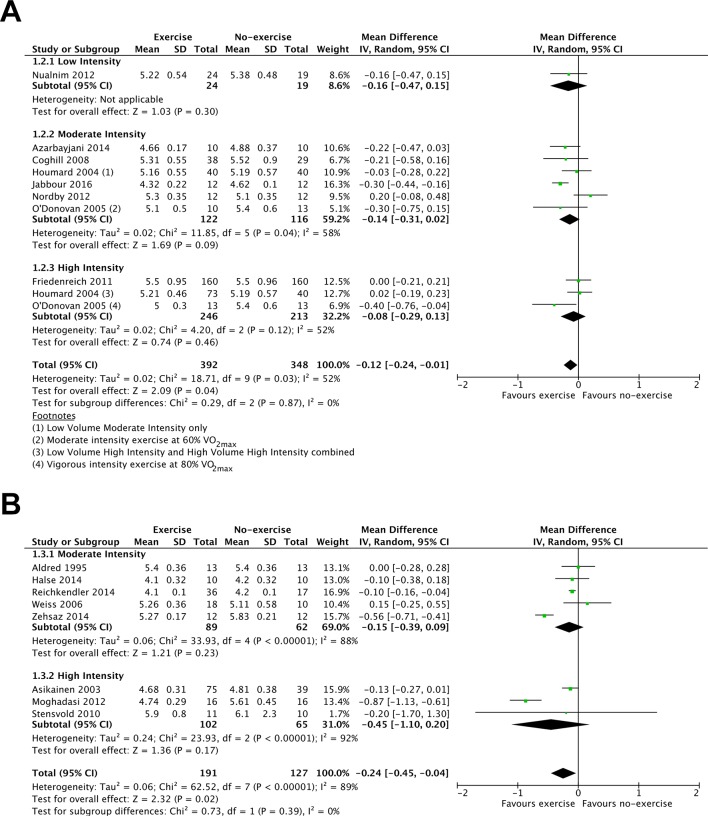
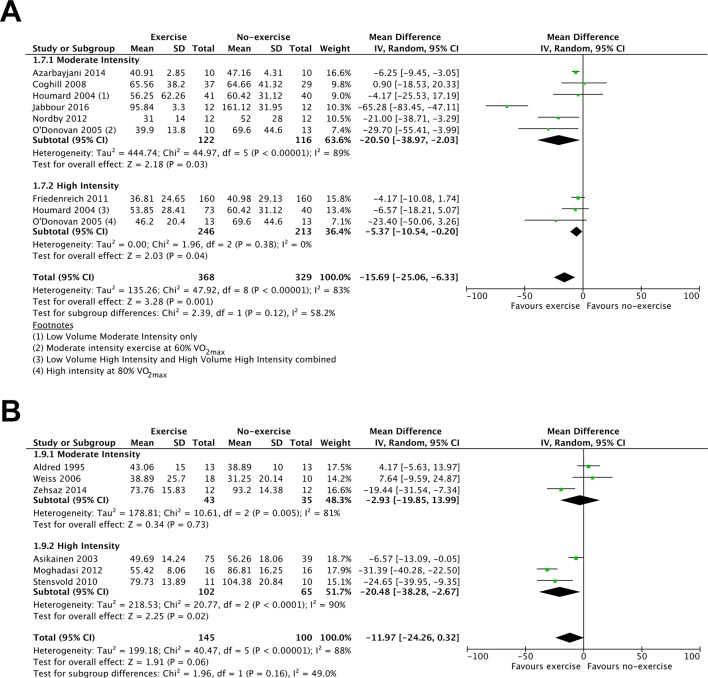
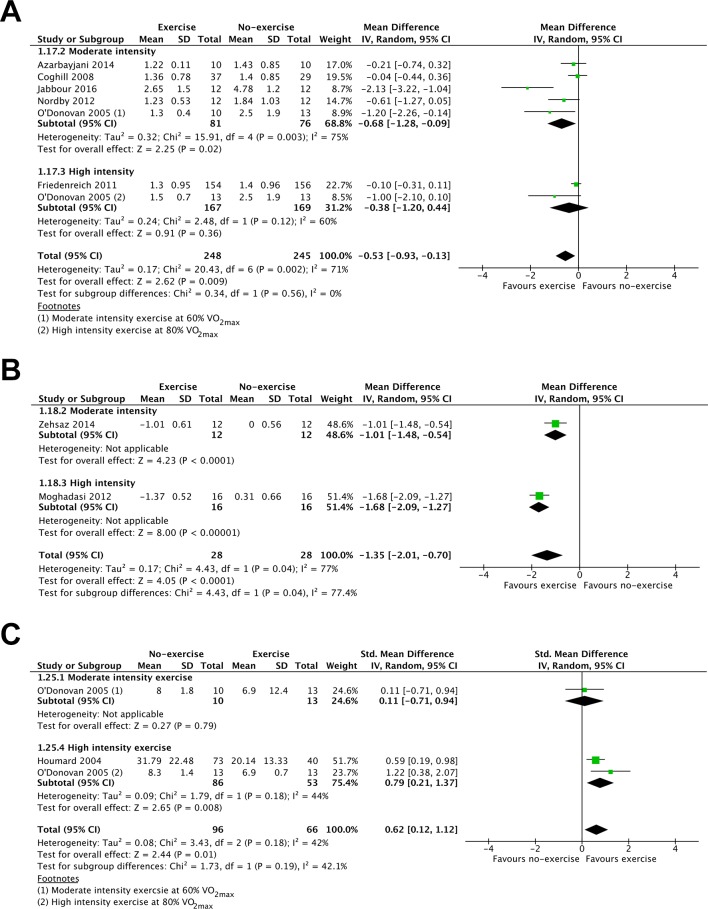
Only one study compared accumulated exercise to single-bout exercise with no significant effect on fasting glucose (95% CI: -0.04 to 0.24 mmol·L) or fasting insulin (95% CI: -1.79 to 9.85 pmol·L) reported 48 hours after the final bout. No studies compared accumulated exercise with no-exercise. Compared with no-exercise, single-bout exercise reduces insulin resistance (mean difference (MD): -0.53 pmol·L; 95% CI: -0.93 to -0.13). Insulin resistance was clearly reduced with moderate-intensity (-0.68 (-1.28 to -0.09)) but not with high-intensity (-0.38 (-1.20 to 0.44)) exercise. Single-bout exercise was not statistically more beneficial than no-exercise for glycated haemoglobin (HbA) (MD: -0.11 %; 95% CI: -0.24 to 0.02) in metabolically healthy individuals.
SUMMARY/CONCLUSION: The glycaemic response to accumulated exercise or single-bout exercise might not be different, however exercise intensity might influence the mechanisms generating the response.
CRD42015025042.
比较一天中多次进行至少10分钟的累积运动与单次进行的运动(持续运动或间歇运动)或不运动,对未诊断出血糖功能障碍的不活跃人群血糖控制和调节的效果。
系统评价和荟萃分析。
检索了七个电子数据库:CINAHL(EBSCO)、Cochrane图书馆、EMBASE(Ovid)、MEDLINE 1948 - (Ovid)、SCOPUS(爱思唯尔)、SPORTDiscus(EBSCO)和科学引文索引(ISI),检索无日期限制,纳入截至2018年2月索引的所有标题。
报告19至64岁无代谢功能障碍的活动不足成年人,在至少6周有氧运动后测量血糖控制或调节情况的文章。
只有一项研究比较了累积运动和单次运动,结果显示末次运动后48小时,对空腹血糖(95%可信区间:-0.04至0.24毫摩尔/升)或空腹胰岛素(95%可信区间:-1.79至9.85皮摩尔/升)无显著影响。没有研究比较累积运动与不运动的情况。与不运动相比,单次运动可降低胰岛素抵抗(平均差(MD):-0.53皮摩尔/升;95%可信区间:-0.93至-0.13)。中等强度运动(-0.68(-1.28至-0.09))可明显降低胰岛素抵抗,但高强度运动(-0.38(-1.20至0.44))则不然。在代谢健康个体中,单次运动对糖化血红蛋白(HbA)的益处与不运动相比无统计学差异(MD:-0.11%;95%可信区间:-0.24至0.02)。
总结/结论:累积运动或单次运动对血糖的反应可能没有差异,然而运动强度可能会影响产生该反应的机制。
PROSPERO注册号:CRD42015025042。