Beane Abi, De Silva Ambepitiyawaduge Pubudu, Athapattu Priyantha Lakmini, Jayasinghe Saroj, Abayadeera Anuja Unnathie, Wijerathne Mandika, Udayanga Ishara, Rathnayake Shriyananda, Dondorp Arjen M, Haniffa Rashan
Network for Improving Critical Care Systems and Training, Colombo, Sri Lanka.
Mahidol Oxford Tropical Research Unit, Bangkok, Thailand.
BMJ Glob Health. 2019 Jan 29;4(1):e001134. doi: 10.1136/bmjgh-2018-001134. eCollection 2019.
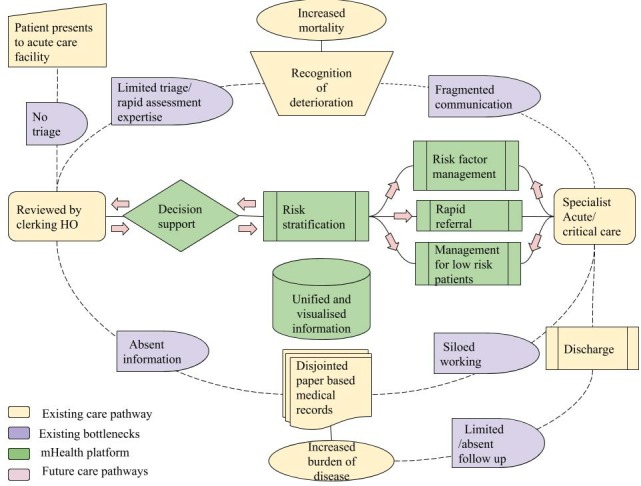
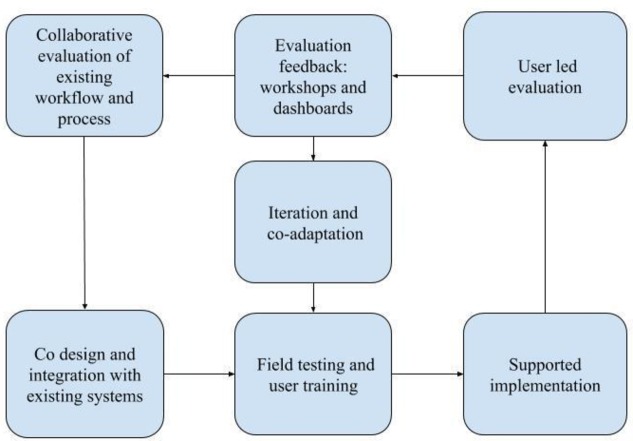
Lack of investment in low-income and middle-income countries (LMICs) in systems capturing continuous information regarding care of the acutely unwell patient is hindering global efforts to address inequalities, both at facility and national level. Furthermore, this of lack of data is disempowering frontline staff and those seeking to support them, from progressing setting-relevant research and quality improvement. In contrast to high-income country (HIC) settings, where electronic surveillance has boosted the capability of governments, clinicians and researchers to engage in service-wide healthcare evaluation, healthcare information in resource-limited settings remains almost exclusively paper based. In this practice paper, we describe the efforts of a collaboration of clinicians, administrators, researchers and healthcare informaticians working in South Asia, in addressing the inequality in access to patient information in acute care. Harnessing a clinician-led collaborative approach to design and evaluation, we have implemented a national acute care information platform in Sri Lanka that is tailored to priorities of frontline staff. Iterative adaptation has ensured the platform has the flexibility to integrate with legacy paper systems, support junior team members in advocating for acutely unwell patients and has made information captured accessible to diverse stakeholders to improve service delivery. The same platform is now empowering clinicians to participate in international research and drive forwards improvements in care. During this journey, we have also gained insights on how to overcome well-described barriers to implementation of digital information tools in LMIC. We anticipate that this north-south collaborative approach to addressing the challenges of health system implementation in acute care may provide learning and inspiration to other partnerships seeking to engage in similar work.
低收入和中等收入国家(LMICs)在建立能够持续收集急性病患者护理信息的系统方面缺乏投资,这在机构和国家层面都阻碍了全球消除不平等现象的努力。此外,数据的缺失使一线工作人员以及那些试图支持他们的人无法推进与实际情况相关的研究和质量改进。与高收入国家(HIC)不同,在高收入国家,电子监测提高了政府、临床医生和研究人员进行全服务范围医疗保健评估的能力,而在资源有限的环境中,医疗保健信息几乎完全基于纸质记录。在本实践论文中,我们描述了南亚的临床医生、管理人员、研究人员和医疗保健信息专家合作,努力解决急性护理中患者信息获取不平等问题的情况。通过采用临床医生主导的协作方法进行设计和评估,我们在斯里兰卡实施了一个国家急性护理信息平台,该平台是根据一线工作人员的优先事项量身定制的。反复调整确保了该平台具有与传统纸质系统集成的灵活性,支持初级团队成员为急性病患者争取权益,并使不同利益相关者能够获取所收集的信息以改善服务提供。同样的平台现在使临床医生能够参与国际研究并推动护理改进。在这个过程中,我们还获得了关于如何克服在低收入和中等收入国家实施数字信息工具时所面临的诸多障碍的见解。我们预计,这种解决急性护理中卫生系统实施挑战的南北协作方法可能会为其他寻求开展类似工作的伙伴关系提供借鉴和启发。