1Division of Cellular and Molecular Toxicology, Center for Biological Safety and Research (CBSR), National Institute of Health Sciences (NIHS), 3-25-26 Tonomachi, Kawasaki-ku, Kawasaki-shi, Kanagawa-ken 210-9501 Japan.
Japan Bioassay Research Center, Japan Organization of Occupational Health and Safety, 2445, Hirasawa, Hadano-shi, Kanagawa-ken 257-0015 Japan.
Commun Biol. 2019 Feb 8;2:57. doi: 10.1038/s42003-019-0300-2. eCollection 2019.
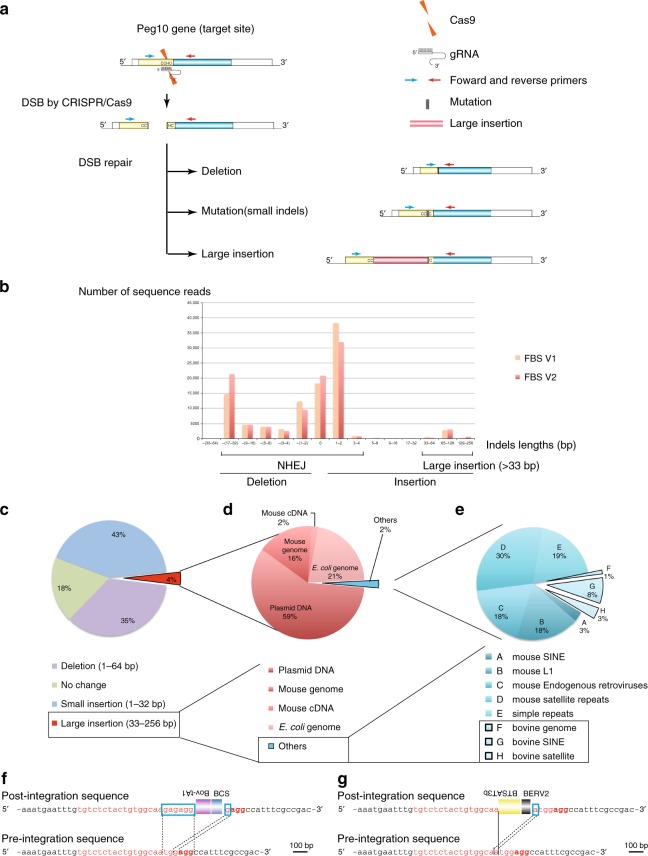
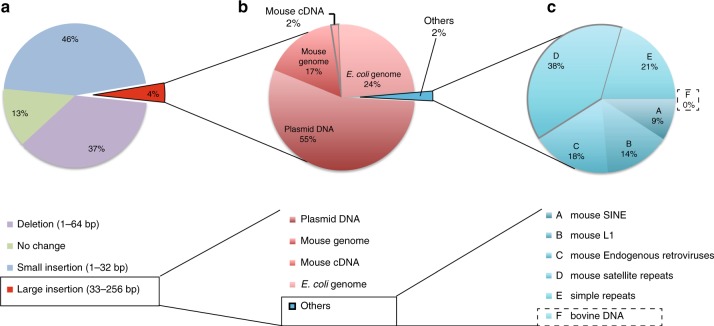
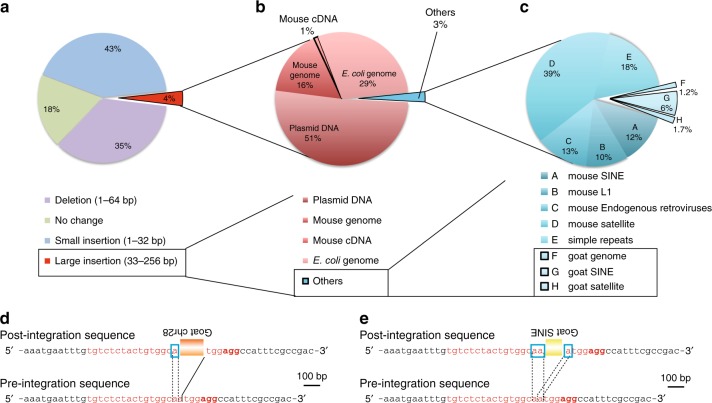
The CRISPR-Cas9 system has been successfully applied in many organisms as a powerful genome-editing tool. Undoubtedly, it will soon be applied to human genome editing, including gene therapy. We have previously reported that unintentional DNA sequences derived from retrotransposons, genomic DNA, mRNA and vectors are captured at double-strand breaks (DSBs) sites when DSBs are introduced by the CRISPR-Cas9 system. Therefore, it is possible that unintentional insertions associated with DSB repair represent a potential risk for human genome editing gene therapies. To address this possibility, comprehensive sequencing of DSB sites was performed. Here, we report that exosome-mediated horizontal gene transfer occurs in DSB repair during genome editing. Exosomes are present in all fluids from living animals, including seawater and breathing mammals, suggesting that exosome-mediated horizontal gene transfer is the driving force behind mammalian genome evolution. The findings of this study highlight an emerging new risk for this leading-edge technology.
CRISPR-Cas9 系统已成功应用于许多生物体中,成为一种强大的基因组编辑工具。毫无疑问,它很快将被应用于人类基因组编辑,包括基因治疗。我们之前曾报道,当 CRISPR-Cas9 系统引入双链断裂 (DSB) 时,源自逆转录转座子、基因组 DNA、mRNA 和载体的非有意 DNA 序列会在 DSB 位点被捕获。因此,与 DSB 修复相关的非有意插入可能代表人类基因组编辑基因治疗的潜在风险。为了解决这个可能性,我们对 DSB 位点进行了全面的测序。在这里,我们报告在基因组编辑过程中,DSB 修复会发生外体介导的水平基因转移。外体存在于所有活体动物的液体中,包括海水和呼吸的哺乳动物,这表明外体介导的水平基因转移是哺乳动物基因组进化的驱动力。这项研究的结果强调了这项前沿技术的一个新出现的风险。