Ou Yi-Hsuan, Liang Jeremy, Chng Wei Heng, Muthuramalingam Ram Pravin Kumar, Ng Zi Xiu, Lee Choon Keong, Neupane Yub Raj, Yau Jia Ning Nicolette, Zhang Sitong, Lou Charles Kang Liang, Huang Chenyuan, Wang Jiong-Wei, Pastorin Giorgia
Department of Pharmacy, National University of Singapore, Singapore 117543, Singapore.
Department of Chemistry, National University of Singapore, Singapore 117543, Singapore.
Pharmaceutics. 2022 Aug 20;14(8):1738. doi: 10.3390/pharmaceutics14081738.
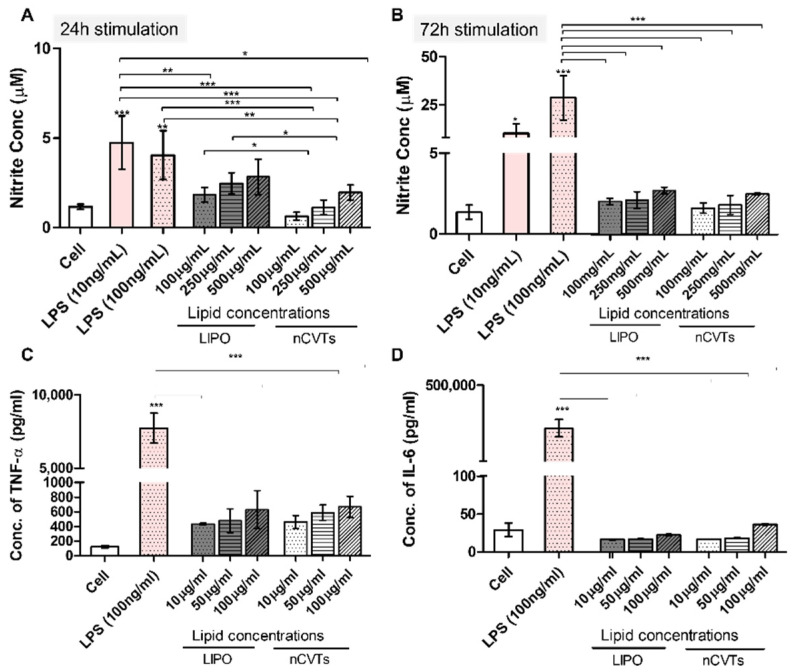
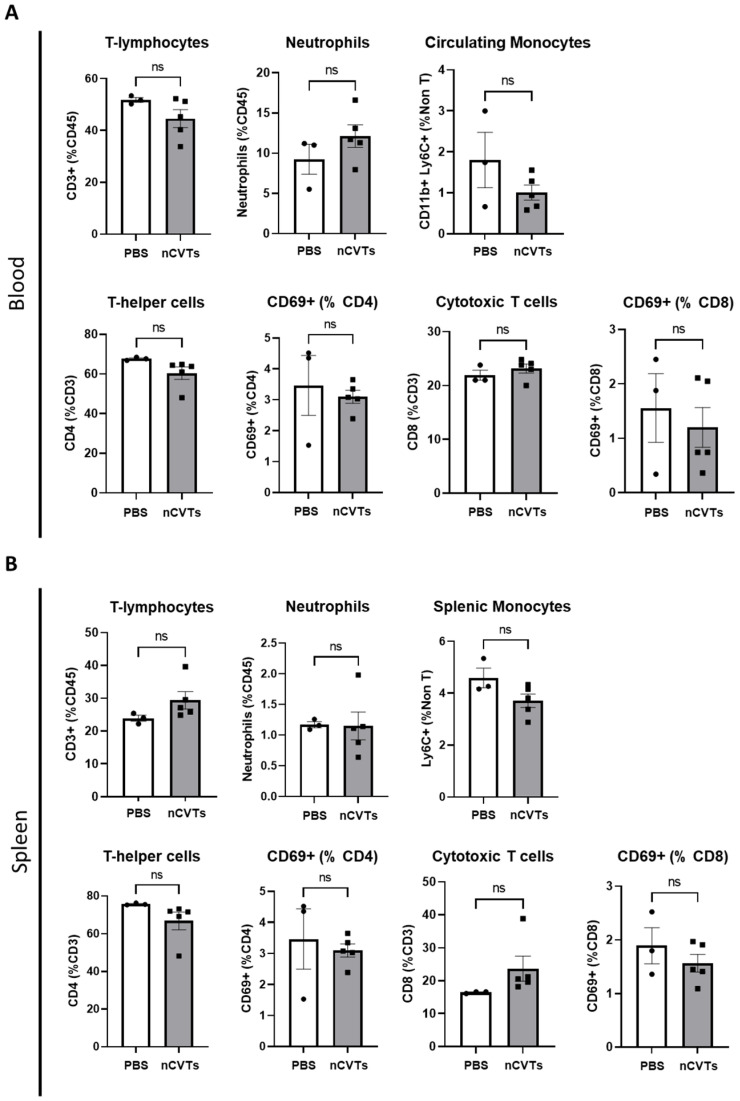
In drug delivery, the development of nanovesicles that combine both synthetic and cellular components provides added biocompatibility and targeting specificity in comparison to conventional synthetic carriers such as liposomes. Produced through the fusion of U937 monocytes' membranes and synthetic lipids, our nano-cell vesicle technology systems (nCVTs) showed promising results as targeted cancer treatment. However, no investigation has been conducted yet on the immunogenic profile and the uptake mechanisms of nCVTs. Hence, this study was aimed at exploring the potential cytotoxicity and immune cells' activation by nCVTs, as well as the routes through which cells internalize these biohybrid systems. The endocytic pathways were selectively inhibited to establish if the presence of cellular components in nCVTs affected the internalization route in comparison to both liposomes (made up of synthetic lipids only) and nano-cellular membranes (made up of biological material only). As a result, nCVTs showed an 8-to-40-fold higher cellular internalization than liposomes within the first hour, mainly through receptor-mediated processes (i.e., clathrin- and caveolae-mediated endocytosis), and low immunostimulatory potential (as indicated by the level of IL-1α, IL-6, and TNF-α cytokines) both in vitro and in vivo. These data confirmed that nCVTs preserved surface cues from their parent U937 cells and can be rationally engineered to incorporate ligands that enhance the selective uptake and delivery toward target cells and tissues.
在药物递送方面,与脂质体等传统合成载体相比,结合了合成成分和细胞成分的纳米囊泡的开发提供了更高的生物相容性和靶向特异性。通过U937单核细胞膜与合成脂质的融合产生的我们的纳米细胞囊泡技术系统(nCVTs)作为靶向癌症治疗显示出有前景的结果。然而,尚未对nCVTs的免疫原性特征和摄取机制进行研究。因此,本研究旨在探索nCVTs的潜在细胞毒性和免疫细胞激活,以及细胞内化这些生物杂交系统的途径。选择性抑制内吞途径,以确定与脂质体(仅由合成脂质组成)和纳米细胞膜(仅由生物材料组成)相比,nCVTs中细胞成分的存在是否会影响内化途径。结果,nCVTs在第一小时内的细胞内化比脂质体高8至40倍,主要通过受体介导的过程(即网格蛋白介导的内吞作用和小窝蛋白介导的内吞作用),并且在体外和体内均具有低免疫刺激潜力(如IL-1α、IL-6和TNF-α细胞因子水平所示)。这些数据证实,nCVTs保留了其亲本U937细胞的表面线索,并且可以合理设计以掺入增强对靶细胞和组织的选择性摄取和递送的配体。