1 Integrative Vascular Biology Laboratory Department of Integrative Physiology University of Colorado Boulder Boulder CO.
2 Department of Medicine Anschutz Medical Center University of Colorado Denver Denver CO.
J Am Heart Assoc. 2019 Feb 19;8(4):e011134. doi: 10.1161/JAHA.118.011134.
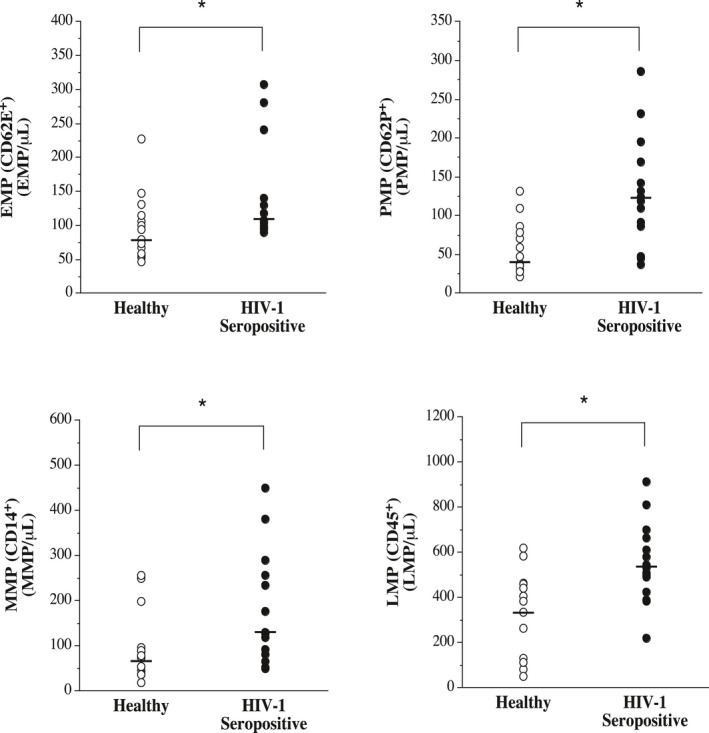
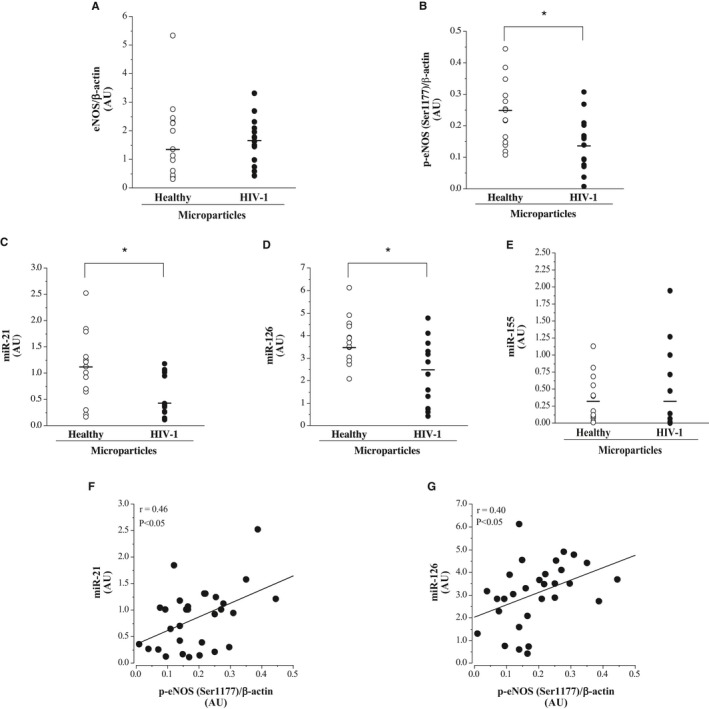
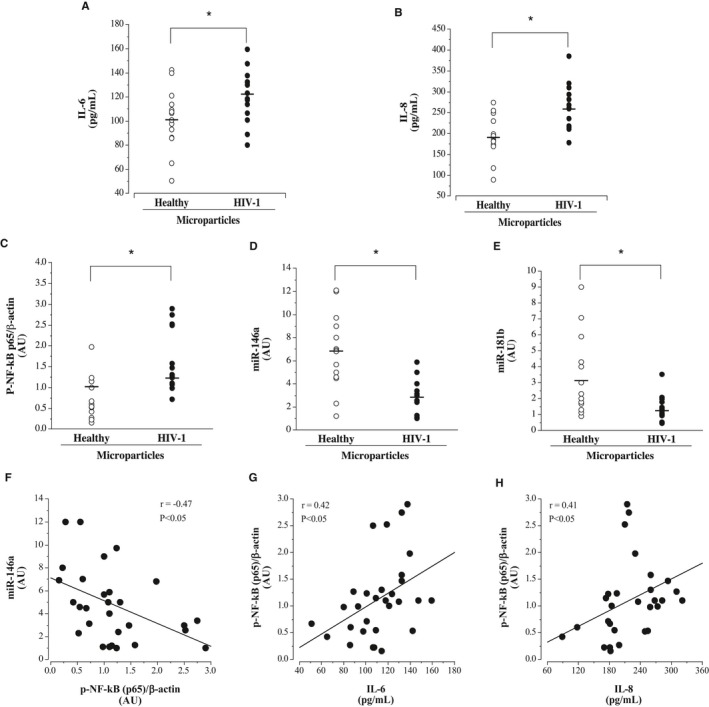
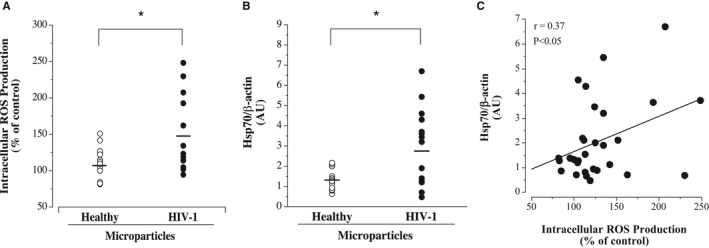
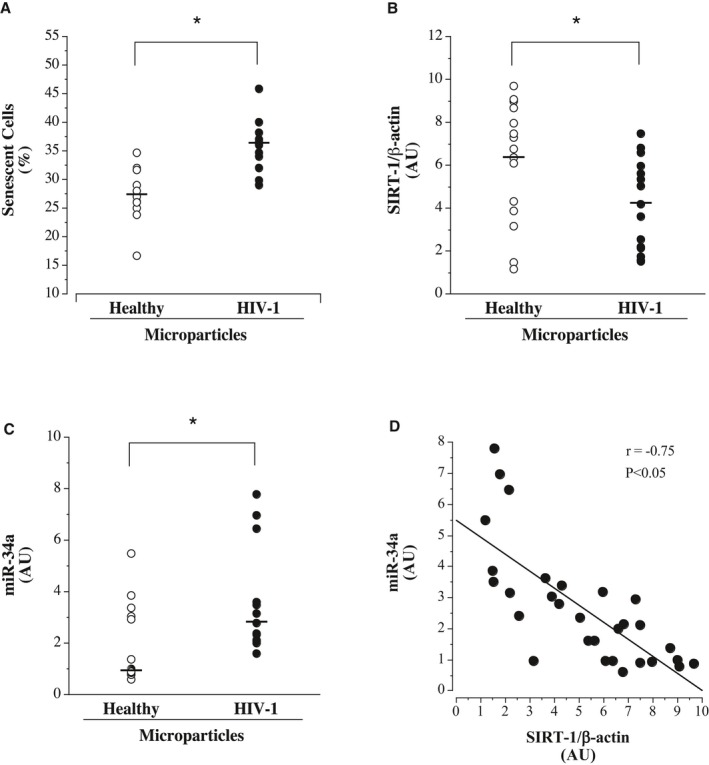
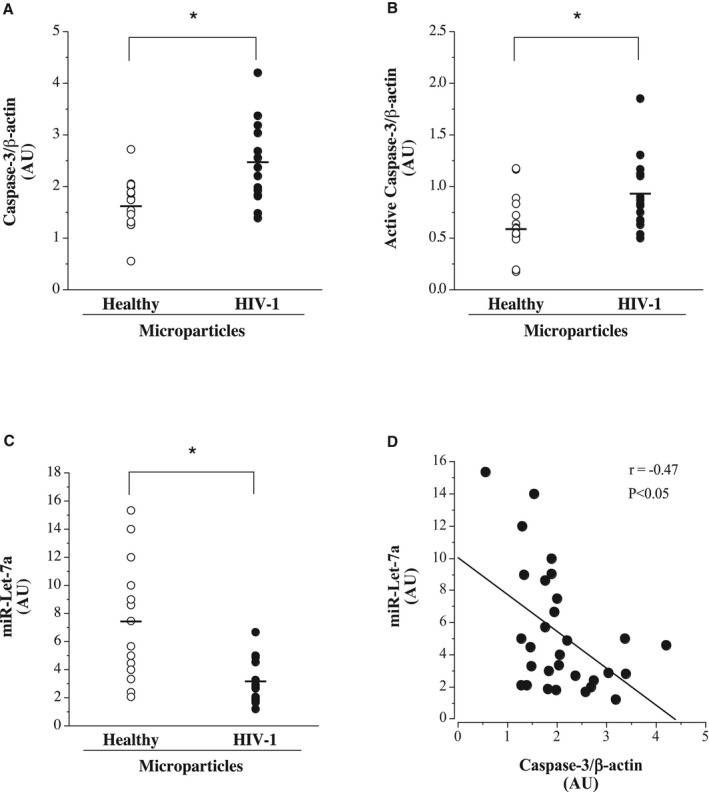
Background Circulating microparticles have emerged as biomarkers and effectors of vascular disease. Elevated rates of cardiovascular disease are seen in HIV -1-seropositive individuals. The aims of this study were to determine: (1) if circulating microparticles are elevated in antiretroviral therapy-treated HIV -1-seropositive adults; and (2) the effects of microparticles isolated from antiretroviral therapy -treated HIV -1-seropositive adults on endothelial cell function, in vitro. Methods and Results Circulating levels of endothelial-, platelet-, monocyte-, and leukocyte-derived microparticles were determined by flow cytometry in plasma from 15 healthy and 15 antiretroviral therapy-treated, virologically suppressed HIV -1-seropositive men. Human umbilical vein endothelial cells were treated with microparticles from individual subjects for 24 hours; thereafter, endothelial cell inflammation, oxidative stress, senescence, and apoptosis were assessed. Circulating concentrations of endothelial-, platelet-, monocyte-, and leukocyte-derived microparticles were significantly higher (≈35%-225%) in the HIV -1-seropositive compared with healthy men. Microparticles from HIV -1-seropositive men induced significantly greater endothelial cell release of interleukin-6 and interleukin-8 (≈20% and ≈35%, respectively) and nuclear factor-κB expression while suppressing anti-inflammatory microRNAs (miR-146a and miR-181b). Intracellular reactive oxygen species production and expression of reactive oxygen species -related heat shock protein 70 were both higher in cells treated with microparticles from the HIV -1-seropositive men. In addition, the percentage of senescent cells was significantly higher and sirtuin 1 expression lower in cells treated with HIV -1-related microparticles. Finally, caspase-3 was significantly elevated by microparticles from HIV -1-seropositive men. Conclusions Circulating concentrations of endothelial-, platelet-, monocyte-, and leukocyte-derived microparticles were higher in antiretroviral therapy-treated HIV -1-seropositive men and adversely affect endothelial cells promoting cellular inflammation, oxidative stress, senescence, and apoptosis. Circulating microparticles may contribute to the vascular risk associated with HIV -1 infection.
循环微粒已成为血管疾病的生物标志物和效应物。HIV-1 血清阳性个体中心血管疾病的发生率较高。本研究旨在确定:(1)在接受抗逆转录病毒治疗的 HIV-1 血清阳性成年人中,循环微粒是否升高;(2)从接受抗逆转录病毒治疗的 HIV-1 血清阳性成年人中分离出的微粒对体外内皮细胞功能的影响。
通过流式细胞术测定了来自 15 名健康和 15 名接受抗逆转录病毒治疗、病毒抑制的 HIV-1 血清阳性男性的血浆中内皮细胞、血小板、单核细胞和白细胞衍生的微粒的循环水平。用人脐静脉内皮细胞处理个体来源的微粒 24 小时;之后,评估内皮细胞炎症、氧化应激、衰老和凋亡。与健康男性相比,HIV-1 血清阳性男性的循环浓度显著更高(≈35%-225%),内皮细胞、血小板、单核细胞和白细胞衍生的微粒。HIV-1 血清阳性男性的微粒诱导内皮细胞白细胞介素-6 和白细胞介素-8 的释放显著增加(≈20%和≈35%),并抑制抗炎 microRNAs(miR-146a 和 miR-181b)。用 HIV-1 血清阳性男性的微粒处理的细胞中,细胞内活性氧物质的产生和活性氧相关热休克蛋白 70 的表达均升高。此外,用 HIV-1 相关微粒处理的细胞中衰老细胞的百分比显著升高,而 Sirtuin 1 的表达降低。最后,HIV-1 血清阳性男性的微粒显著升高了 caspase-3。
在接受抗逆转录病毒治疗的 HIV-1 血清阳性男性中,循环浓度更高的内皮细胞、血小板、单核细胞和白细胞衍生的微粒会对内皮细胞产生不利影响,促进细胞炎症、氧化应激、衰老和凋亡。循环微粒可能导致与 HIV-1 感染相关的血管风险。