National Clinical Research Center for Ocular Diseases, Eye Hospital, Wenzhou Medical University, Wenzhou, 325027, China.
State Key Laboratory of Ophthalmology, Optometry and Vison Science, Eye Hospital, Wenzhou Medical University, Wenzhou, 325027, China.
J Transl Med. 2024 Jun 7;22(1):546. doi: 10.1186/s12967-024-05263-y.
The pathogenesis of thyroid-associated orbitopathy (TAO) remains incompletely understand. The interaction between immunocytes and orbital fibroblasts (OFs) play a critical role in orbital inflammatory and fibrosis. Accumulating reports indicate that a significant portion of plasma exosomes (Pla-Exos) are derived from immune cells; however, their impact upon OFs function is unclear.
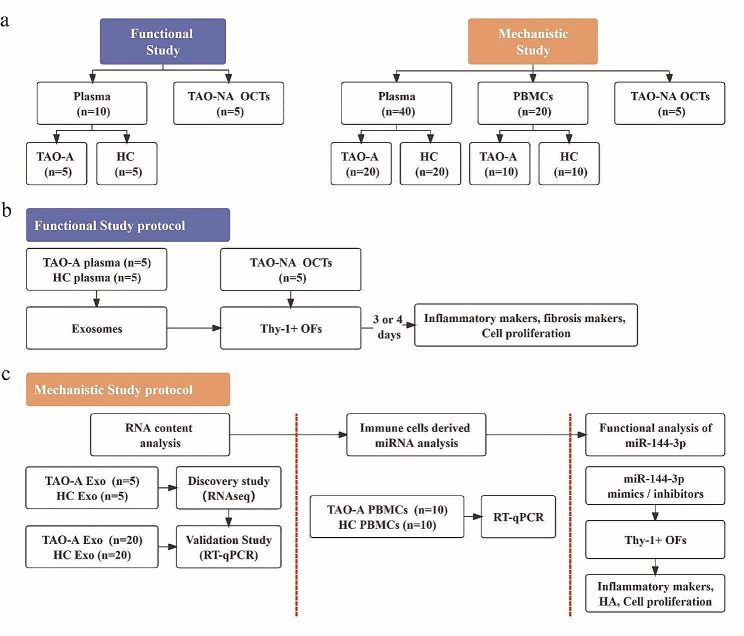
OFs were primary cultured from inactive TAO patients. Exosomes isolated from plasma samples of patients with active TAO and healthy controls (HCs) were utilized for functional and RNA cargo analysis. Functional analysis in thymocyte differentiation antigen-1 (Thy-1) OFs measured expression of inflammatory and fibrotic markers (mRNAs and proteins) and cell activity in response to Pla-Exos. RNA cargo analysis was performed by RNA sequencing and RT-qPCR. Thy-1 OFs were transfected with miR-144-3p mimics/inhibitors to evaluate its regulation of inflammation, fibrosis, and proliferation.
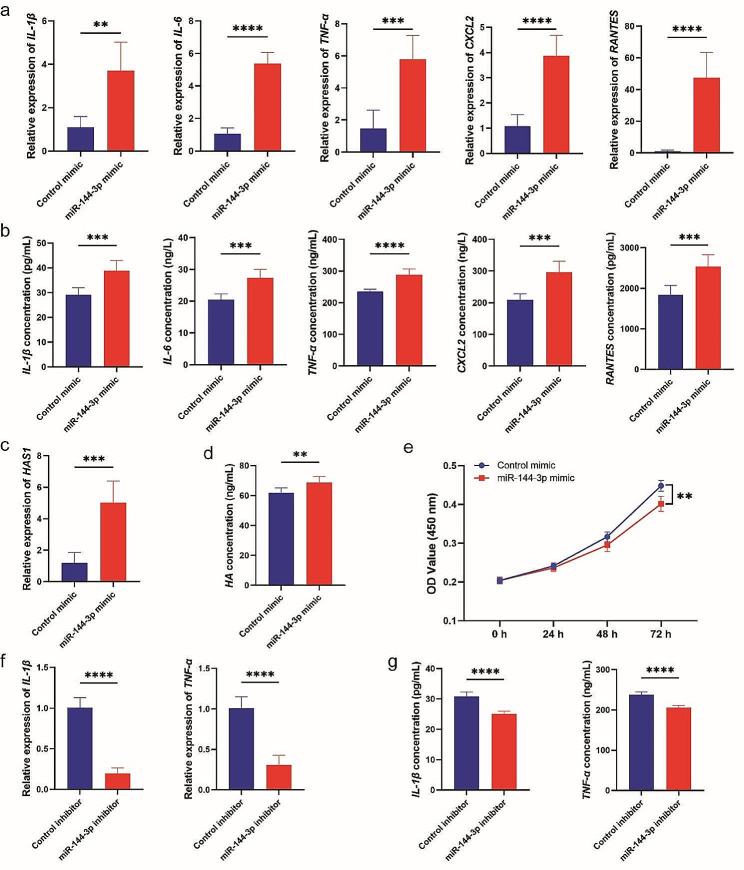
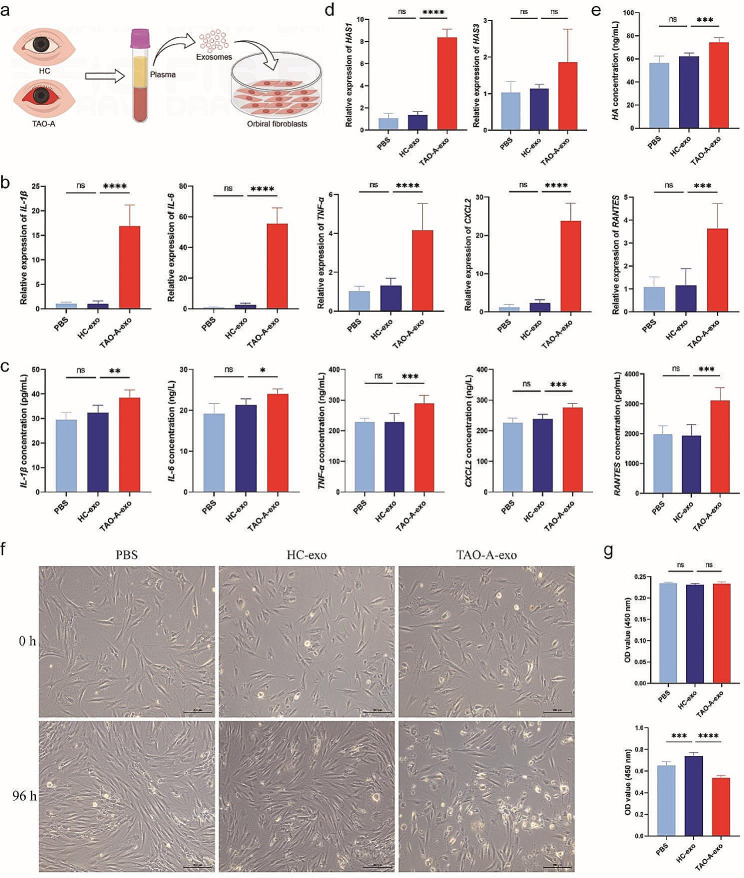
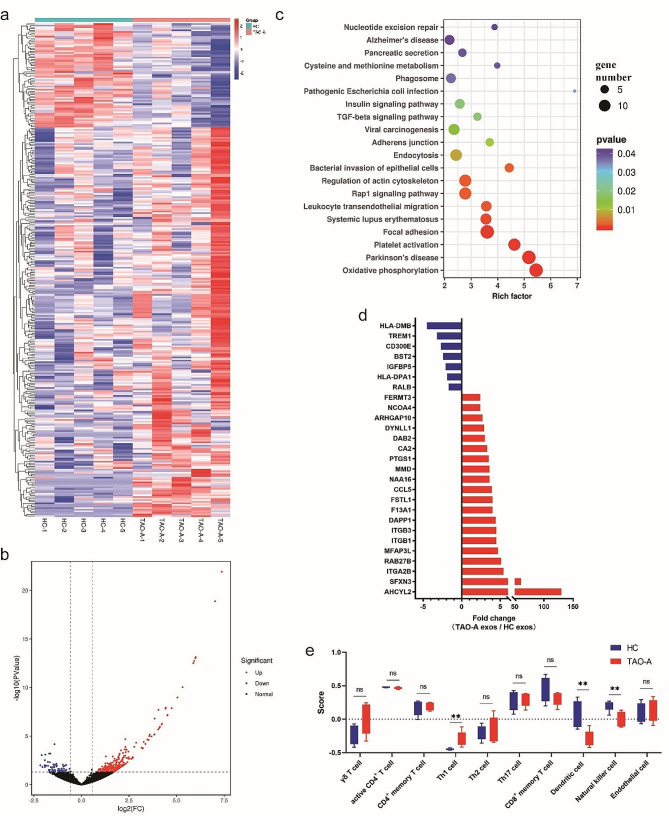
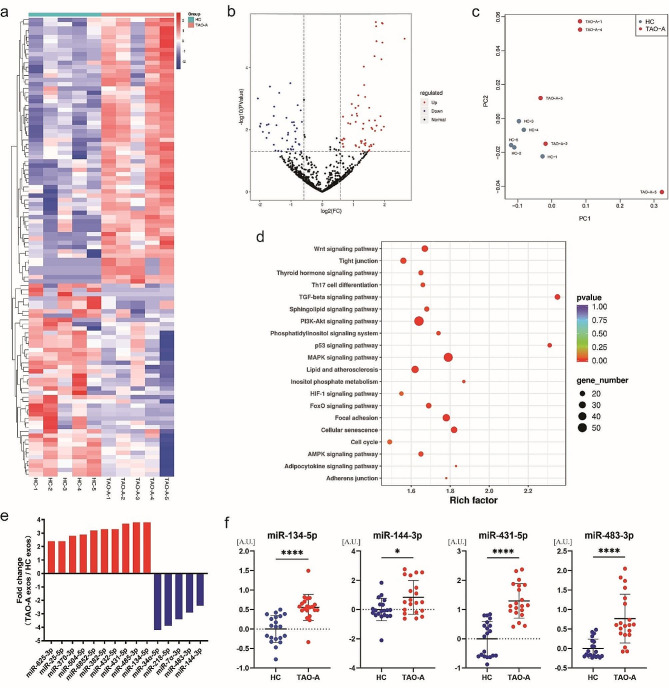
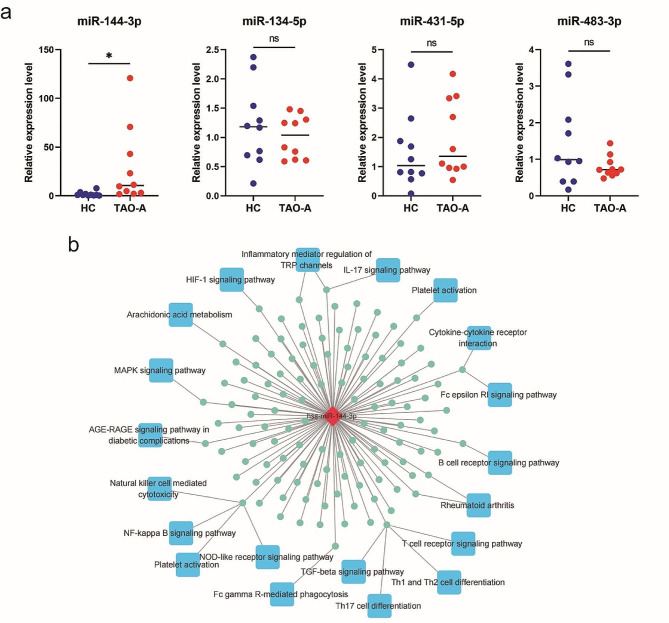
Pla-Exos derived from active TAO patients (Pla-Exos) induced stronger production of inflammatory cytokines and hyaluronic acid (HA) in Thy-1 OFs while inhibiting their proliferation. Kyoto Encyclopedia of Genes and Genomes (KEGG) pathway analysis and single sample gene set enrichment analysis (ssGSEA) suggested that the difference in mRNA expression levels between Pla-Exos and Pla-Exos was closely related to immune cells. Differential expression analysis revealed that 62 upregulated and 45 downregulated miRNAs in Pla-Exos, with the elevation of miR-144-3p in both Pla-Exos and PBMCs in active TAO group. KEGG analysis revealed that the target genes of differentially expressed miRNA and miR-144-3p enriched in immune-related signaling pathways. Overexpression of the miR-144-3p mimic significantly upregulated the secretion of inflammatory cytokines and HA in Thy-1 OFs while inhibiting their proliferation.
Pla-Exos derived from patients with active TAO were immune-active, which may be a long-term stimulus casual for inflammatory and fibrotic progression of TAO. Our finding suggests that Pla-Exos could be used as biomarkers or treatment targets in TAO patients.
甲状腺相关眼病(TAO)的发病机制尚不完全清楚。免疫细胞与眼眶成纤维细胞(OFs)之间的相互作用在眼眶炎症和纤维化中起着关键作用。越来越多的报道表明,大量的血浆外泌体(Pla-Exos)来源于免疫细胞;然而,它们对 OFs 功能的影响尚不清楚。
从活动期 TAO 患者中分离出 OFs 进行原代培养。从活动期 TAO 患者和健康对照者(HCs)的血浆样本中分离出外泌体,用于功能和 RNA carg分析。Thy-1 OFs 的功能分析测量了炎症和纤维化标志物(mRNA 和蛋白质)的表达以及 Pla-Exos 刺激下细胞的活性。RNA carg 分析通过 RNA 测序和 RT-qPCR 进行。用 miR-144-3p 模拟物/抑制剂转染 Thy-1 OFs,以评估其对炎症、纤维化和增殖的调节作用。
来自活动期 TAO 患者的 Pla-Exos(Pla-Exos)诱导 Thy-1 OFs 产生更强的炎症细胞因子和透明质酸(HA),同时抑制其增殖。京都基因与基因组百科全书(KEGG)通路分析和单样本基因集富集分析(ssGSEA)表明,Pla-Exos 和 Pla-Exos 之间 mRNA 表达水平的差异与免疫细胞密切相关。差异表达分析显示,Pla-Exos 中有 62 个上调和 45 个下调 miRNA,活动期 TAO 组 Pla-Exos 和 PBMCs 中 miR-144-3p 升高。KEGG 分析显示,差异表达 miRNA 和 miR-144-3p 的靶基因富集在免疫相关信号通路中。miR-144-3p 模拟物的过表达显著上调了 Thy-1 OFs 中炎症细胞因子和 HA 的分泌,同时抑制了其增殖。
来自活动期 TAO 患者的 Pla-Exos 具有免疫活性,可能是 TAO 炎症和纤维化进展的长期刺激因素。我们的发现表明,Pla-Exos 可作为 TAO 患者的生物标志物或治疗靶点。