Chae Unbin, Lee Heejin, Kim Bokyung, Jung Haiyoung, Kim Byeong Mo, Lee Ann- Hwee, Lee Dong-Seok, Min Sang-Hyun
School of Life Sciences and Biotechnology, BK21 Plus KNU Creative BioResearch Group, Kyungpook National University, Daegu, Republic of Korea.
Drug Development Center, DGMIF, Daegu, Republic of Korea.
Oncogenesis. 2019 Feb 19;8(3):12. doi: 10.1038/s41389-019-0124-4.
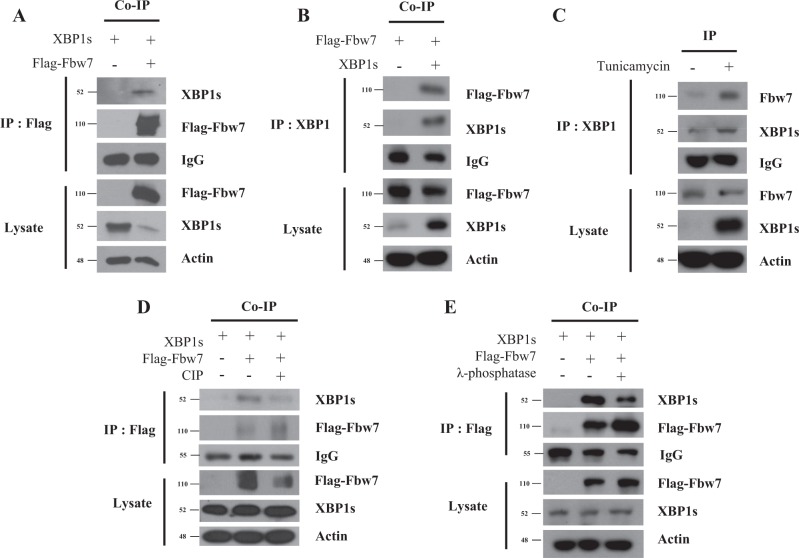
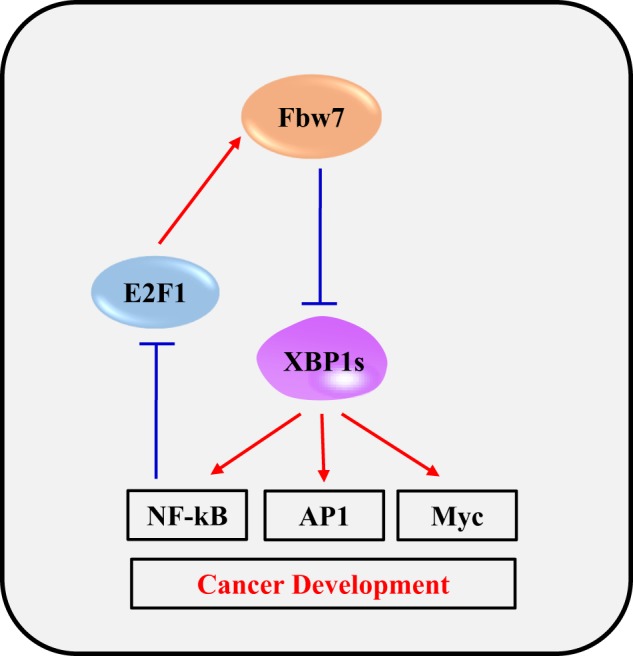
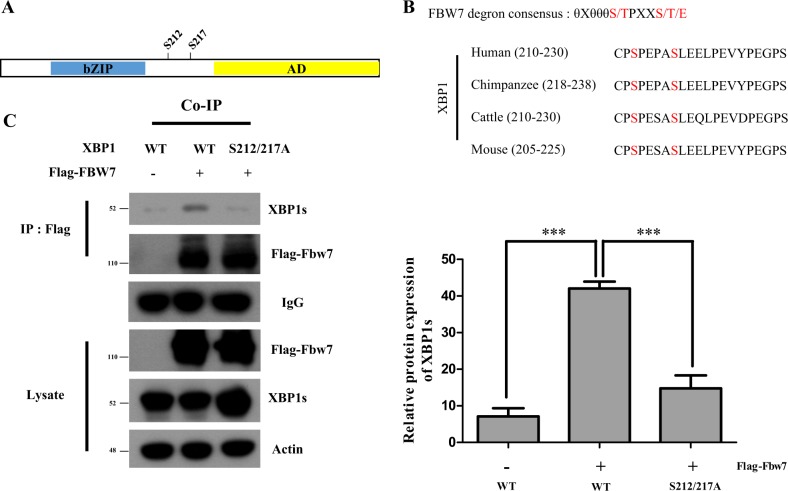
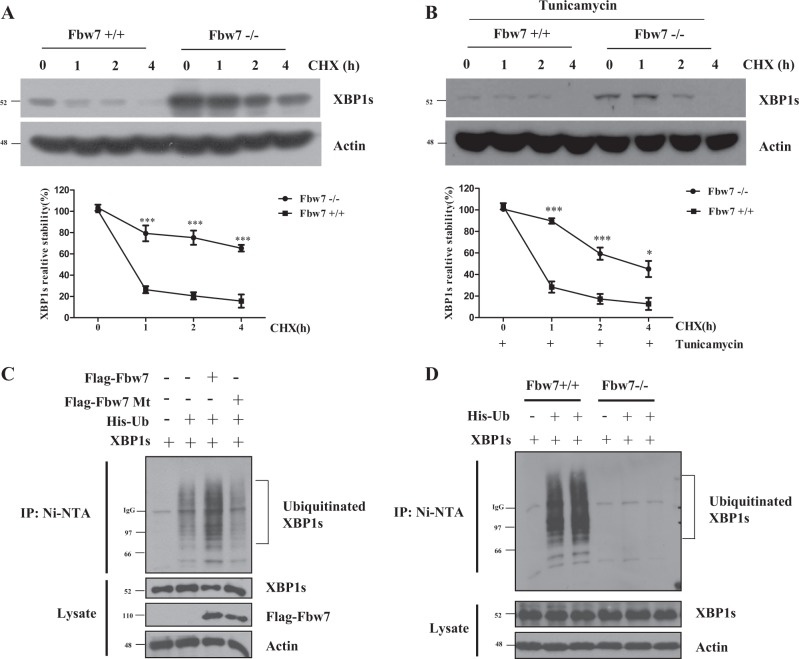
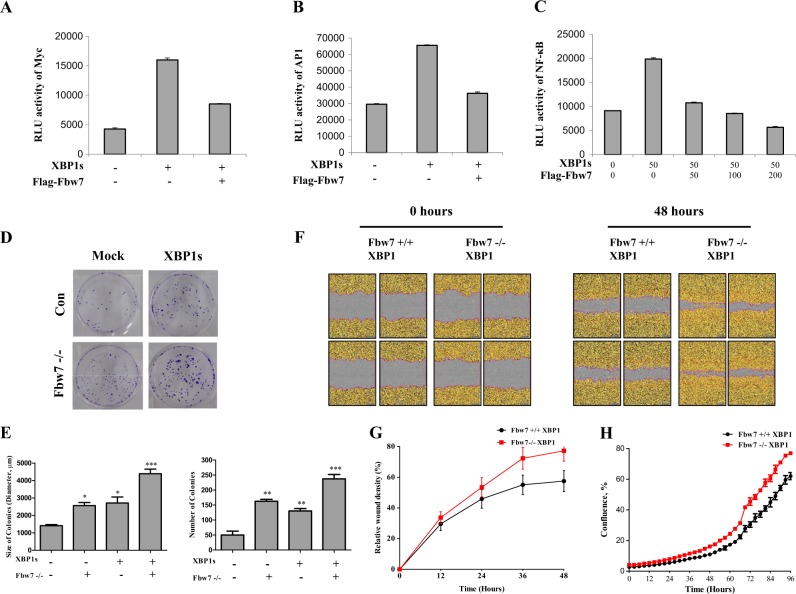
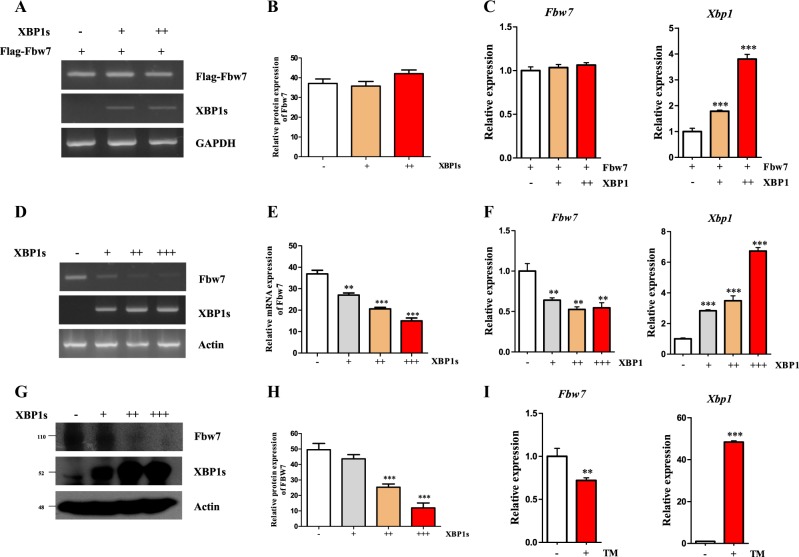
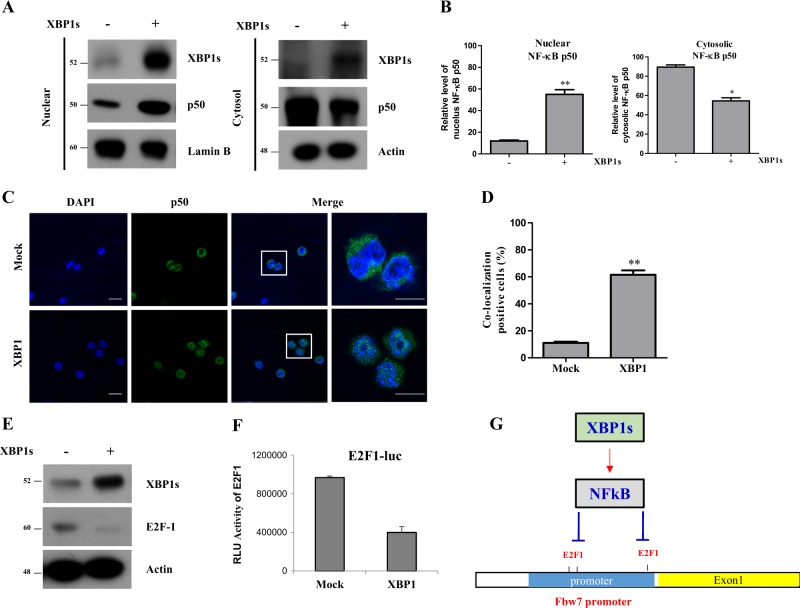
In cancer, activation of X-box binding protein (XBP1) has a critical role in tumorigenesis and cancer progression. Transcriptional regulatory mechanism of XBP1 in cancer development has been well known, however, regulation of ubiquitination and degradation of XBP1 has not been elucidated yet. Here we show that Fbw7, a substrate recognition component of the SKP1-Cullin-F-box-type E3 ligase, interacts with XBP1 in a phosphorylation-dependent manner, and facilitates XBP1 ubiquitination and protein degradation. Moreover, Fbw7 inhibits oncogenic pathways including NF-κB, AP1, and Myc induced by XBP1. Interestingly, XBP1 negatively regulates transcription of Fbw7 via a feedback mechanism through NF-κB/E2F-1 axis signaling pathway, suggesting that overexpression of XBP1s may contribute to low level of Fbw7 expression in human cancers. Therefore, a negative feedback loop between Fbw7 and XBP1 contributes to the regulation of tumor development and can be an attractive target for novel therapy in cancers.
在癌症中,X盒结合蛋白(XBP1)的激活在肿瘤发生和癌症进展中起着关键作用。XBP1在癌症发展中的转录调控机制已为人所知,然而,XBP1的泛素化和降解调控尚未阐明。在此我们表明,Fbw7是SKP1-Cullin-F盒型E3连接酶的底物识别成分,以磷酸化依赖的方式与XBP1相互作用,并促进XBP1的泛素化和蛋白质降解。此外,Fbw7抑制由XBP1诱导的包括NF-κB、AP1和Myc在内的致癌途径。有趣的是,XBP1通过NF-κB/E2F-1轴信号通路的反馈机制负向调节Fbw7的转录,这表明XBP1s的过表达可能导致人类癌症中Fbw7表达水平较低。因此,Fbw7和XBP1之间的负反馈环有助于调节肿瘤发展,并且可能成为癌症新型治疗的有吸引力的靶点。