Key Laboratory of Cultural Heritage Research and Conservation, School of Cultural Heritage, Northwest University, Xi'an, 710069, China.
Laboratory of Land Surface Pattern and Simulation, Institute of Geographic Sciences and Natural Resources Research, Chinese Academy of Sciences, Beijing, 100101, China.
Sci Rep. 2019 Feb 20;9(1):2355. doi: 10.1038/s41598-019-38758-6.
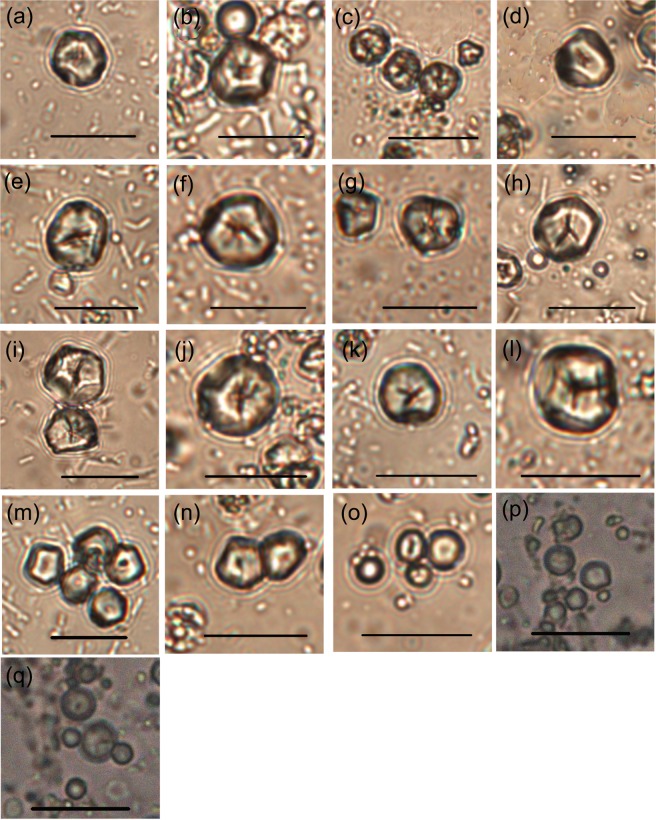
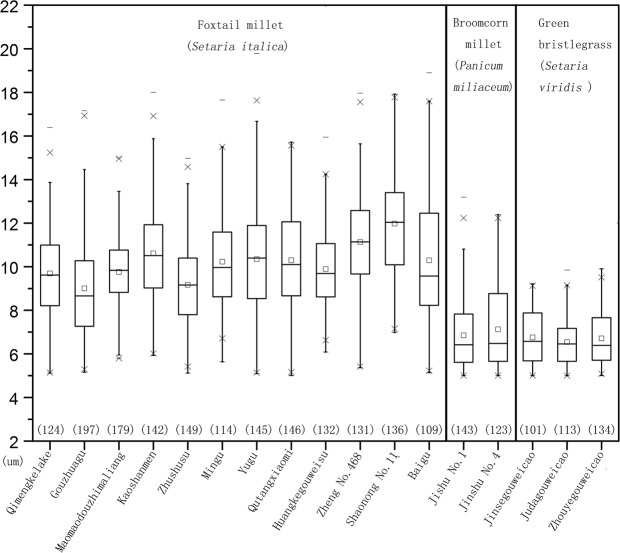
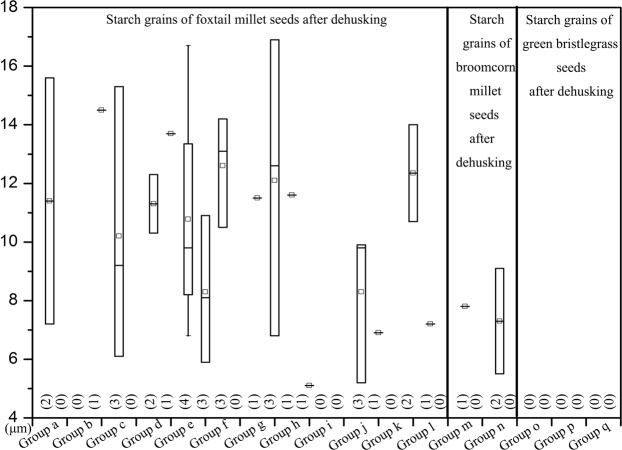
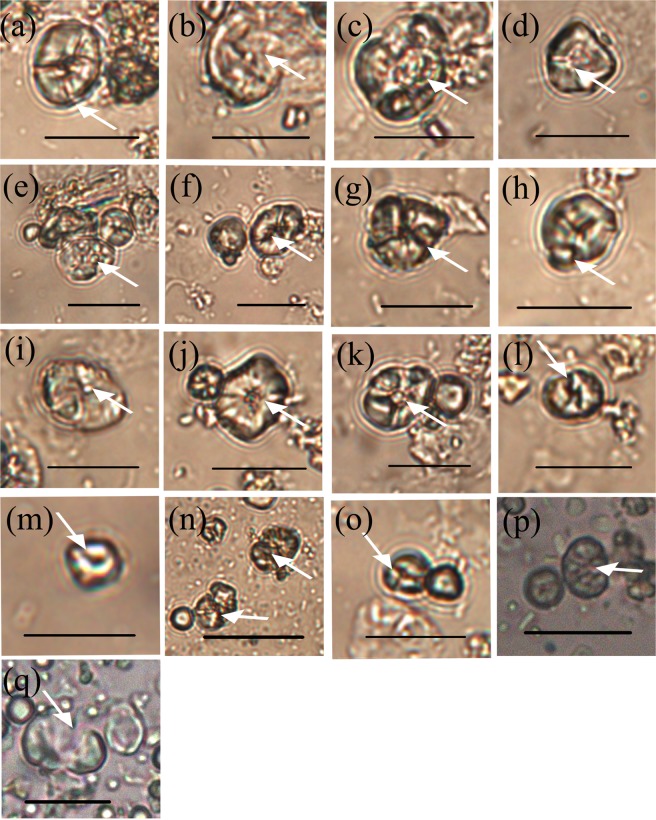
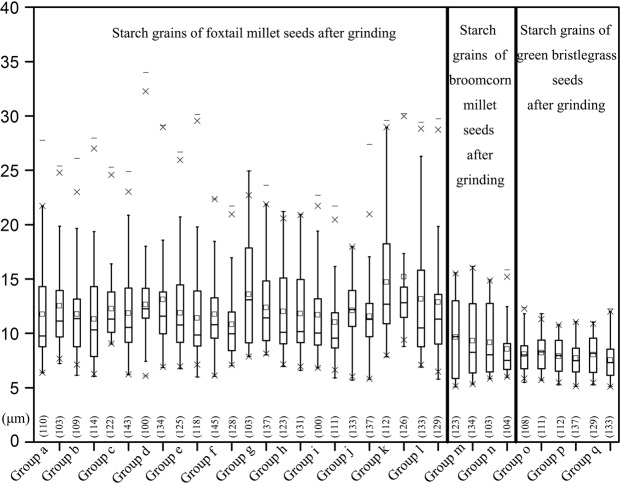
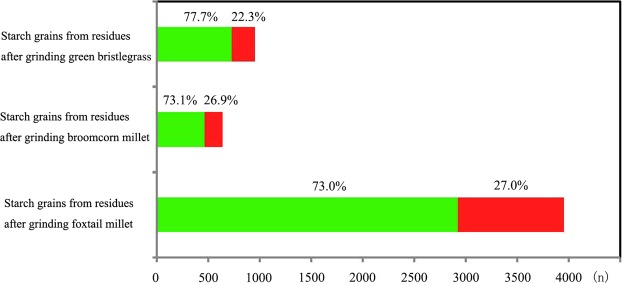
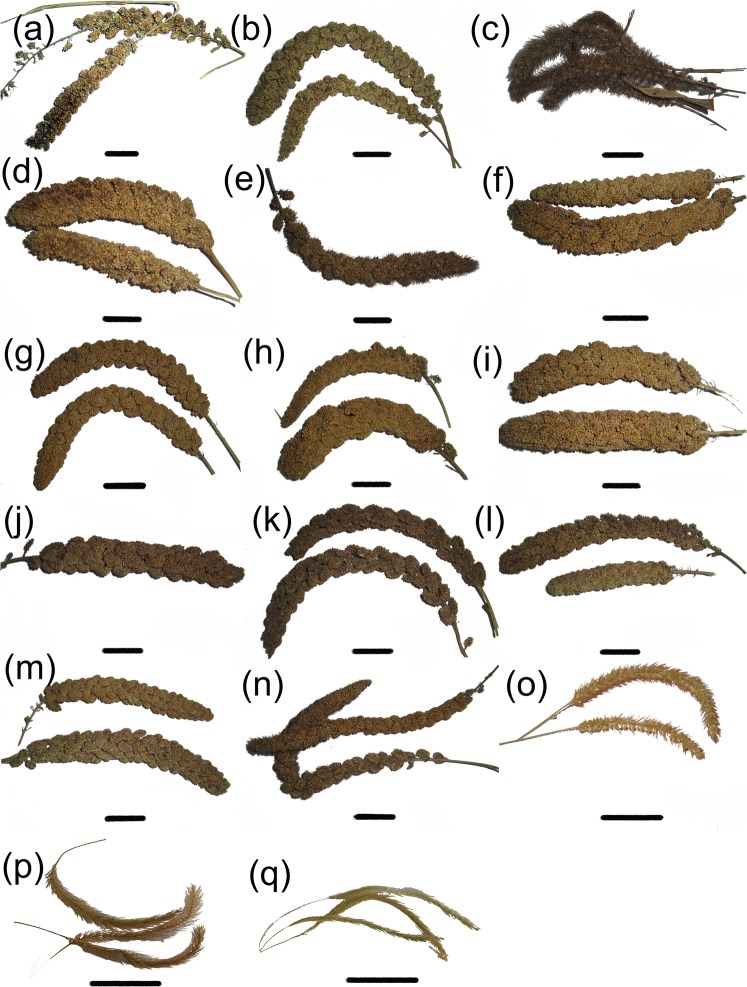
Research on the manufacture, use, and use-wear of grinding stones (including slabs and mullers) can provide a wealth of information on ancient subsistence strategy and plant food utilization. Ancient residues extracted from stone tools frequently exhibit damage from processing methods, and modern experiments can replicate these morphological changes so that they can be better understood. Here, experiments have been undertaken to dehusk and grind grass grain using stone artifacts. To replicate ancient activities in northern China, we used modern stone tools to dehusk and grind twelve cultivars of foxtail millet (Setaria italica), two cultivars of broomcorn millet (Panicum miliaceum) and three varieties of green bristlegrass (Setaira viridis). The residues from both used and unused facets of the stone tools were then extracted, and the starch grains studied for morphological features and changes from the native states. The results show that (1) Dehusking did not significantly change the size and morphology of millet starch grains; (2) After grinding, the size of millet starch grains increases up to 1.2 times larger than native grains, and a quarter of the ground millet starch grains bore surface damage and also exhibited distortion of the extinction cross. This indicator will be of significance in improving the application of starch grains to research in the functional inference of grinding stone tools, but we are unable to yet distinguish dehusked forms from native.
磨石(包括石板和磨棒)的制造、使用和使用痕迹的研究可以提供大量关于古代生计策略和植物性食物利用的信息。从石器工具中提取的古代残留物经常表现出加工方法造成的损坏,而现代实验可以复制这些形态变化,以便更好地理解它们。在这里,我们进行了使用石器去壳和研磨草谷的实验。为了复制中国北方的古代活动,我们使用现代石器去壳和研磨了 12 个品种的粟(Setaria italica)、2 个品种的黍(Panicum miliaceum)和 3 个品种的绿色画眉草(Setaira viridis)。然后提取了石器的使用和未使用面的残留物,并研究了淀粉颗粒的形态特征和从原生状态的变化。结果表明:(1)去壳不会显著改变小米淀粉颗粒的大小和形态;(2)研磨后,小米淀粉颗粒的大小增加了 1.2 倍以上,四分之一的研磨小米淀粉颗粒表面受损,消光十字也发生了扭曲。这一指标将对提高淀粉颗粒在研磨石器工具功能推断研究中的应用具有重要意义,但我们还无法将去壳形式与原生形式区分开来。