Section of Epidemiology, Department of Public Health, Faculty of Health and Medical Science, University of Copenhagen, Oster Farimagsgade 5, bd. 24, DK-1014, Copenhagen K, Denmark.
Department of Sport Science and Clinical Biomechanics, University of Southern Denmark, Campusvej 55, 5230, Odense, Denmark.
Eur J Pediatr. 2019 May;178(5):695-706. doi: 10.1007/s00431-019-03326-7. Epub 2019 Feb 20.
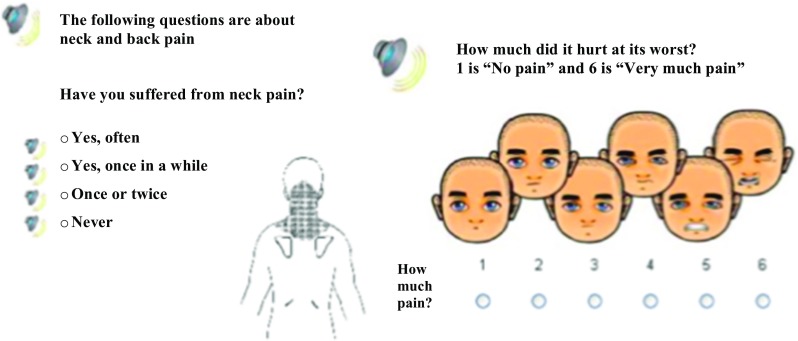
This study aims to describe the prevalence of spinal pain among Danish children, explore the differential nature of spinal pain, and investigate socio-demographic factors predisposing spinal pain. A descriptive study of 46,726 11-14-year-olds participating in the Danish National Birth Cohort was conducted. Self-reported spinal pain (neck, middle back, and low back pain) was registered and classified according to severity. Socioeconomic data on children and their parents were identified in Statistics Denmark registers. Associations between socio-demographic factors and aspects of spinal pain were estimated using multinomial logistic regression models. To account for sample selection, inverse probability weighting (IPW) was applied. Almost 10% boys and 14% girls reported severe spinal pain, whereas around 30% of all children reported moderate pain. Effect estimates indicated the risk to increase with increasing age. Further, children without biological full siblings, not living with both of their parents, or children living in less-educated or lower-income families were more likely to experience spinal pain. The study conclusions were essentially unaffected by IPW.Conclusion: A considerable number of children suffer from spinal pain, and it is more common among children in more disadvantaged families. Etiology of spinal pain needs to be explored further with the aim of informing efficient and targeted prevention. What is Known: • Childhood spinal pain may cause marked discomfort and impairment in children's everyday life, and is suggested as important predictor of later-in-life spinal pain. • Methodological heterogeneity in previous studies and complexity of measuring pain make inferences at a broader level inadequate. What is New: • Prevalence of severe spinal pain in 11-14-year-olds was estimated to almost 10% for boys and 14% for girls, and children in more disadvantaged families were more likely to experience spinal pain. • The results seemed unaffected by sample selection.
本研究旨在描述丹麦儿童的脊柱疼痛患病率,探讨脊柱疼痛的差异性质,并调查导致脊柱疼痛的社会人口因素。对参加丹麦国家出生队列的 46726 名 11-14 岁儿童进行了描述性研究。自我报告的脊柱疼痛(颈部、中背部和下背部疼痛)进行了登记,并根据严重程度进行了分类。在丹麦统计局的登记册中确定了儿童及其父母的社会经济数据。使用多项逻辑回归模型估计了社会人口因素与脊柱疼痛各方面之间的关联。为了考虑样本选择,应用了逆概率加权(IPW)。近 10%的男孩和 14%的女孩报告严重的脊柱疼痛,而大约 30%的儿童报告中度疼痛。估计的效应表明,随着年龄的增长,风险会增加。此外,没有生物学全兄弟姐妹的儿童、与父母双方都不住在一起的儿童或生活在教育程度较低或收入较低家庭的儿童更有可能经历脊柱疼痛。IPW 对研究结论的影响基本没有影响。结论:相当多的儿童患有脊柱疼痛,而且在处于不利地位的家庭中的儿童中更为常见。需要进一步探讨脊柱疼痛的病因,以便为有效的有针对性的预防提供信息。已知的: • 儿童期脊柱疼痛可能会给儿童的日常生活带来明显的不适和障碍,并被认为是日后脊柱疼痛的重要预测因素。 • 先前研究中的方法学异质性和疼痛测量的复杂性使得在更广泛的层面上进行推断不足。新的发现: • 11-14 岁儿童严重脊柱疼痛的患病率估计为男孩接近 10%,女孩 14%,处于不利地位的家庭的儿童更有可能经历脊柱疼痛。 • 结果似乎不受样本选择的影响。