Division of Behavioral Medicine and Clinical Psychology, Cincinnati Children's Hospital Medical Center, 231 Albert Sabin Way, Cincinnati, OH, 45229, USA.
Department of Psychology, University of Kentucky, 111-B Kastle Hall, 171 Funkhouser Dr., Lexington, KY, 40506, USA.
J Behav Med. 2019 Oct;42(5):934-946. doi: 10.1007/s10865-019-00019-2. Epub 2019 Feb 21.
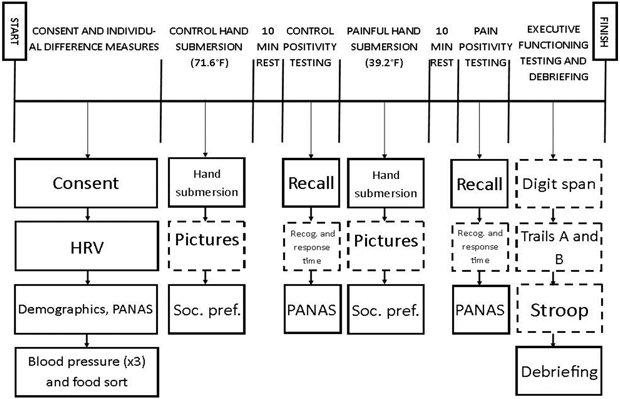
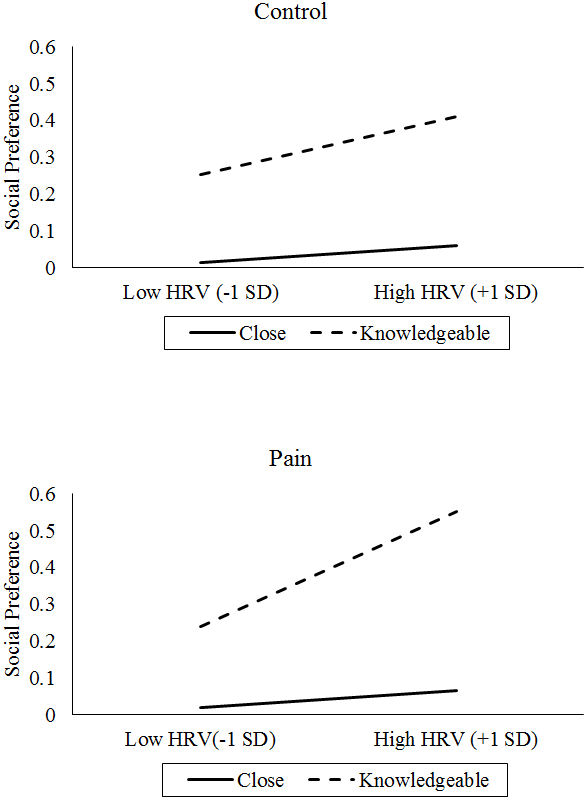
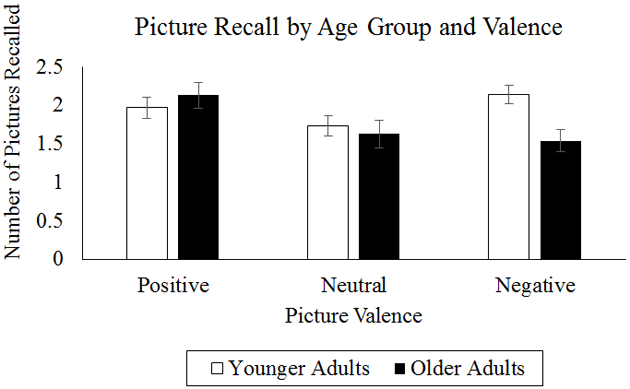
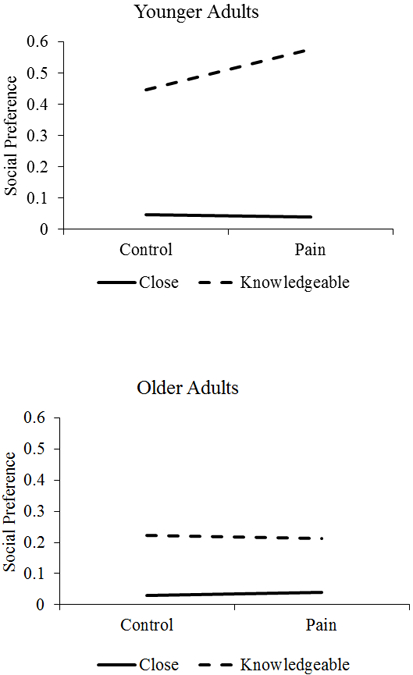
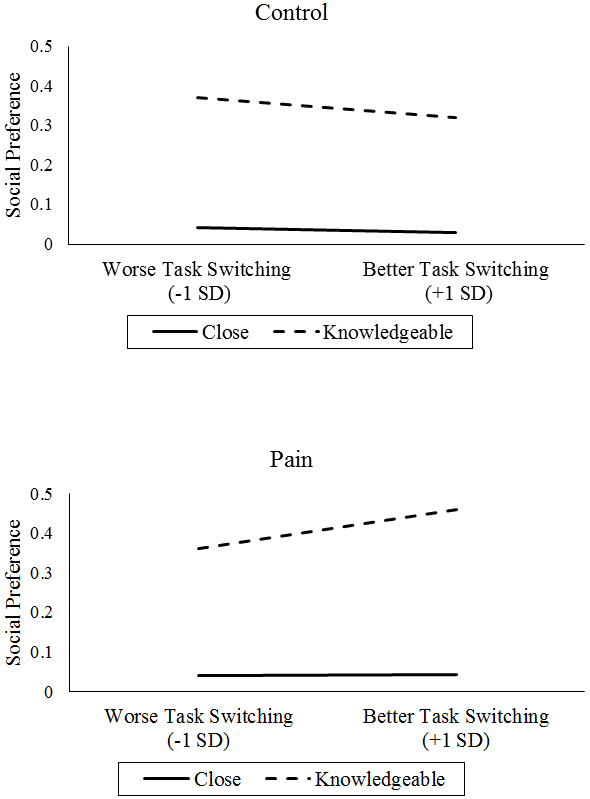
Over 70% of older adults report chronic or acute pain, and pain threatens affective wellbeing. The strategies older adults use to maintain affective wellbeing following acute pain remain unknown. Specific strategies that can be used to manage pain include recalling, recognizing, and responding to positive stimuli and prioritizing close over knowledgeable social partners. The study tested whether older adults used positivity-enhancing strategies and maintained affective wellbeing following acute pain better than younger adults. Fifty older (ages 65-85) and 50 younger (ages 18-30) pain-free adults experienced a control and a pain condition and were given the chance to employ positivity-enhancing strategies. Older and younger adults similarly used positivity-enhancing strategies following pain. Younger adults demonstrated reduced preference for knowledgeable social partners after experiencing pain. Pain-related affective changes were similar between age groups. Older and younger adults may cope with acute pain similarly, highlighting future directions for exploring age differences in pain coping.
超过 70%的老年人报告有慢性或急性疼痛,疼痛威胁着他们的情感健康。老年人在急性疼痛后保持情感健康所使用的策略尚不清楚。可以用来管理疼痛的具体策略包括回忆、识别和对积极刺激做出反应,并优先考虑亲密而非知识渊博的社交伙伴。该研究测试了老年人在经历急性疼痛后是否比年轻人更能使用积极增强策略并保持情感健康。50 名老年人(年龄 65-85 岁)和 50 名年轻人(年龄 18-30 岁)无疼痛者经历了对照和疼痛两种情况,并被给予使用积极增强策略的机会。在经历疼痛后,老年人和年轻人都同样使用了积极增强策略。年轻人在经历疼痛后对知识渊博的社交伙伴的偏好降低。疼痛相关的情感变化在两个年龄组之间相似。老年人和年轻人可能以相似的方式应对急性疼痛,这为探索疼痛应对中的年龄差异提供了未来的方向。