Department of Plant and Environmental Sciences, Clemson University, Clemson, South Carolina, United States of America.
Pee Dee Research and Education Center, Clemson University, Florence, South Carolina, United States of America.
PLoS One. 2019 Feb 22;14(2):e0212700. doi: 10.1371/journal.pone.0212700. eCollection 2019.
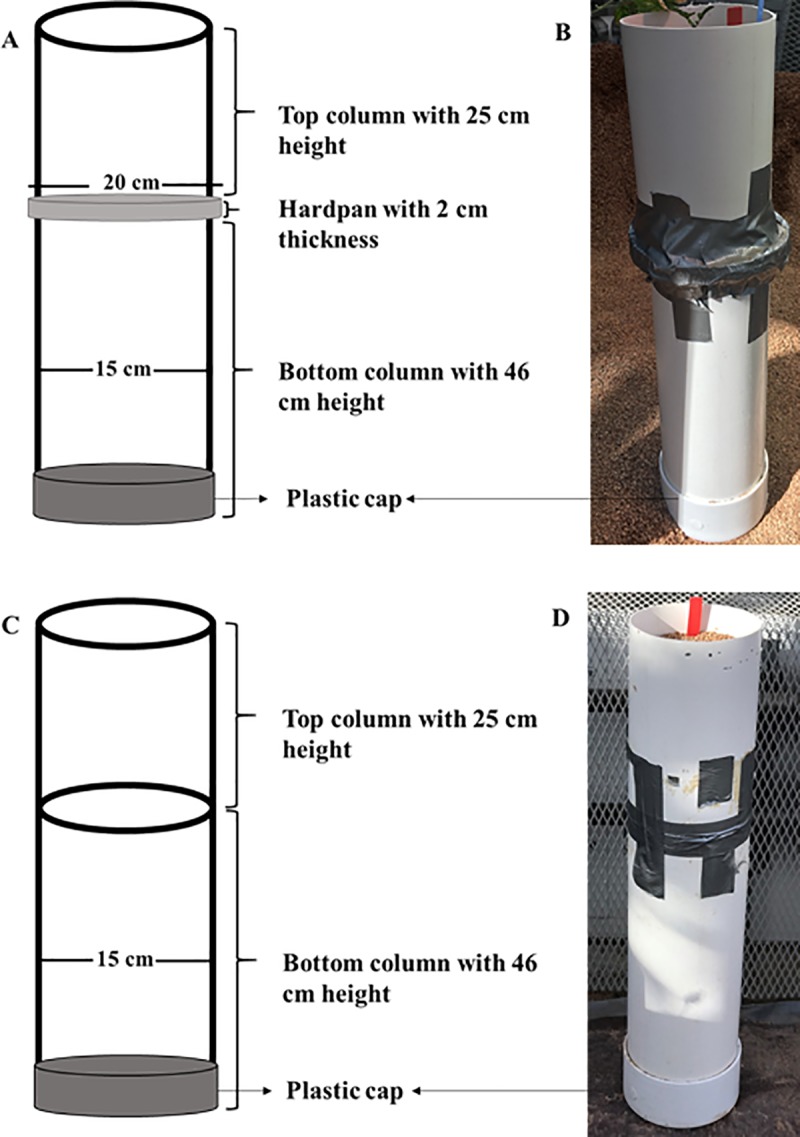
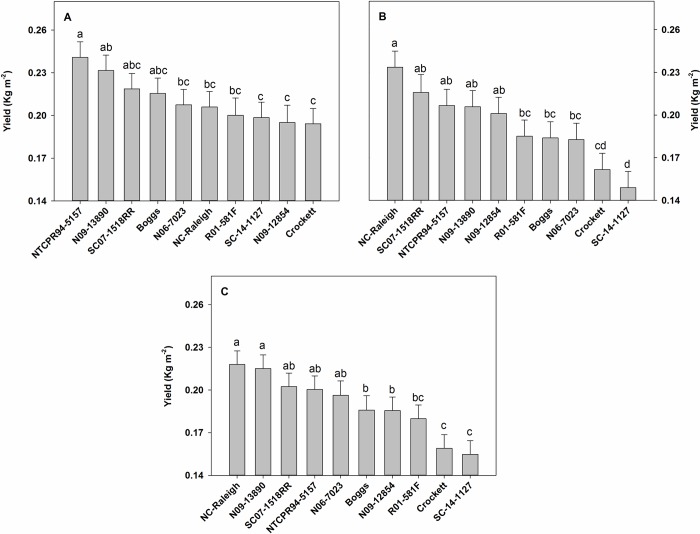
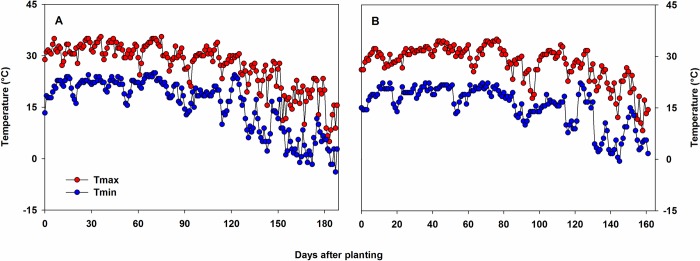
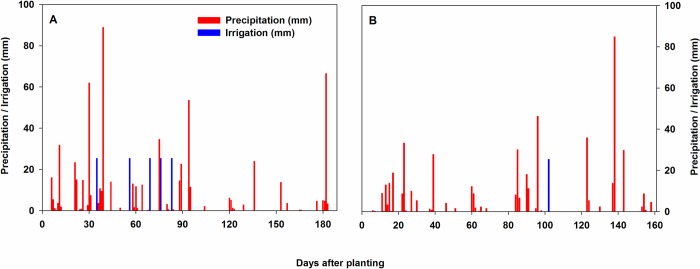
Drought stress has been identified as the major environmental factor limiting soybean [Glycine max (L.) Merr.] yield worldwide. Current breeding efforts in soybean largely focus on identifying genotypes with high seed yield and drought tolerance. Water use efficiency (WUE) that results in greater yield per unit rainfall is an important parameter in determining crop yields in many production systems, and is often related with crop drought tolerance. Even though roots are major plant organs that perceive and respond to drought stress, their utility in improving soybean yield and WUE under different environmental and management conditions are largely unclear. The objectives of this research was to evaluate soybean cultivars and breeding and germplasm lines for yield, WUE, root penetrability of hardpan, and root morphology. Field experiments were conducted at two locations in South Carolina (southeastern United States) during the 2017 cropping season to test the genotypes for yield and root morphology under irrigated and non-irrigated conditions. Two independent controlled-environmental experiments were conducted to test the genotypes for WUE and root penetrability of synthetic hardpans. The slow wilting lines NTCPR94-5157 and N09-13890 had equal or greater yield than the checks- cultivar NC-Raleigh and the elite South Carolina breeding line SC07-1518RR, under irrigated and non-irrigated conditions. The high yielding genotypes NTCPR94-5157, N09-13890, and SC07-1518RR exhibited root parsimony (reduced root development). This supported the recent hypothesis in literature that root parsimony would have adaptational advantage to improve yield under high input field conditions. The high yielding genotypes NTCPR94-5157, N09-13890, NC-Raleigh, and SC07-1518RR and a cultivar Boggs (intermediate in yield) possessed high WUE and had increased root penetrability of hardpans. These genotypes offer useful genetic materials for soybean breeding programs for improving yield, drought tolerance, and/or hardpan penetrability.
干旱胁迫已被确定为全球范围内限制大豆(Glycine max (L.) Merr.)产量的主要环境因素。目前,大豆的育种工作主要集中在鉴定具有高种子产量和耐旱性的基因型上。水分利用效率(WUE)是决定许多生产系统作物产量的一个重要参数,通常与作物耐旱性有关。尽管根是主要的植物器官,可以感知和响应干旱胁迫,但它们在不同的环境和管理条件下提高大豆产量和 WUE 的效用在很大程度上尚不清楚。本研究的目的是评估大豆品种和育种以及种质资源的产量、WUE、硬磐穿透性和根系形态。在南卡罗来纳州(美国东南部)的两个地点进行了田间试验,以在灌溉和非灌溉条件下测试基因型的产量和根系形态。进行了两个独立的受控环境实验,以测试基因型的 WUE 和合成硬磐的穿透性。在灌溉和非灌溉条件下,慢萎蔫系 NTCPR94-5157 和 N09-13890 的产量与对照品种 NC-Raleigh 和南卡罗来纳州的优良育种系 SC07-1518RR 相等或更高。高产基因型 NTCPR94-5157、N09-13890 和 SC07-1518RR 表现出根系简约性(根系发育减少)。这支持了文献中最近的假设,即根系简约性将具有适应优势,以在高投入田间条件下提高产量。高产基因型 NTCPR94-5157、N09-13890、NC-Raleigh 和 SC07-1518RR 以及品种 Boggs(产量中等)具有高 WUE 并且具有较高的硬磐穿透性。这些基因型为大豆的育种计划提供了有用的遗传材料,可用于提高产量、耐旱性和/或硬磐穿透性。