Gene Expression Laboratory, Salk Institute for Biological Studies, La Jolla, CA 92037, USA.
Storr Liver Centre, Westmead Institute for Medical Research and Sydney Medical School, University of Sydney, Westmead NSW 2145, Australia.
Cell. 2019 Feb 21;176(5):1098-1112.e18. doi: 10.1016/j.cell.2019.01.036.
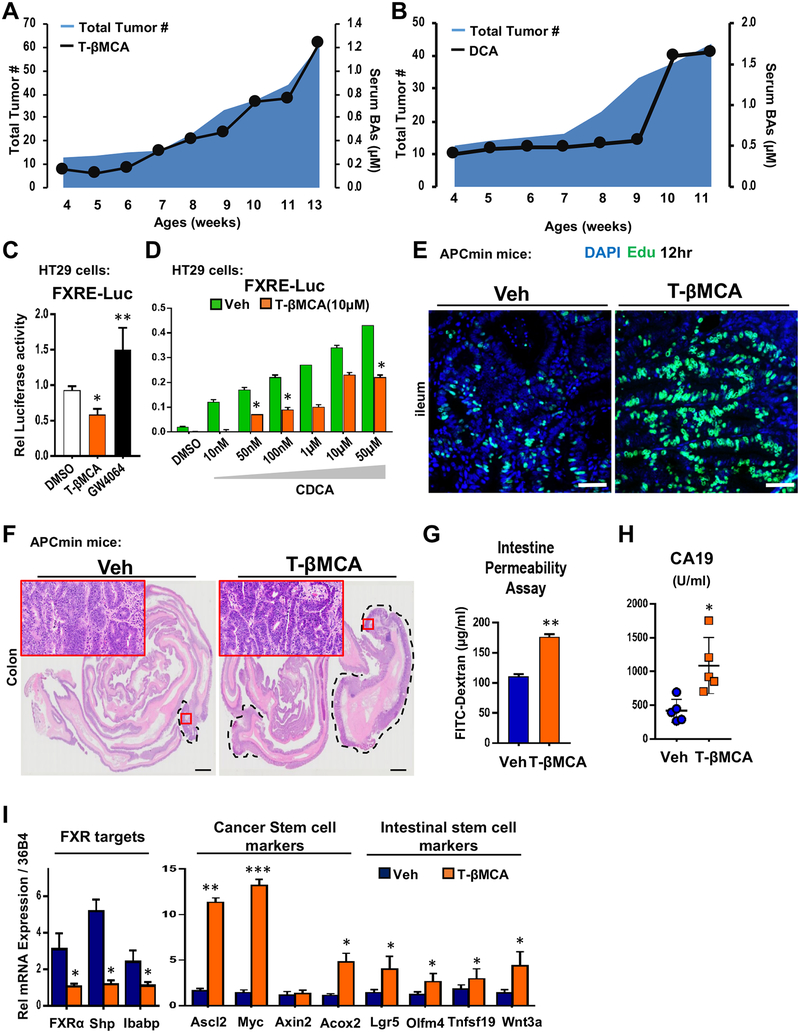
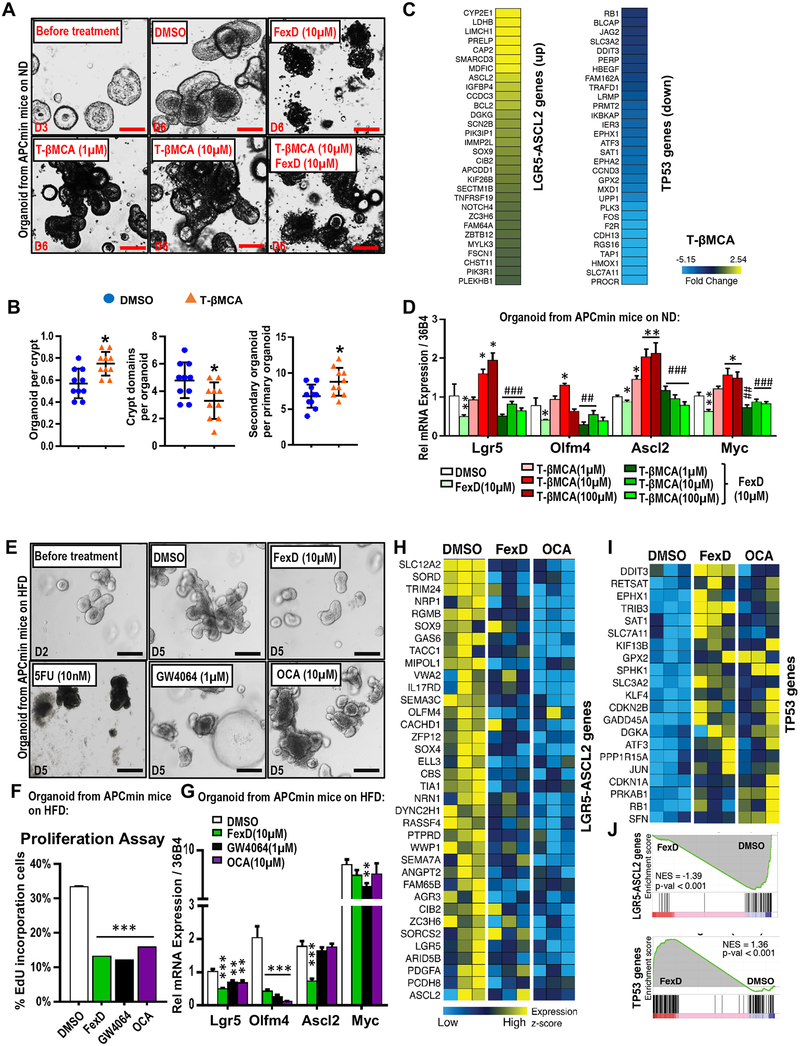
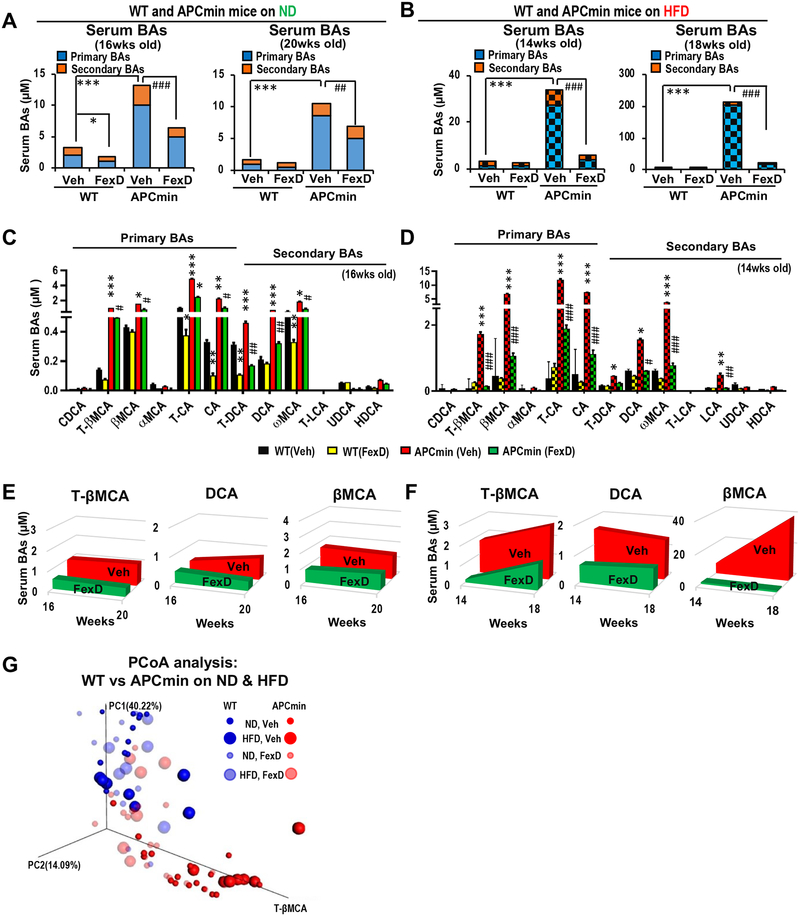
Increased levels of intestinal bile acids (BAs) are a risk factor for colorectal cancer (CRC). Here, we show that the convergence of dietary factors (high-fat diet) and dysregulated WNT signaling (APC mutation) alters BA profiles to drive malignant transformations in Lgr5-expressing (Lgr5) cancer stem cells and promote an adenoma-to-adenocarcinoma progression. Mechanistically, we show that BAs that antagonize intestinal farnesoid X receptor (FXR) function, including tauro-β-muricholic acid (T-βMCA) and deoxycholic acid (DCA), induce proliferation and DNA damage in Lgr5 cells. Conversely, selective activation of intestinal FXR can restrict abnormal Lgr5 cell growth and curtail CRC progression. This unexpected role for FXR in coordinating intestinal self-renewal with BA levels implicates FXR as a potential therapeutic target for CRC.
肠道胆汁酸(BAs)水平升高是结直肠癌(CRC)的一个风险因素。在这里,我们表明,饮食因素(高脂肪饮食)和 WNT 信号失调(APC 突变)的汇聚改变了 BA 谱,从而驱动 Lgr5 表达(Lgr5)癌症干细胞的恶性转化,并促进腺瘤-腺癌的进展。从机制上讲,我们表明,拮抗肠道法尼醇 X 受体(FXR)功能的 BA,包括牛磺-β-鼠胆酸(T-βMCA)和脱氧胆酸(DCA),可诱导 Lgr5 细胞增殖和 DNA 损伤。相反,肠道 FXR 的选择性激活可以限制异常 Lgr5 细胞的生长并遏制 CRC 的进展。FXR 在协调肠道自我更新与 BA 水平方面的这种意外作用暗示 FXR 可能是 CRC 的一个潜在治疗靶点。