Department of Biochemistry, University of Oxford, OX1 3QU Oxford, UK.
German Cancer Research Center (DKFZ), 69120 Heidelberg, Germany; Faculty of Biosciences, Heidelberg University, Heidelberg, Germany.
Mol Cell. 2019 Apr 4;74(1):196-211.e11. doi: 10.1016/j.molcel.2019.01.017. Epub 2019 Feb 21.
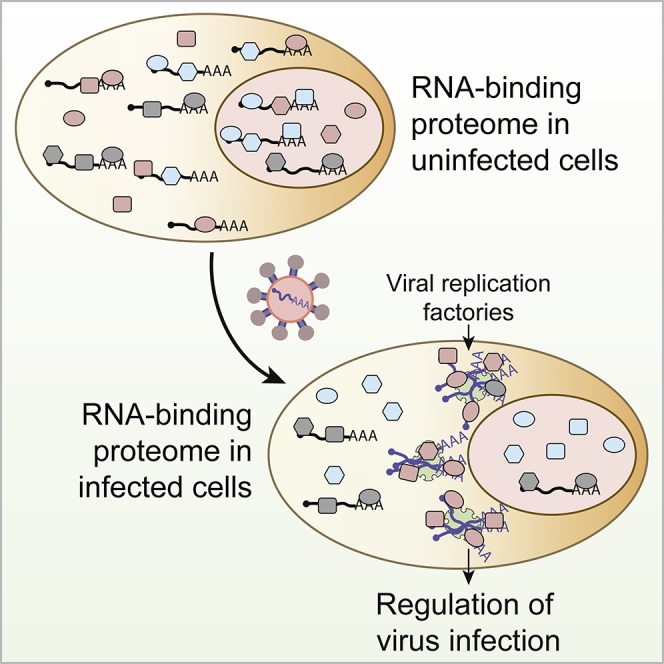
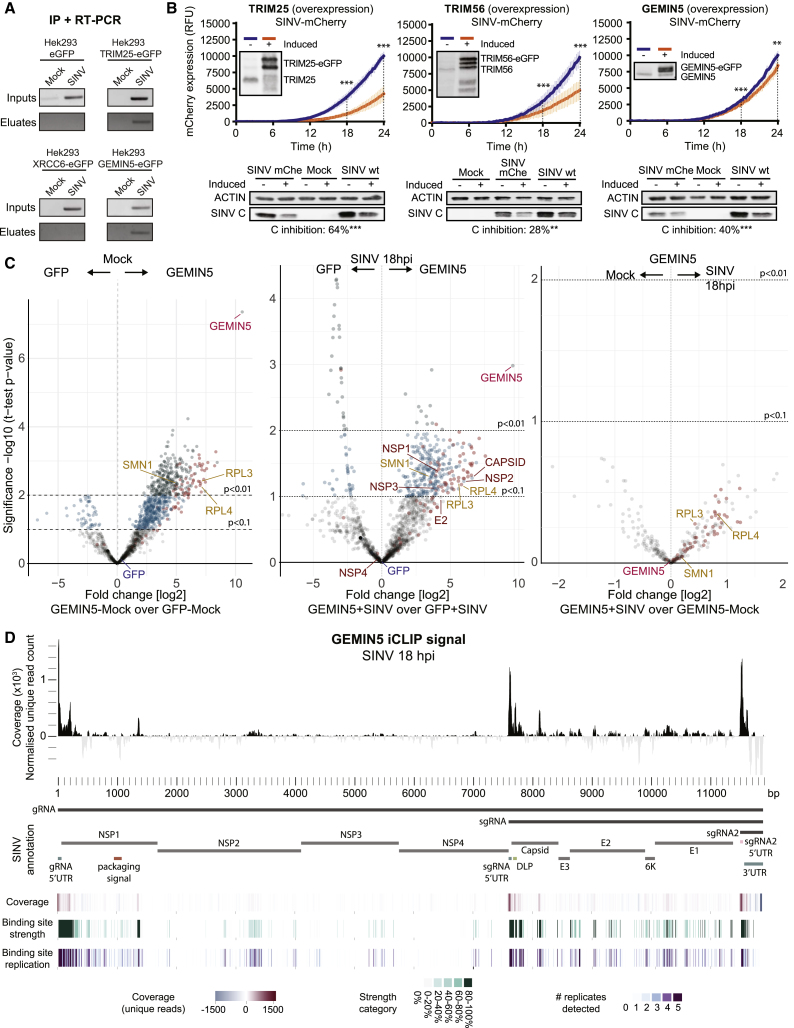
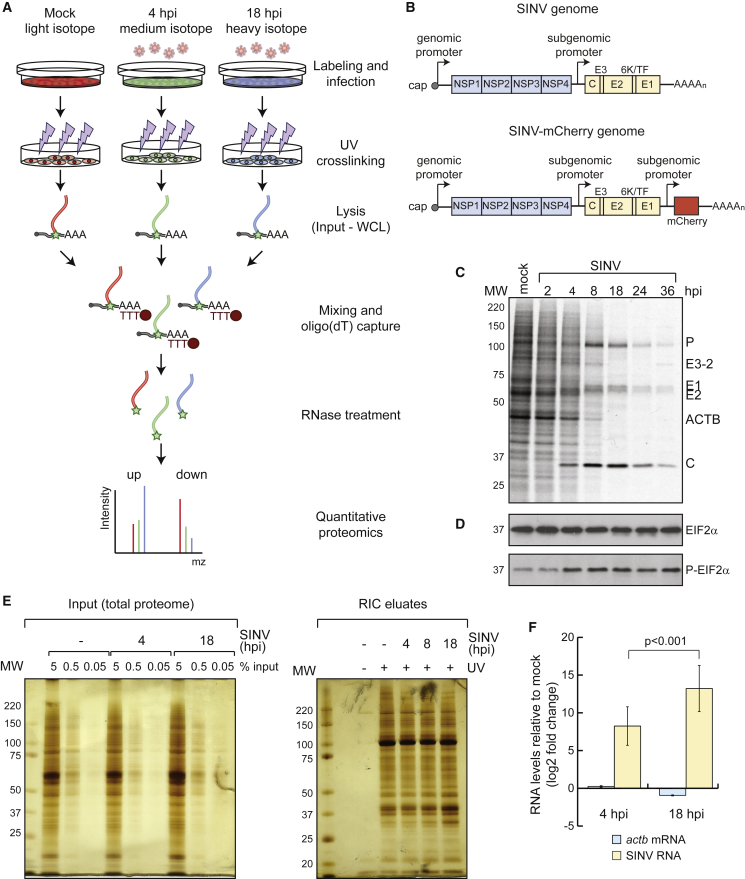
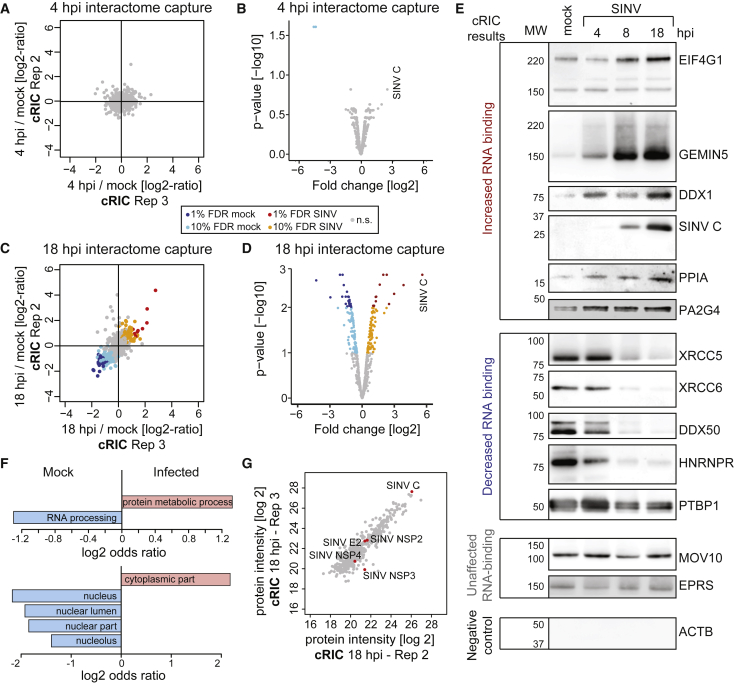
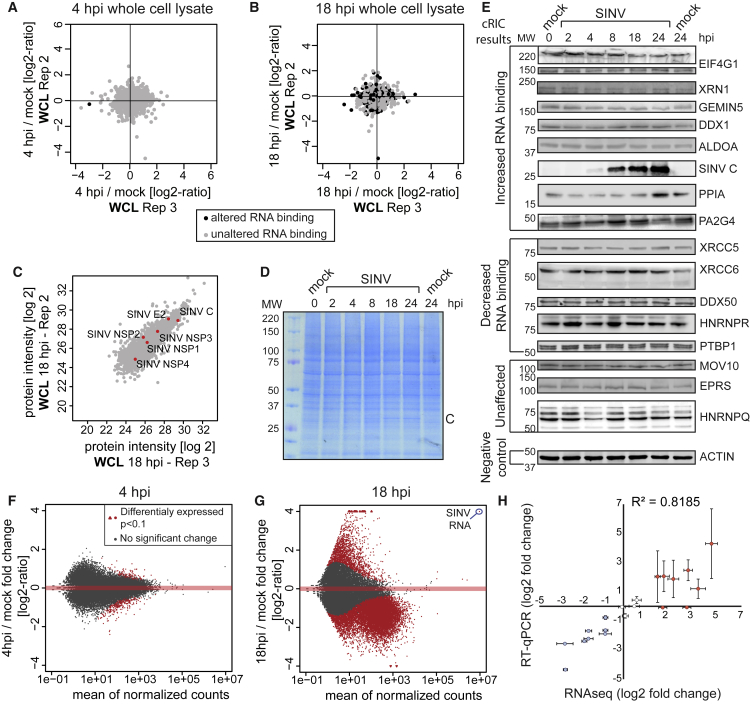
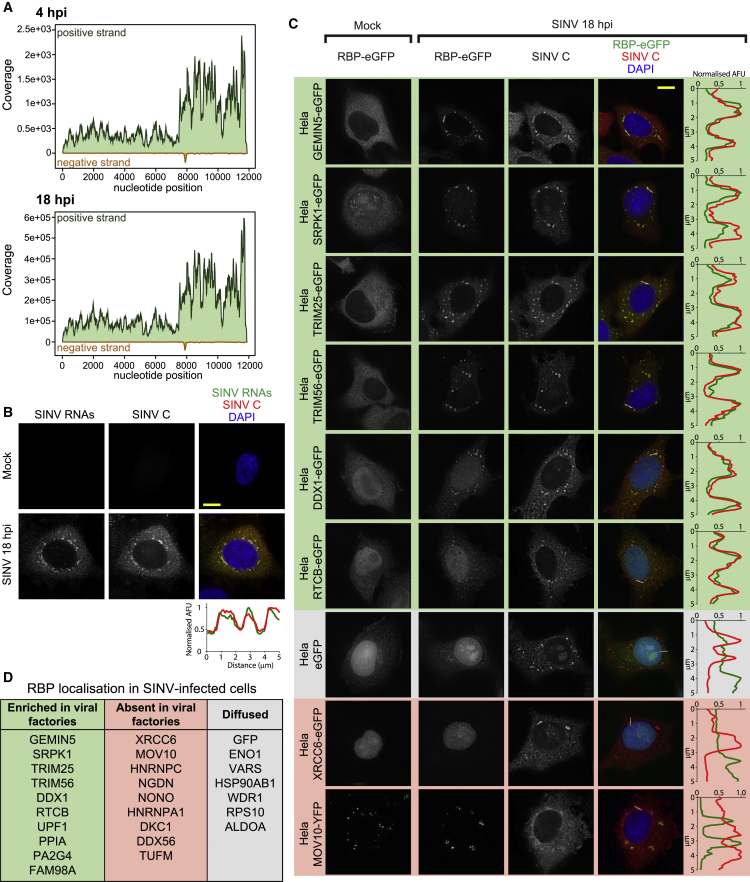
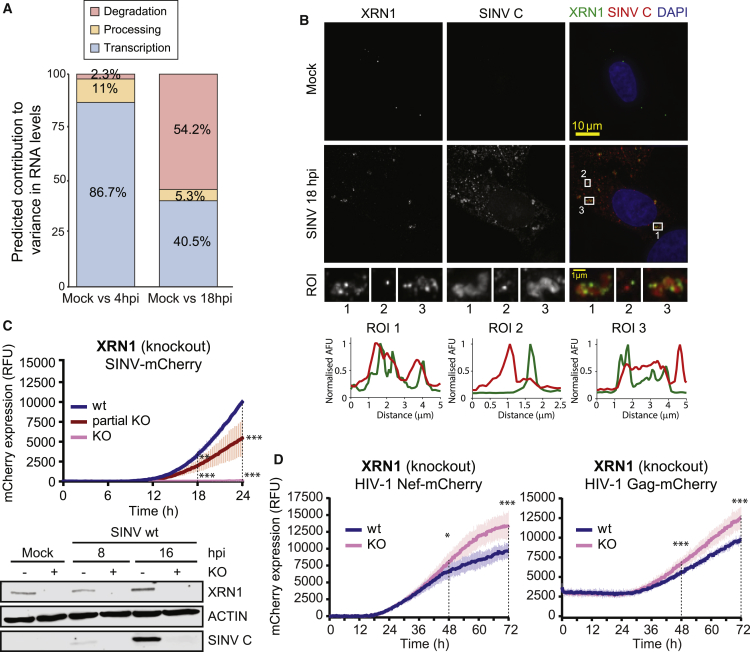
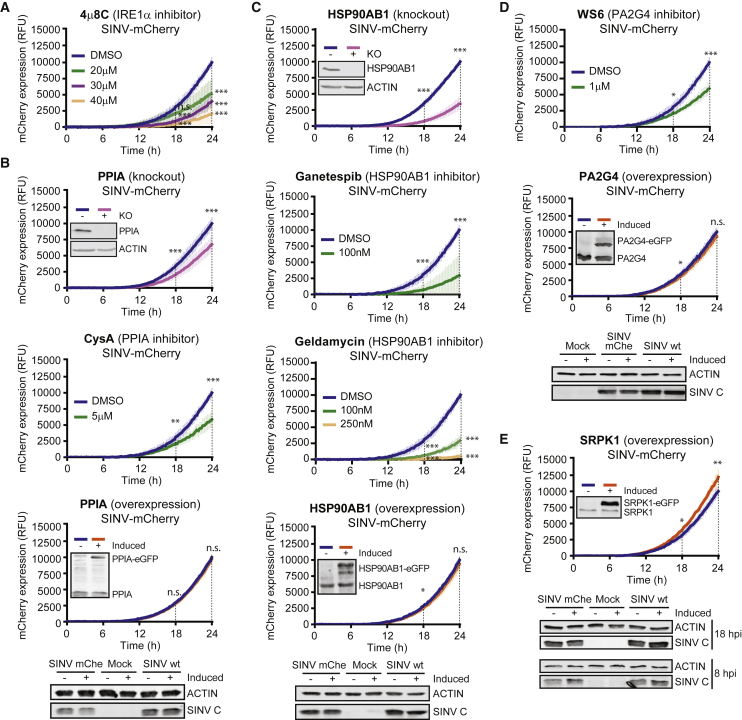
The compendium of RNA-binding proteins (RBPs) has been greatly expanded by the development of RNA-interactome capture (RIC). However, it remained unknown if the complement of RBPs changes in response to environmental perturbations and whether these rearrangements are important. To answer these questions, we developed "comparative RIC" and applied it to cells challenged with an RNA virus called sindbis (SINV). Over 200 RBPs display differential interaction with RNA upon SINV infection. These alterations are mainly driven by the loss of cellular mRNAs and the emergence of viral RNA. RBPs stimulated by the infection redistribute to viral replication factories and regulate the capacity of the virus to infect. For example, ablation of XRN1 causes cells to be refractory to SINV, while GEMIN5 moonlights as a regulator of SINV gene expression. In summary, RNA availability controls RBP localization and function in SINV-infected cells.
RNA 结合蛋白(RBPs)的纲要随着 RNA 互作组捕获(RIC)的发展而大大扩展。然而,尚不清楚 RBPs 的组成是否会响应环境干扰而发生变化,以及这些重排是否重要。为了回答这些问题,我们开发了“比较 RIC”并将其应用于受到称为辛德比斯(SINV)的 RNA 病毒挑战的细胞。超过 200 个 RBPs 在 SINV 感染时与 RNA 显示出不同的相互作用。这些改变主要是由细胞 mRNA 的丢失和病毒 RNA 的出现驱动的。受感染刺激的 RBPs 重新分布到病毒复制工厂,并调节病毒感染的能力。例如,XRN1 的缺失会导致细胞对 SINV 产生抗性,而 GEMIN5 则兼职作为 SINV 基因表达的调节剂。总之,RNA 的可用性控制了 SINV 感染细胞中 RBPs 的定位和功能。