Institute for Environmental Genomics, University of Oklahoma, Norman, Oklahoma, USA.
Department of Microbiology and Plant Biology, University of Oklahoma, Norman, Oklahoma, USA.
mBio. 2019 Feb 26;10(1):e02521-18. doi: 10.1128/mBio.02521-18.
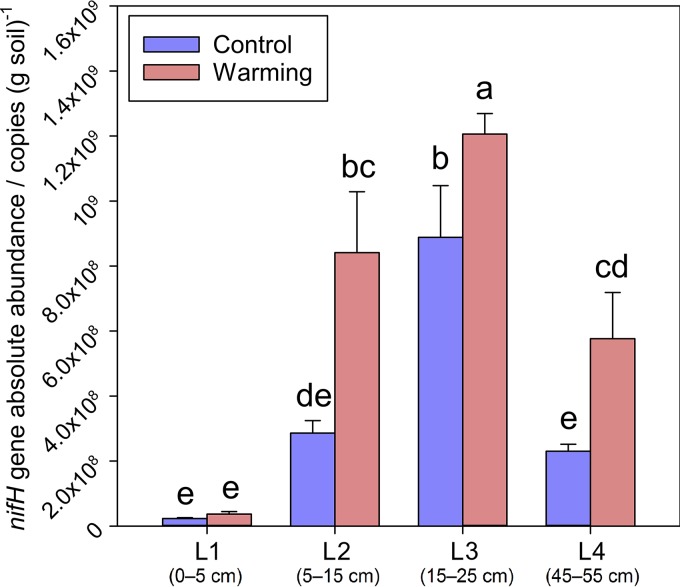
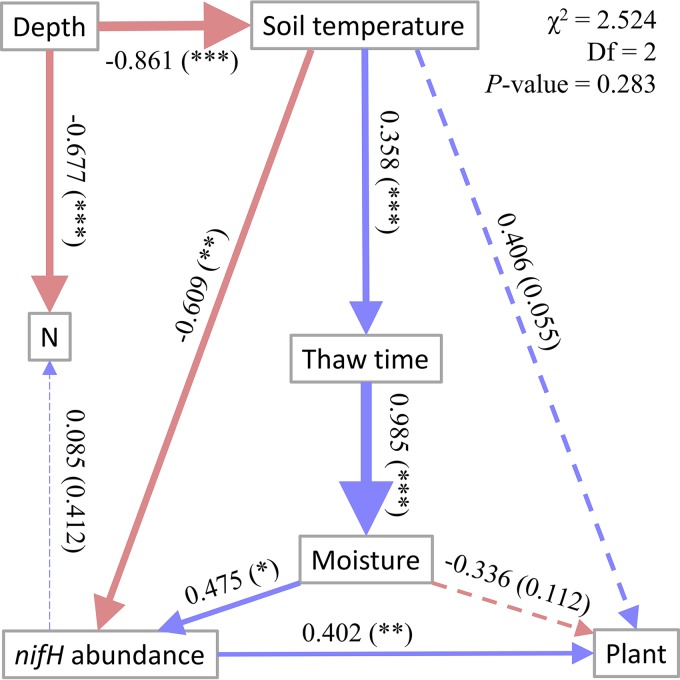
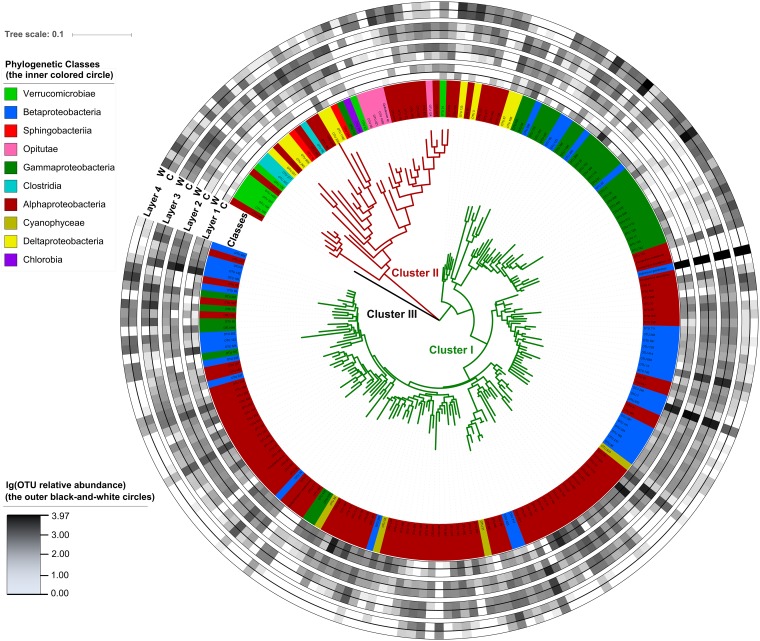
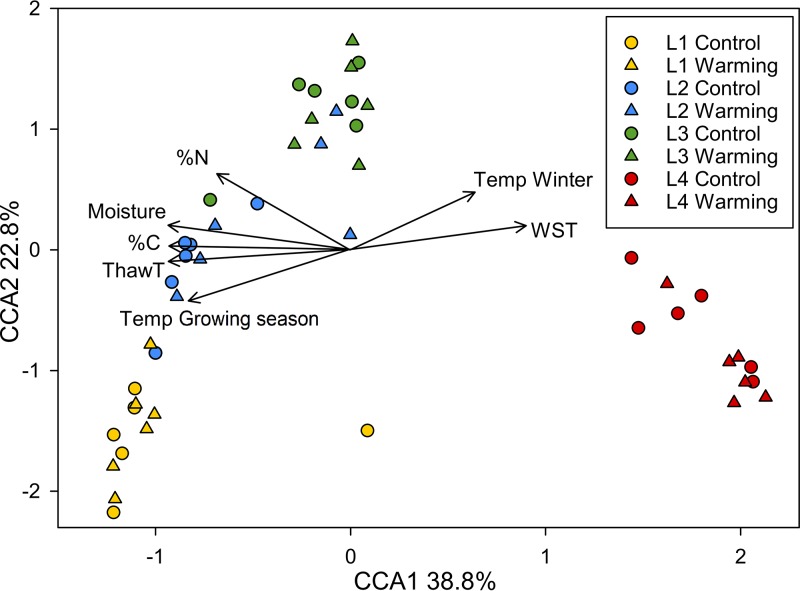
Tundra ecosystems are typically carbon (C) rich but nitrogen (N) limited. Since biological N fixation is the major source of biologically available N, the soil N-fixing (i.e., diazotrophic) community serves as an essential N supplier to the tundra ecosystem. Recent climate warming has induced deeper permafrost thaw and adversely affected C sequestration, which is modulated by N availability. Therefore, it is crucial to examine the responses of diazotrophic communities to warming across the depths of tundra soils. Herein, we carried out one of the deepest sequencing efforts of nitrogenase gene () to investigate how 5 years of experimental winter warming affects Alaskan soil diazotrophic community composition and abundance spanning both the organic and mineral layers. Although soil depth had a stronger influence on diazotrophic community composition than warming, warming significantly (0.05) enhanced diazotrophic abundance by 86.3% and aboveground plant biomass by 25.2%. Diazotrophic composition in the middle and lower organic layers, detected by sequencing and a microarray-based tool (GeoChip), was markedly altered, with an increase of α-diversity. Changes in diazotrophic abundance and composition significantly correlated with soil moisture, soil thaw duration, and plant biomass, as shown by structural equation modeling analyses. Therefore, more abundant diazotrophic communities induced by warming may potentially serve as an important mechanism for supplementing biologically available N in this tundra ecosystem. With the likelihood that changes in global climate will adversely affect the soil C reservoir in the northern circumpolar permafrost zone, an understanding of the potential role of diazotrophic communities in enhancing biological N fixation, which constrains both plant production and microbial decomposition in tundra soils, is important in elucidating the responses of soil microbial communities to global climate change. A recent study showed that the composition of the diazotrophic community in a tundra soil exhibited no change under a short-term (1.5-year) winter warming experiment. However, it remains crucial to examine whether the lack of diazotrophic community responses to warming is persistent over a longer time period as a possibly important mechanism in stabilizing tundra soil C. Through a detailed characterization of the effects of winter warming on diazotrophic communities, we showed that a long-term (5-year) winter warming substantially enhanced diazotrophic abundance and altered community composition, though soil depth had a stronger influence on diazotrophic community composition than warming. These changes were best explained by changes in soil moisture, soil thaw duration, and plant biomass. These results provide crucial insights into the potential factors that may impact future C and N availability in tundra regions.
苔原生态系统通常富含碳 (C) 但氮 (N) 有限。由于生物固氮是生物可利用氮的主要来源,因此土壤固氮(即固氮生物)群落是苔原生态系统的重要氮供应者。最近的气候变暖导致永冻层深度解冻,并对碳封存产生不利影响,而氮的可利用性会对其进行调节。因此,研究固氮生物群落对苔原生态土壤不同深度变暖的响应至关重要。在这里,我们进行了最深的氮酶基因测序工作之一,以研究 5 年的冬季变暖实验如何影响横跨有机层和矿物质层的阿拉斯加土壤固氮生物群落组成和丰度。尽管土壤深度对固氮生物群落组成的影响大于变暖,但变暖显著(0.05)增加了 86.3%的固氮生物丰度和 25.2%的地上植物生物量。通过 测序和基于微阵列的工具(GeoChip)检测到的中层和下层有机层的固氮生物组成发生了明显改变,α-多样性增加。结构方程模型分析表明,固氮生物丰度和组成的变化与土壤水分、土壤解冻持续时间和植物生物量显著相关。因此,变暖诱导的更丰富的固氮生物群落可能成为补充该苔原生态系统中生物可利用氮的重要机制。随着全球气候变化可能对北极永久冻土带土壤碳库产生不利影响,了解固氮生物群落在增强生物固氮方面的潜在作用对于阐明土壤微生物群落对全球气候变化的响应非常重要,生物固氮会限制苔原生态土壤中的植物生产和微生物分解。最近的一项研究表明,在一个短期(1.5 年)冬季变暖实验中,苔原土壤中固氮生物群落的组成没有发生变化。然而,重要的是要检查在较长时间内,固氮生物群落对变暖的反应是否持续不变,因为这可能是稳定苔原土壤碳的一个重要机制。通过详细描述冬季变暖对固氮生物群落的影响,我们表明,长期(5 年)冬季变暖显著增加了固氮生物的丰度并改变了群落组成,尽管土壤深度对固氮生物群落组成的影响大于变暖。这些变化可以通过土壤水分、土壤解冻持续时间和植物生物量的变化来最好地解释。这些结果为可能影响苔原地区未来碳氮供应的潜在因素提供了重要的见解。