Nanomaterials and Nanotechnology Research Center (CINN-CSIC), Universidad de Oviedo (UO), Principado de Asturias, Avda de la Vega 4-6, 33940, El Entrego, Spain.
Nanoker Research, Pol. Ind. Olloniego, Parcela 22A, Nave 5, 33660, Oviedo, Spain.
Sci Rep. 2019 Feb 26;9(1):2762. doi: 10.1038/s41598-019-39324-w.
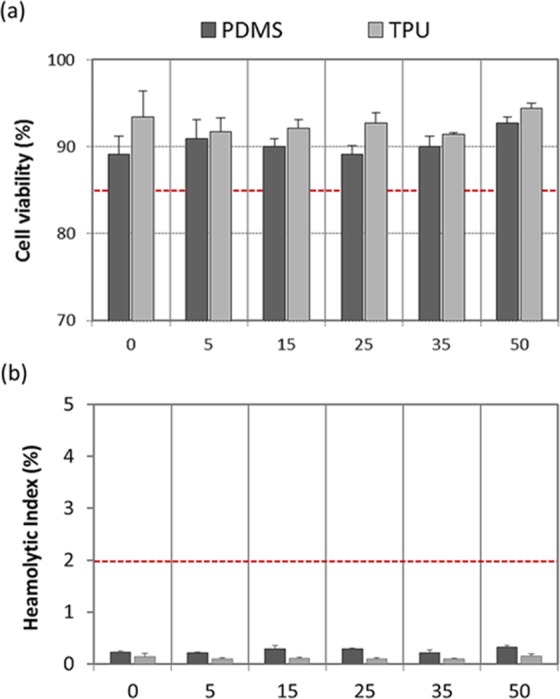
This study investigates a novel approach to controlling biofilms of the most frequent pathogens implicated in the etiology of biomaterials-associated infections. New bactericidal filler based on a non-toxic glass, belonging to BO-SiO-AlO-NaO-ZnO system, was used to formulate composites of the most widely used polymers in biomedical applications [i.e. thermoplastic polyurethane (TPU) and polydimethyl siloxane (PDMS)], with varying percentage by weight of the bactericidal glass (5, 15, 25, 35, 50%). Glass-filled polymer composites show dramatically restricted bacterial colonisation and biofilm formation. They exhibit time- and dose-dependent killing, with maximal action at 5 days. The highest activity was found against S.epidermidis biofilm (99% of reduction), one of the most common cause of nosocomial infections. The tensile properties of the obtained glass-filled composites are comparable with the literature data concerning polymeric biomaterials for medical implants and devices. In addition, all the materials presented in this research, revealed an excellent biocompatibility. This was disclosed by cell viability values above 70%, none alteration on erythrocyte membrane or cell functionality in contact with materials (haemolytic index 0-2%), and absence of interferences in blood coagulation (intrinsic, extrinsic and final pathways).
本研究探讨了一种控制生物膜的新方法,该方法针对的是与生物材料相关感染的病因学有关的最常见病原体。使用了一种基于无毒玻璃的新型杀菌填料,属于 BO-SiO-AlO-NaO-ZnO 系统,用于配制在生物医学应用中最广泛使用的聚合物的复合材料[即热塑性聚氨酯(TPU)和聚二甲基硅氧烷(PDMS)],杀菌玻璃的重量百分比变化为 5、15、25、35、50%。玻璃填充聚合物复合材料显示出明显受限制的细菌定植和生物膜形成。它们表现出时间和剂量依赖性的杀菌作用,在第 5 天达到最大效果。最高的活性是针对表皮葡萄球菌生物膜(减少 99%),这是医院获得性感染的最常见原因之一。所获得的玻璃填充复合材料的拉伸性能与有关医用植入物和装置的聚合物生物材料的文献数据相当。此外,本研究中所有的材料均表现出良好的生物相容性。细胞活力值超过 70%,与材料接触时红细胞膜或细胞功能无任何改变(溶血指数 0-2%),以及在血液凝固(内在、外在和最终途径)中没有干扰,表明了这一点。