Devers Eye Institute, Optic Nerve Head Research Laboratory, Legacy Research Institute, Portland, Oregon, United States.
Department of Ophthalmology, Second Xiangya Hospital, Central South University, Changsha, Hunan Province, People's Republic of China.
Invest Ophthalmol Vis Sci. 2019 Feb 1;60(2):795-806. doi: 10.1167/iovs.18-25407.
To quantify peripapillary choroidal thickness (PCT) and the factors that influence it in healthy participants who represent the racial and ethnic composition of the U.S. population.
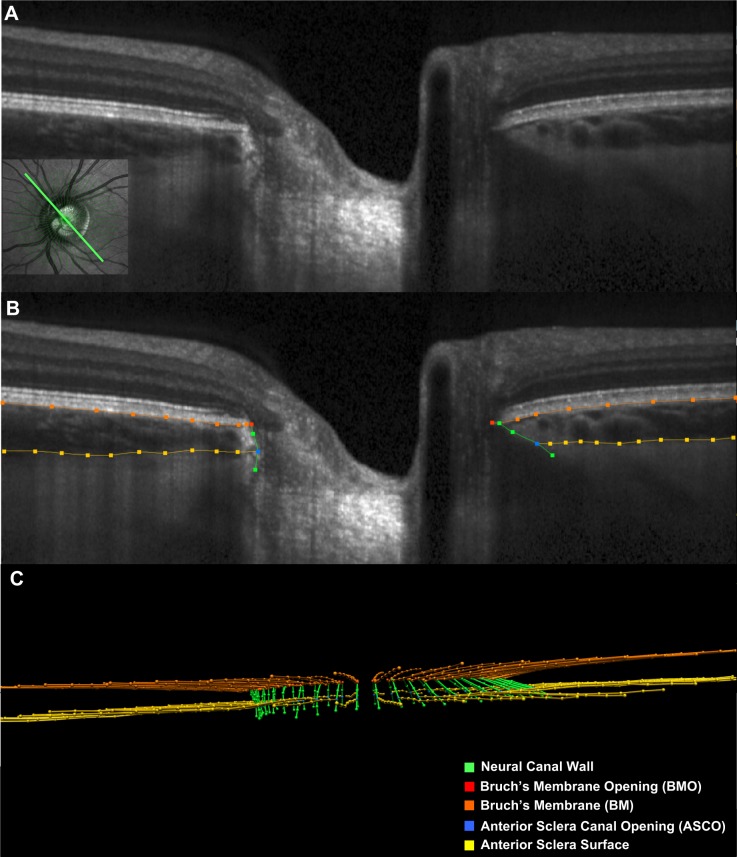
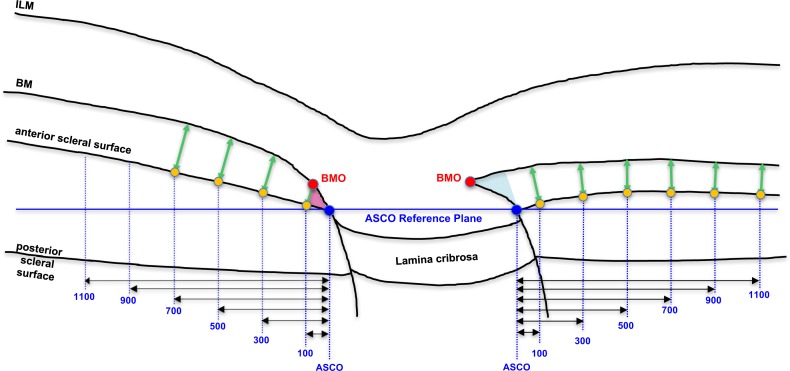
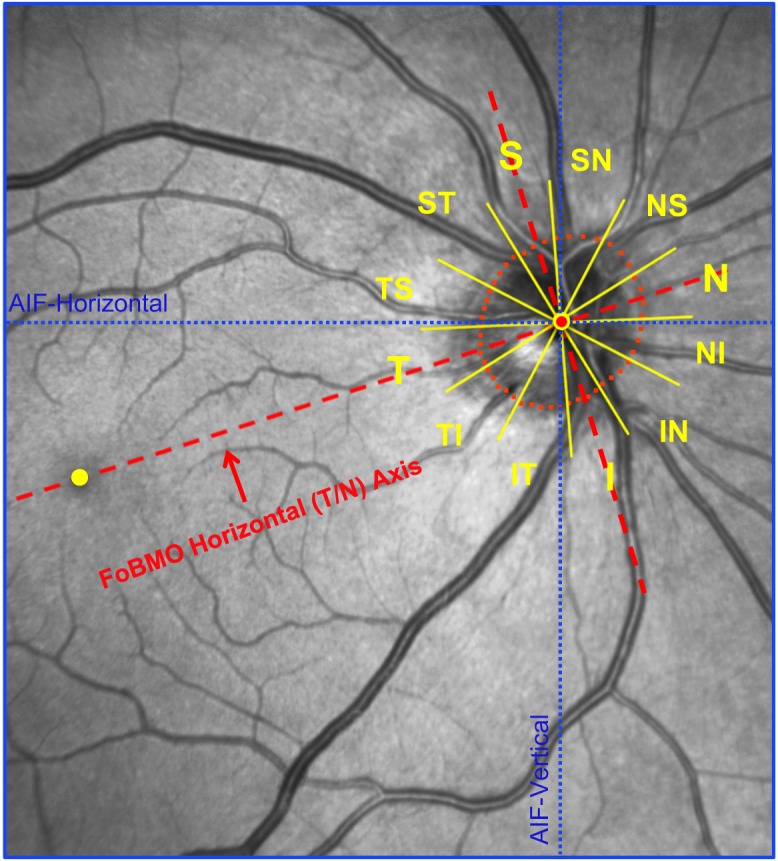
A total of 362 healthy participants underwent optical coherence tomography (OCT) enhanced depth imaging of the optic nerve head with a 24 radial B-scan pattern aligned to the fovea to Bruch's membrane opening axis. Bruch's membrane, anterior scleral canal opening (ASCO), and the anterior scleral surface were manually segmented. PCT was measured at 100, 300, 500, 700, 900, and 1100 μm from the ASCO globally and within 12 clock-hour sectors. The effects of age, axial length, intraocular pressure, ethnicity, sex, sector, and ASCO area on PCT were assessed by ANOVA and univariable and multivariable regressions.
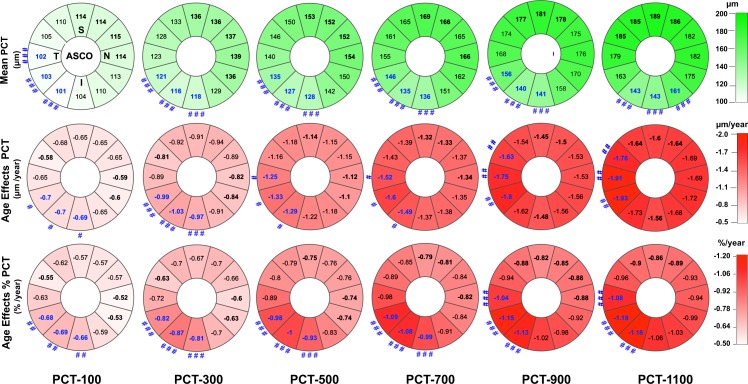
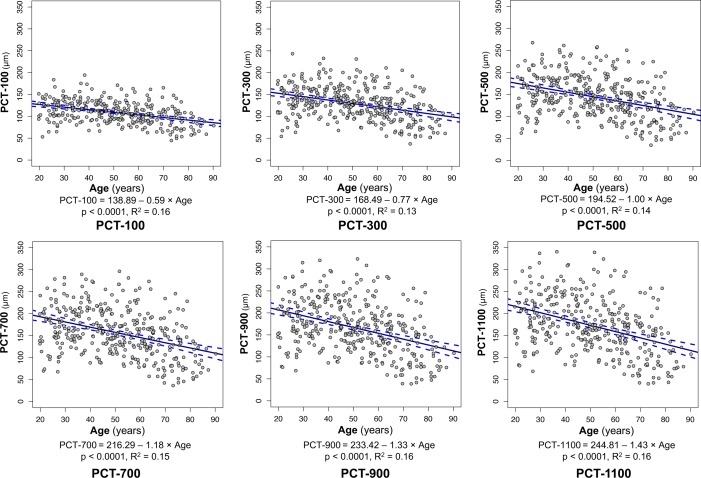
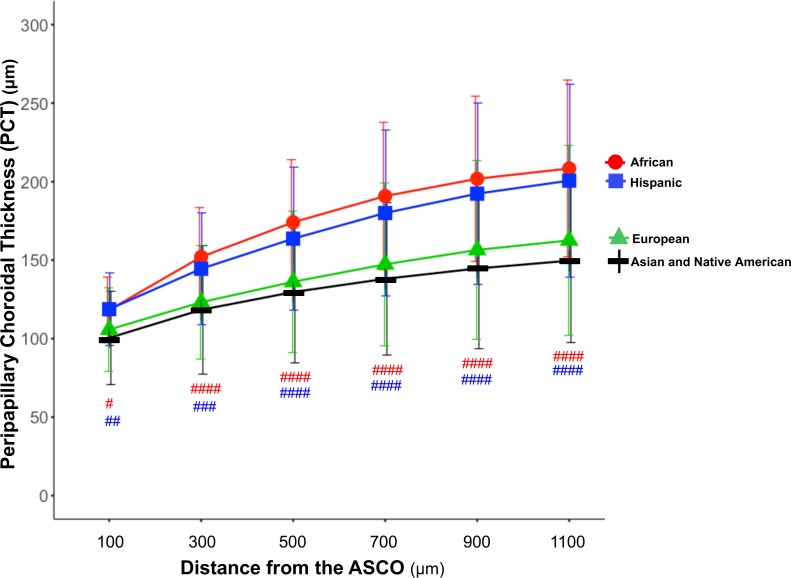
Globally, PCT was thicker further from the ASCO border and thinner with older age, longer axial length, larger ASCO area, European descent, and female sex. Among these effectors, age and axial length explained the greatest proportion of variance. The rate of age-related decline increased further from the ASCO border. Sectorally, the inferior-temporal sectors were thinnest (10.7%-20.0% thinner than the thickest sector) and demonstrated a higher rate of age-related loss (from 15.6% to 20.7% faster) at each ASCO distance.
In healthy eyes, PCT was thinnest in the inferior temporal sectors and thinner PCT was associated with older age, European descent, longer axial length, larger ASCO area, and female sex. Among these associations, age had the strongest influence, and its effect was greatest within the inferior temporal sectors.
定量测量代表美国人口种族和民族构成的健康参与者的视盘周围脉络膜厚度(PCT)及其影响因素。
共有 362 名健康参与者接受了视神经头光学相干断层扫描(OCT)增强深度成像检查,采用 24 条与黄斑至脉络膜开口轴对准的放射状 B 扫描模式。手动分割脉络膜、前巩膜管开口(ASCO)和前巩膜表面。在距 ASCO 全局和 12 个时钟小时扇区 100、300、500、700、900 和 1100μm 处测量 PCT。通过 ANOVA 和单变量及多变量回归评估年龄、眼轴长度、眼内压、种族、性别、扇区和 ASCO 面积对 PCT 的影响。
全局而言,PCT 距 ASCO 边界越远越厚,年龄越大、眼轴越长、ASCO 面积越大、欧洲血统和女性性别越薄。在这些影响因素中,年龄和眼轴长度解释了最大的方差比例。从 ASCO 边界向外,与年龄相关的下降速度进一步增加。在扇形方面,下颞部最薄(比最厚的扇形薄 10.7%-20.0%),并且在每个 ASCO 距离处,与年龄相关的损失速度更快(从 15.6%增加到 20.7%)。
在健康的眼睛中,下颞部的 PCT 最薄,较薄的 PCT 与年龄较大、欧洲血统、眼轴较长、ASCO 面积较大和女性性别有关。在这些关联中,年龄的影响最大,其影响在颞下区最大。