Clar Kim L, Hinterleitner Clemens, Schneider Pascal, Salih Helmut R, Maurer Stefanie
Clinical Collaboration Unit Translational Immunology, German Cancer Consortium (DKTK) and German Cancer Research Center (DKFZ), Partner site Tuebingen 72076, Germany.
Department of Hematology and Oncology, Eberhard Karls University, Tuebingen 72076, Germany.
Cancers (Basel). 2019 Feb 26;11(3):277. doi: 10.3390/cancers11030277.
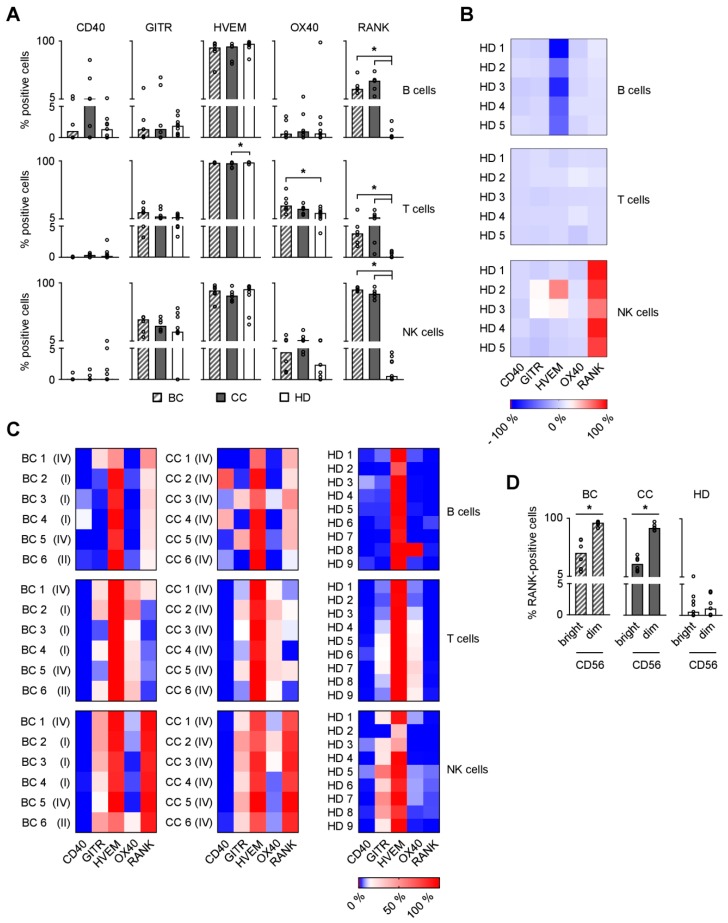
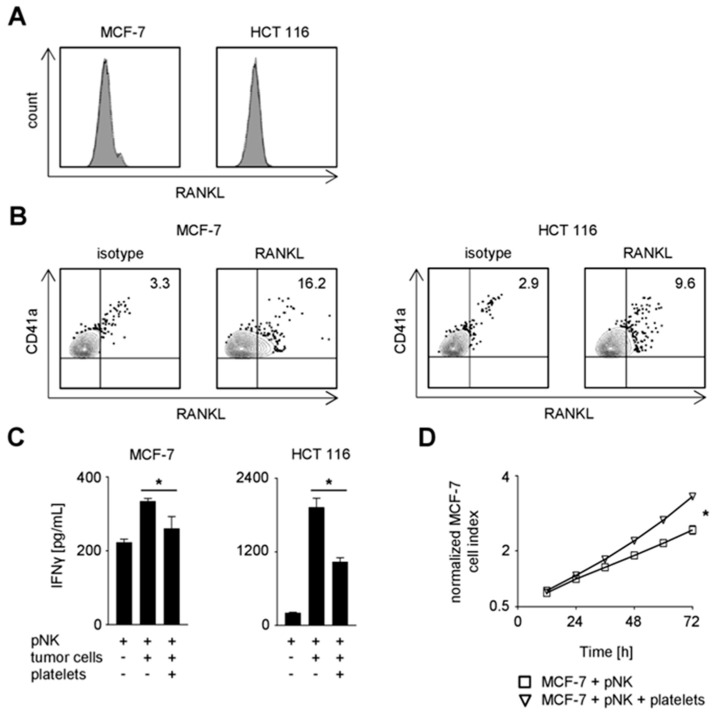
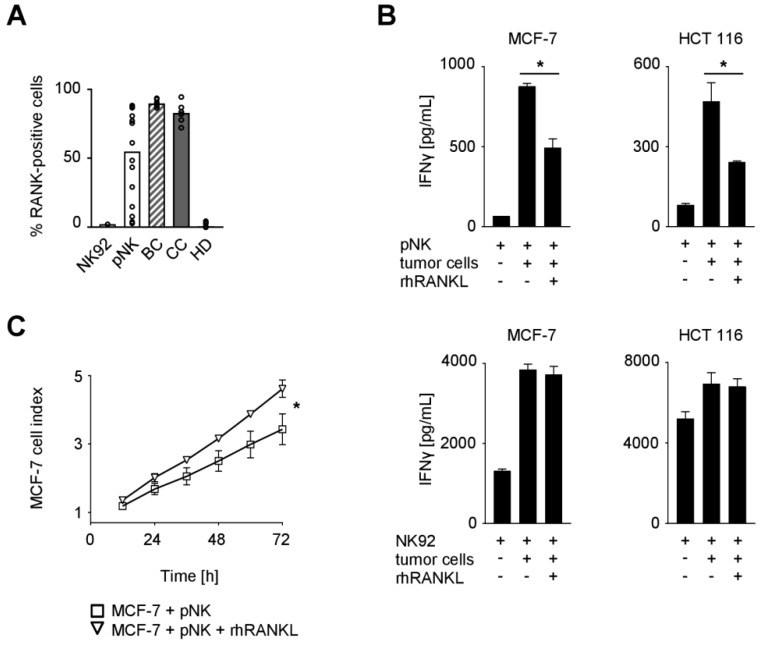
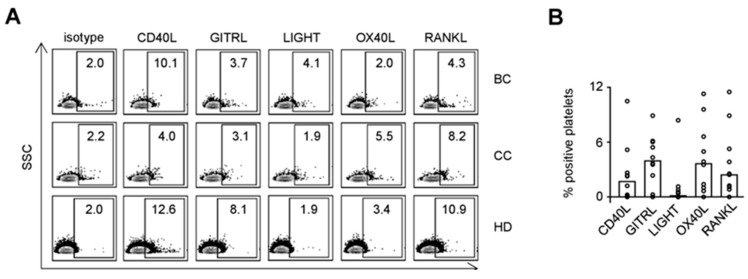
NK cells play an important role in tumor immunosurveillance. Their reactivity is governed by various activating and inhibitory surface receptors, which include several members of the TNF/TNF receptor family. For more than 50 years, it has been recognized that tumor immunosurveillance and in particular NK cell antitumor reactivity is largely influenced by platelets, but the underlying mechanisms remain to be fully elucidated. Here we report that upon activation, which reportedly occurs following interaction with cancer cells, platelets upregulate the TNF family member RANKL. Comparative analysis of the expression of RANK among different NK cell subsets and RANKL on platelets in cancer patients and healthy volunteers revealed a distinct malignant phenotype, and platelet-derived RANKL was found to inhibit the activity of normal NK cells against cancer cells. Notably, NK cell antitumor reactivity could be partially restored by application of denosumab, a RANKL-neutralizing antibody approved for treatment of benign and malignant osteolysis. Together, our data not only unravel a novel mechanism of tumor immune evasion mediated by platelets, but they also provide a functional explanation for the clinical observation that denosumab, beyond protecting from bone loss, may prolong disease-free survival in patients with solid tumors.
自然杀伤细胞(NK细胞)在肿瘤免疫监视中发挥着重要作用。它们的反应性受多种激活和抑制性表面受体的调控,其中包括肿瘤坏死因子(TNF)/TNF受体家族的多个成员。五十多年来,人们已经认识到肿瘤免疫监视,尤其是NK细胞的抗肿瘤反应性在很大程度上受血小板影响,但其潜在机制仍有待充分阐明。在此我们报告,据报道血小板在与癌细胞相互作用后被激活,激活后的血小板会上调TNF家族成员核因子κB受体活化因子配体(RANKL)。对癌症患者和健康志愿者不同NK细胞亚群中的RANK表达以及血小板上RANKL表达的比较分析揭示了一种独特的恶性表型,并且发现血小板衍生的RANKL会抑制正常NK细胞对癌细胞的活性。值得注意的是,通过应用地诺单抗(一种被批准用于治疗良性和恶性骨溶解的RANKL中和抗体),NK细胞的抗肿瘤反应性可以部分恢复。总之,我们的数据不仅揭示了血小板介导的肿瘤免疫逃逸新机制,还为临床观察提供了功能上的解释,即地诺单抗除了预防骨质流失外,还可能延长实体瘤患者的无病生存期。