Institute of Biology Leiden, Leiden University, Leiden, The Netherlands.
PLoS Pathog. 2019 Feb 28;15(2):e1007329. doi: 10.1371/journal.ppat.1007329. eCollection 2019 Feb.
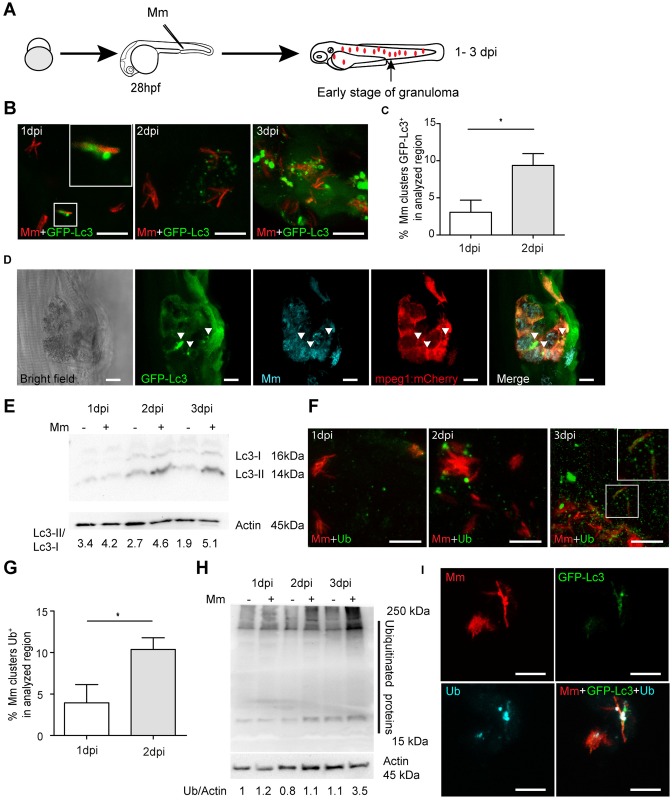
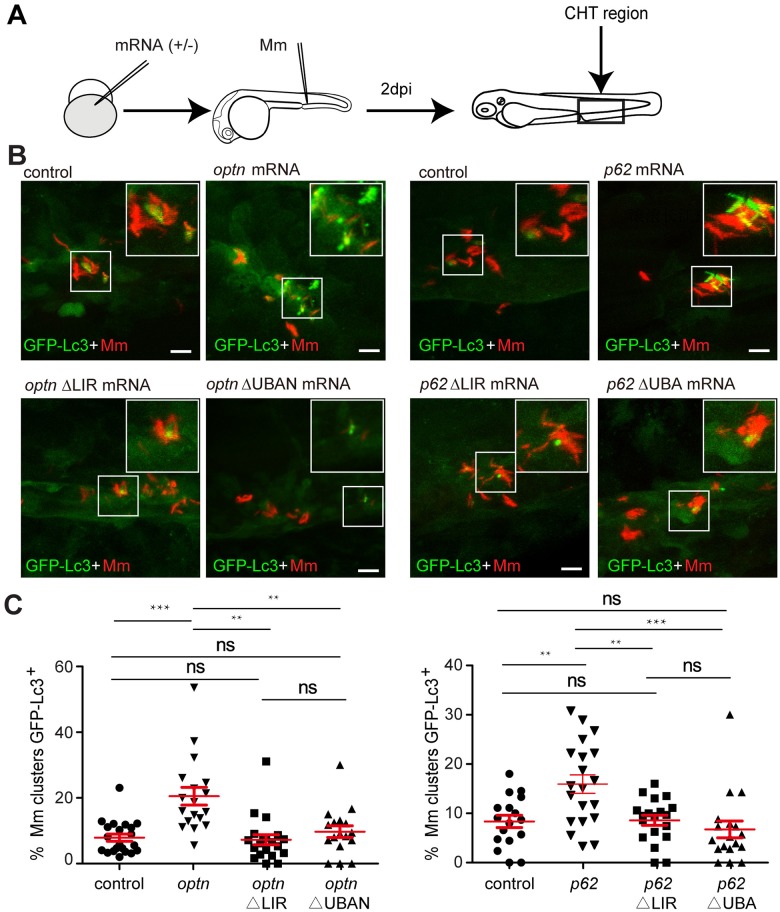
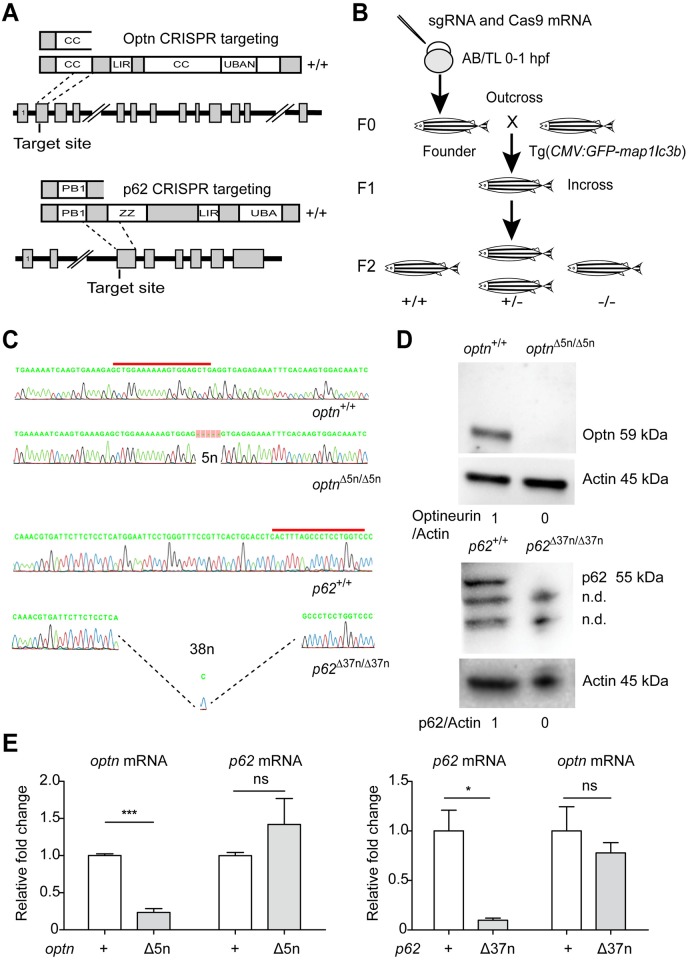
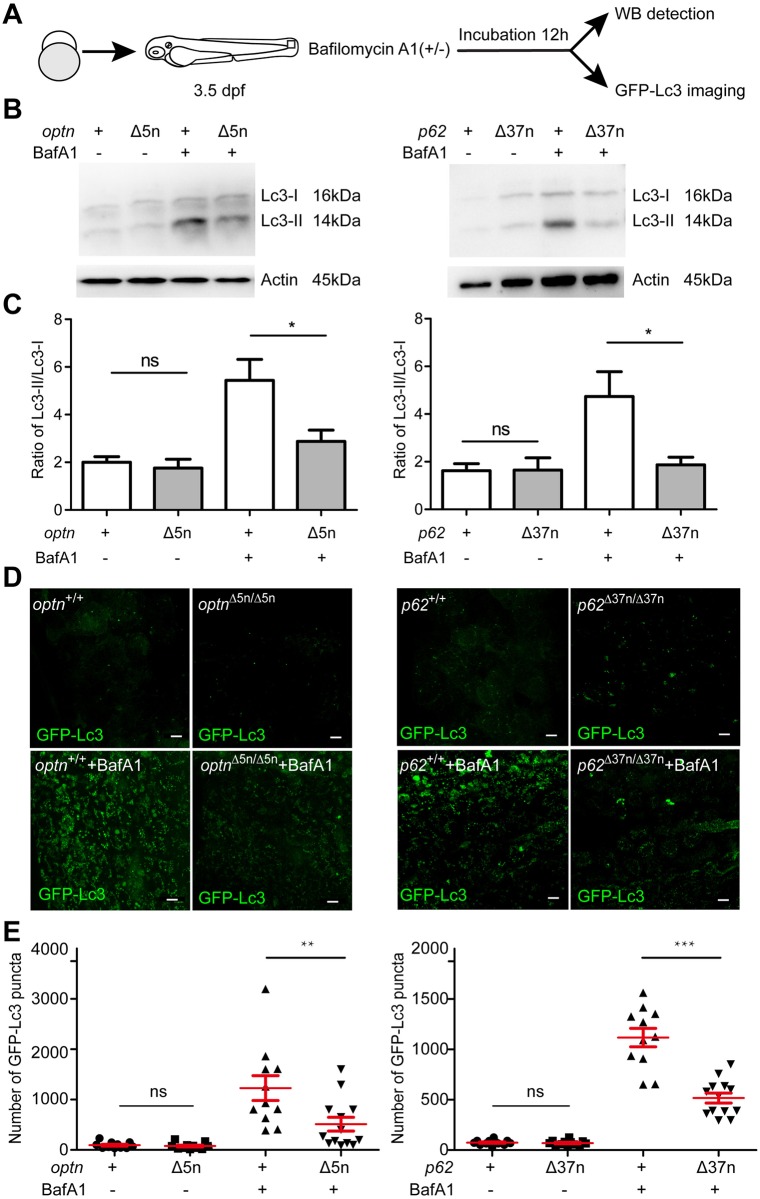
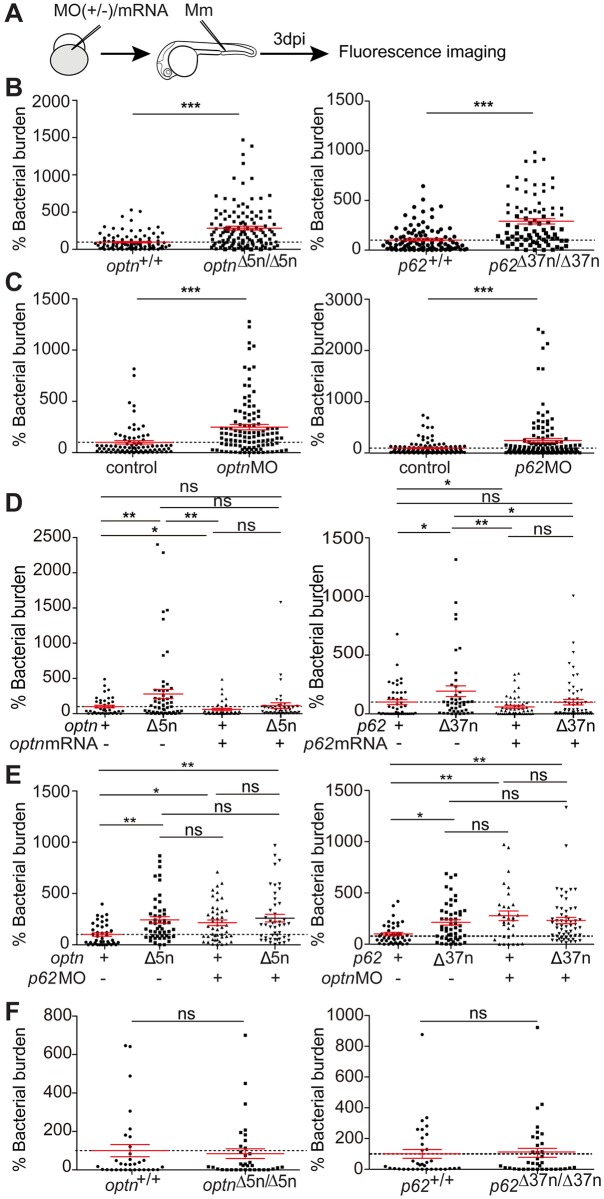
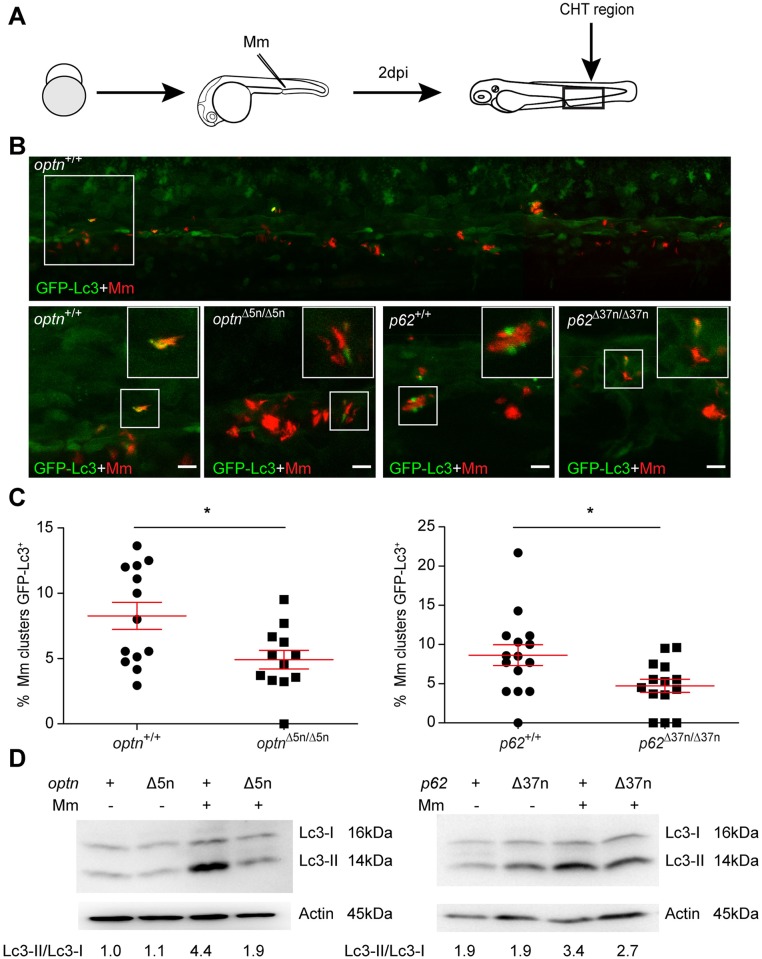
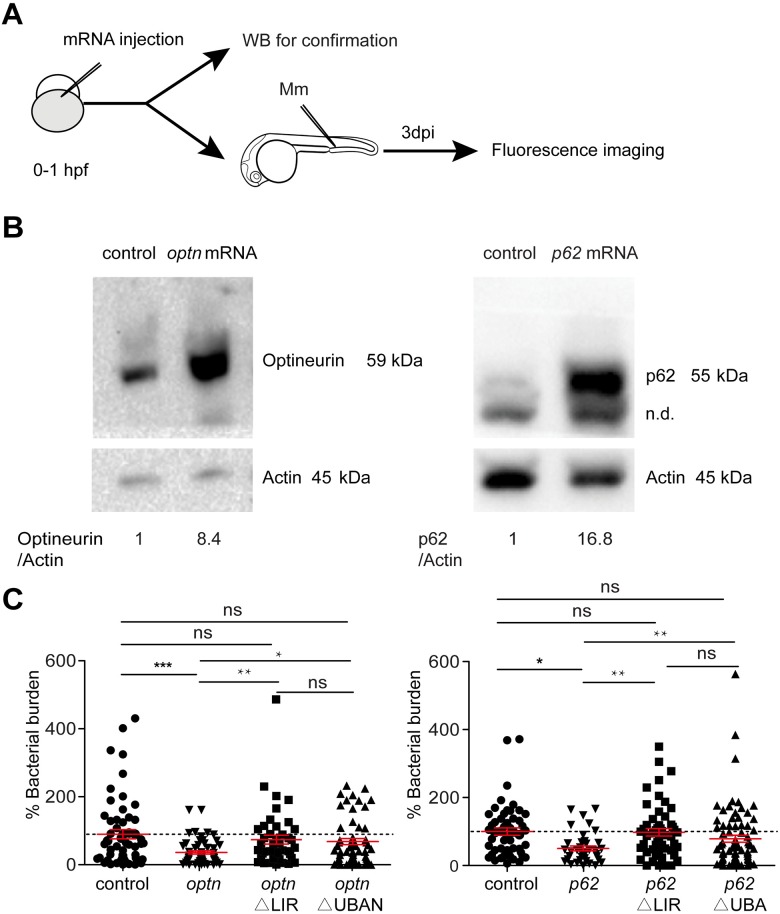
Mycobacterial pathogens are the causative agents of chronic infectious diseases like tuberculosis and leprosy. Autophagy has recently emerged as an innate mechanism for defense against these intracellular pathogens. In vitro studies have shown that mycobacteria escaping from phagosomes into the cytosol are ubiquitinated and targeted by selective autophagy receptors. However, there is currently no in vivo evidence for the role of selective autophagy receptors in defense against mycobacteria, and the importance of autophagy in control of mycobacterial diseases remains controversial. Here we have used Mycobacterium marinum (Mm), which causes a tuberculosis-like disease in zebrafish, to investigate the function of two selective autophagy receptors, Optineurin (Optn) and SQSTM1 (p62), in host defense against a mycobacterial pathogen. To visualize the autophagy response to Mm in vivo, optn and p62 zebrafish mutant lines were generated in the background of a GFP-Lc3 autophagy reporter line. We found that loss-of-function mutation of optn or p62 reduces autophagic targeting of Mm, and increases susceptibility of the zebrafish host to Mm infection. Transient knockdown studies confirmed the requirement of both selective autophagy receptors for host resistance against Mm infection. For gain-of-function analysis, we overexpressed optn or p62 by mRNA injection and found this to increase the levels of GFP-Lc3 puncta in association with Mm and to reduce the Mm infection burden. Taken together, our results demonstrate that both Optn and p62 are required for autophagic host defense against mycobacterial infection and support that protection against tuberculosis disease may be achieved by therapeutic strategies that enhance selective autophagy.
分枝杆菌病原体是结核病和麻风病等慢性传染病的病原体。自噬最近成为一种针对这些细胞内病原体的固有防御机制。体外研究表明,从吞噬体逃到细胞质中的分枝杆菌被泛素化,并被选择性自噬受体靶向。然而,目前没有体内证据表明选择性自噬受体在防御分枝杆菌方面的作用,自噬在控制分枝杆菌病方面的重要性仍然存在争议。在这里,我们使用导致斑马鱼发生类似结核病的海分枝杆菌(Mycobacterium marinum,Mm),来研究两种选择性自噬受体 Optineurin(Optn)和 SQSTM1(p62)在宿主防御分枝杆菌病原体中的作用。为了在体内可视化 Mm 引发的自噬反应,在 GFP-Lc3 自噬报告系的背景下生成了 optn 和 p62 斑马鱼突变系。我们发现 Optn 或 p62 的功能丧失突变减少了 Mm 的自噬靶向,并增加了斑马鱼宿主对 Mm 感染的易感性。瞬时敲低研究证实了这两种选择性自噬受体都需要宿主抵抗 Mm 感染。为了进行功能获得分析,我们通过 mRNA 注射过表达 Optn 或 p62,发现这会增加与 Mm 相关的 GFP-Lc3 斑点水平,并减少 Mm 感染负担。总之,我们的结果表明,Optn 和 p62 都需要自噬来宿主防御分枝杆菌感染,并且支持通过增强选择性自噬的治疗策略可能实现对结核病的保护。