Kim Soohyun, Thomasy Sara M, Raghunathan Vijay Krishna, Teixeira Leandro B C, Moshiri Ala, FitzGerald Paul, Murphy Christopher J
Department of Surgical and Radiological Sciences, School of Veterinary Medicine, University of California Davis, Davis, CA.
Department of Ophthalmology & Vision Science, School of Medicine, School of Medicine, University of California Davis, Davis, CA.
Mol Vis. 2019 Feb 17;25:129-142. eCollection 2019.
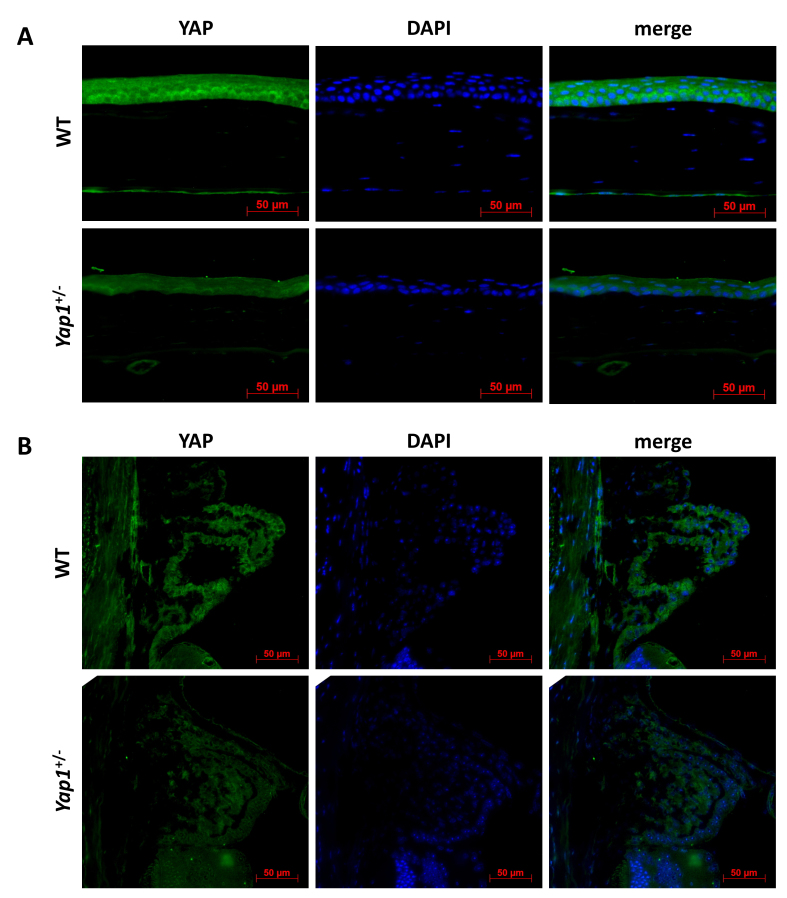
To identify the effects of a single copy deletion of ( ) in the mouse eye, the ocular phenotypic consequences of were determined in detail.
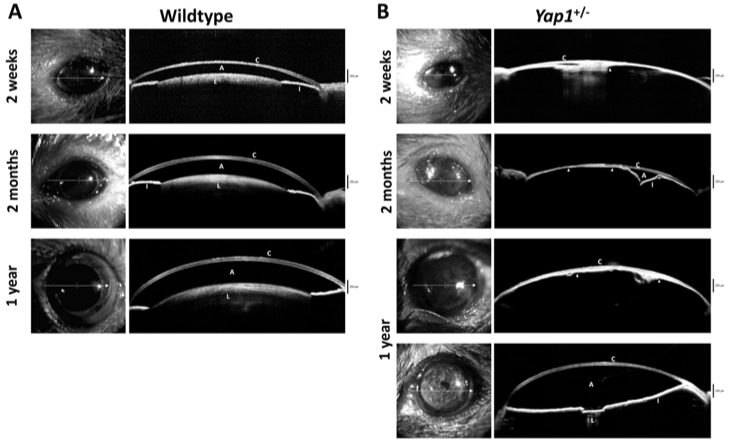
Complete ophthalmic examinations, as well as corneal esthesiometry, the phenol red thread test, intraocular pressure, and Fourier-domain optical coherence tomography were performed on and age-matched wild-type (WT) mice between eyelid opening (2 weeks after birth) and adulthood (2 months and 1 year after birth). Following euthanasia, enucleated eyes were characterized histologically.
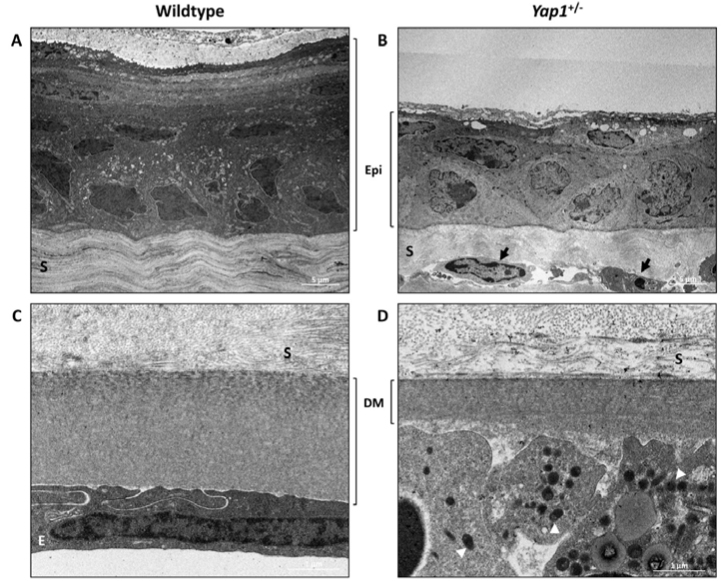
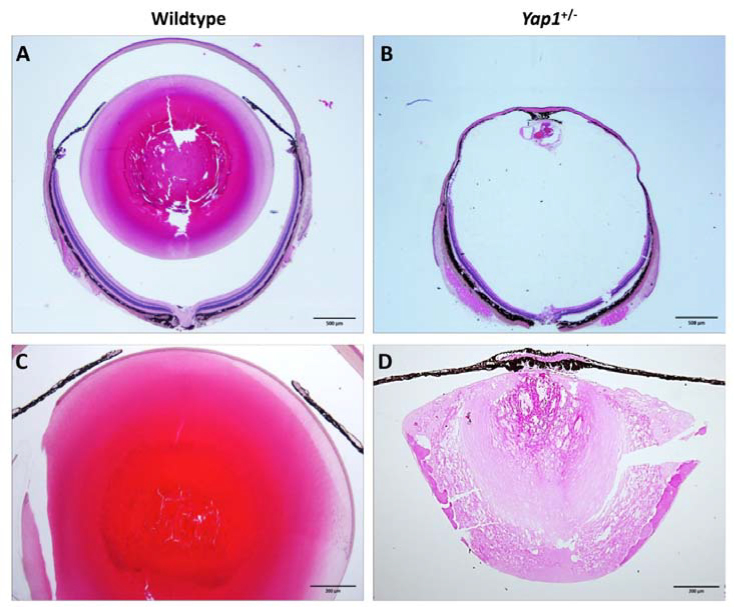
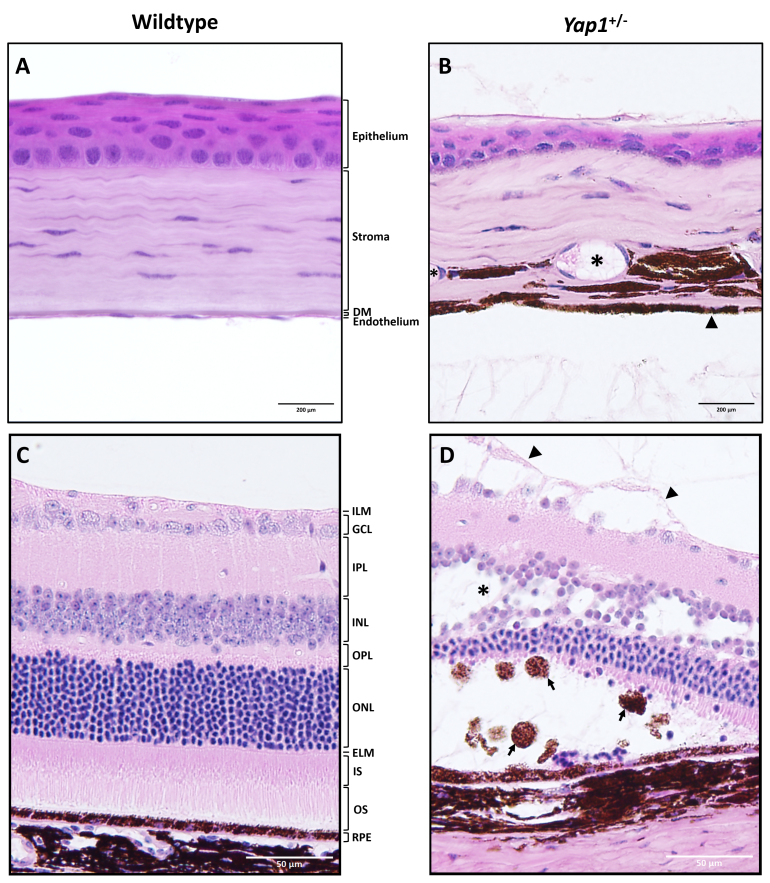
Microphthalmia with small palpebral fissures, corneal fibrosis, and reduced corneal sensation were common findings in the mice. Generalized corneal fibrosis precluded clinical examination of the posterior structures. Histologically, thinning and keratinization of the corneal epithelium were observed in the mice in comparison with the WT mice. Distorted collagen fiber arrangement and hypercellularity of keratocytes were observed in the stroma. Descemet's membrane was extremely thin and lacked an endothelial layer in the mice. The iris was adherent to the posterior cornea along most of its surface creating a distorted contour. Most of the eyes were microphakic with swollen fibers and bladder cells. The retinas of the mice were normal at 2 weeks and 2 months of age, but the presence of retinal abnormalities, including retinoschisis and detachment, was markedly increased in the mice at 1 year of age.
The results show that the heterozygous deletion of the gene in mice leads to complex ocular abnormalities, including microphthalmia, corneal fibrosis, anterior segment dysgenesis, and cataract.
为了确定小鼠眼中( )单拷贝缺失的影响,详细测定了( )的眼部表型后果。
对出生后睁眼(出生后2周)至成年期(出生后2个月和1年)的( )小鼠和年龄匹配的野生型(WT)小鼠进行了全面的眼科检查,以及角膜感觉测量、酚红棉线试验、眼压测量和傅里叶域光学相干断层扫描。安乐死后,对摘除的眼球进行组织学特征分析。
小眼症伴睑裂小、角膜纤维化和角膜感觉减退是( )小鼠的常见表现。广泛性角膜纤维化妨碍了对后部结构的临床检查。组织学上,与WT小鼠相比,( )小鼠角膜上皮变薄并角化。基质中观察到胶原纤维排列紊乱和角膜细胞增多。( )小鼠的Descemet膜极薄且缺乏内皮细胞层。虹膜大部分表面与角膜后部粘连,轮廓扭曲。大多数( )小鼠眼球晶状体小,纤维和囊状细胞肿胀。( )小鼠在2周龄和2月龄时视网膜正常,但在1岁时,( )小鼠视网膜异常(包括视网膜劈裂和脱离)的发生率明显增加。
结果表明,小鼠中该基因的杂合缺失导致复杂的眼部异常,包括小眼症、角膜纤维化、眼前节发育异常和白内障。