Liver Unit, Queen Elizabeth Hospital, University Hospitals Birmingham National Health Service Foundation Trust, Birmingham, United Kingdom.
National Institute for Health Research Birmingham Biomedical Research Centre, University Hospitals Birmingham National Health Service Foundation Trust, Birmingham, United Kingdom.
Liver Transpl. 2019 Jul;25(7):1007-1022. doi: 10.1002/lt.25439.
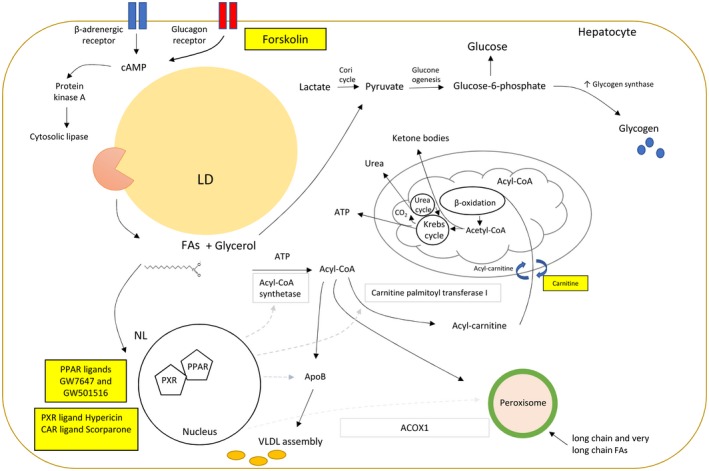
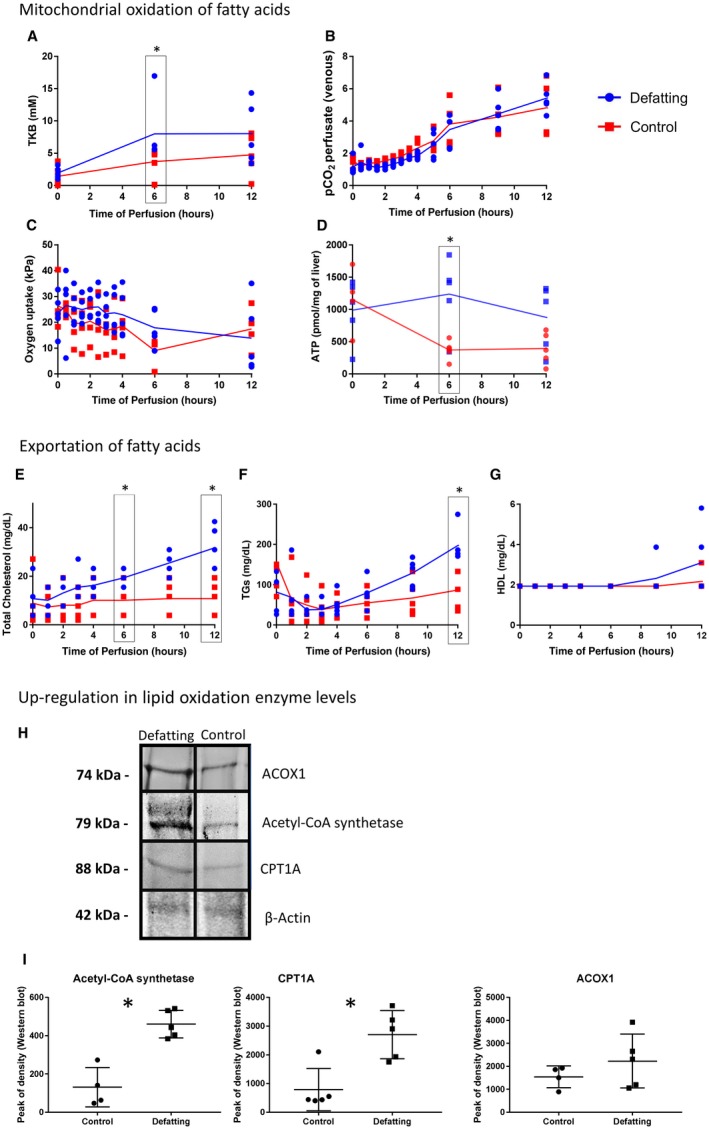
Strategies to increase the use of steatotic donor livers are required to tackle the mortality on the transplant waiting list. We aimed to test the efficacy of pharmacological enhancement of the lipid metabolism of human livers during ex situ normothermic machine perfusion to promote defatting and improve the functional recovery of the organs. Because of steatosis, 10 livers were discarded and were allocated either to a defatting group that had the perfusate supplemented with a combination of drugs to enhance lipid metabolism or to a control group that received perfusion fluid with vehicle only. Steatosis was assessed using tissue homogenate and histological analyses. Markers for lipid oxidation and solubilization, oxidative injury, inflammation, and biliary function were evaluated by enzyme-linked immunosorbent assay, immunohistochemistry, and in-gel protein detection. Treatment reduced tissue triglycerides by 38% and macrovesicular steatosis by 40% over 6 hours. This effect was driven by increased solubility of the triglycerides (P = 0.04), and mitochondrial oxidation as assessed by increased ketogenesis (P = 0.008) and adenosine triphosphate synthesis (P = 0.01) were associated with increased levels of the enzymes acyl-coenzyme A oxidase 1, carnitine palmitoyltransferase 1A, and acetyl-coenzyme A synthetase. Concomitantly, defatted livers exhibited enhanced metabolic functional parameters such as urea production (P = 0.03), lower vascular resistance, lower release of alanine aminotransferase (P = 0.049), and higher bile production (P = 0.008) with a higher bile pH (P = 0.03). The treatment down-regulated the expression of markers for oxidative injury as well as activation of immune cells (CD14; CD11b) and reduced the release of inflammatory cytokines in the perfusate (tumor necrosis factor α; interleukin 1β). In conclusion, pharmacological enhancement of intracellular lipid metabolism during normothermic machine perfusion decreased the lipid content of human livers within 6 hours. It also improved the intracellular metabolic support to the organs, leading to successful functional recovery and decreased expression of markers of reperfusion injury.
为了解决移植等待名单上的死亡率问题,需要增加使用脂肪变性供肝的策略。我们旨在测试在体外常温机器灌注过程中用药物增强人肝的脂质代谢以促进去脂和改善器官功能恢复的效果。由于脂肪变性,10 个肝脏被丢弃,并被分配到去脂组或对照组。去脂组的灌流液中添加了一组增强脂质代谢的药物,而对照组的灌流液中仅含有载体。使用组织匀浆和组织学分析评估脂肪变性。通过酶联免疫吸附试验、免疫组织化学和凝胶内蛋白检测评估脂质氧化和溶解、氧化损伤、炎症和胆汁功能的标志物。治疗在 6 小时内将组织甘油三酯降低了 38%,将大泡性脂肪变性降低了 40%。这种效果是由甘油三酯溶解度的增加(P=0.04)驱动的,酮生成(P=0.008)和三磷酸腺苷合成(P=0.01)的增加表明线粒体氧化增加,这与酰基辅酶 A 氧化酶 1、肉碱棕榈酰基转移酶 1A 和乙酰辅酶 A 合成酶的水平升高有关。同时,去脂的肝脏表现出增强的代谢功能参数,如尿素产生(P=0.03)、较低的血管阻力、较低的丙氨酸氨基转移酶释放(P=0.049)和较高的胆汁产生(P=0.008),胆汁 pH 值较高(P=0.03)。该治疗方法下调了氧化损伤标志物以及免疫细胞(CD14;CD11b)的激活和灌流液中炎症细胞因子(肿瘤坏死因子-α;白细胞介素 1β)的释放。总之,在常温机器灌注过程中用药物增强细胞内脂质代谢可在 6 小时内降低人肝的脂质含量。它还改善了器官的细胞内代谢支持,导致功能成功恢复和再灌注损伤标志物表达降低。