Univ Lyon, Université Claude Bernard Lyon 1, Inserm, Stem Cell and Brain Research Institute, Bron, France.
Visual Neurosciences Research Group, Singapore Eye Research Institute, Singapore.
PLoS Biol. 2019 Mar 1;17(3):e2006211. doi: 10.1371/journal.pbio.2006211. eCollection 2019 Mar.
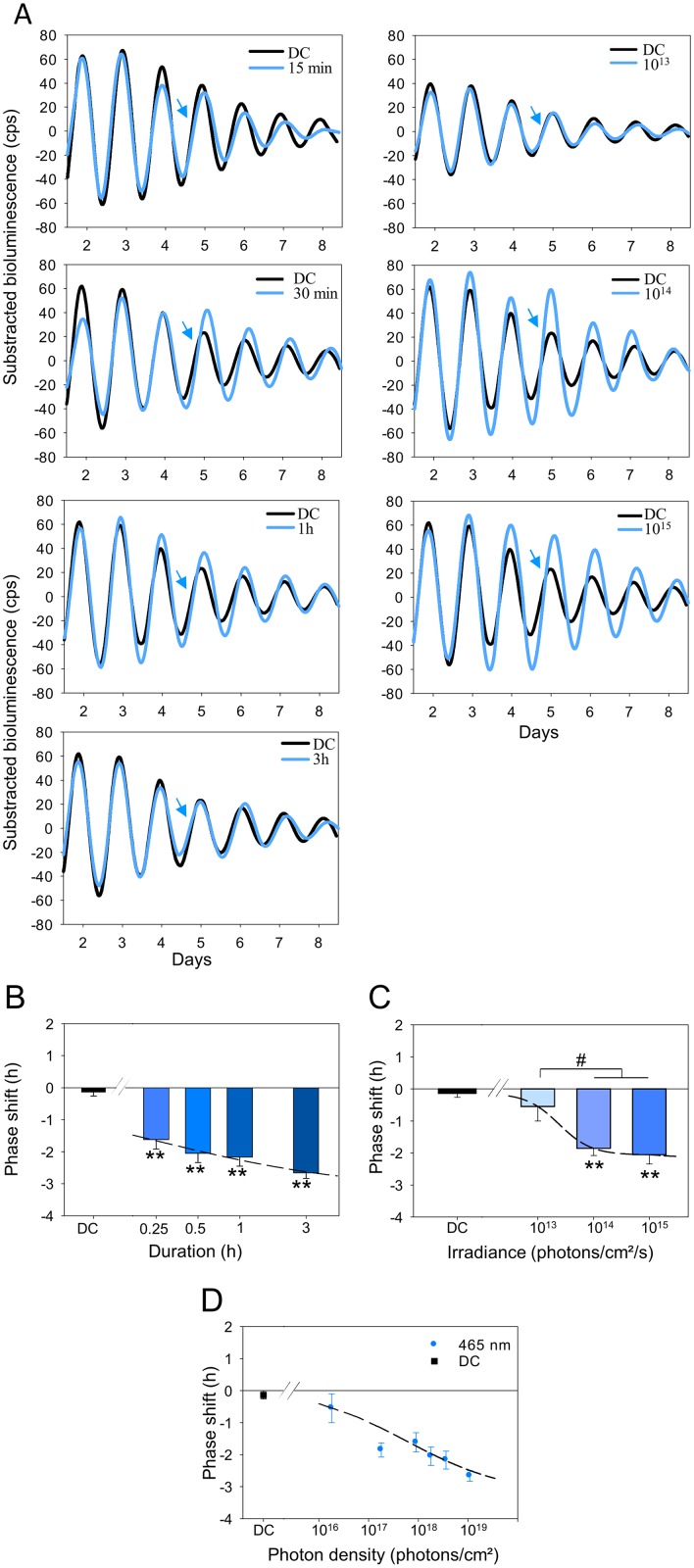
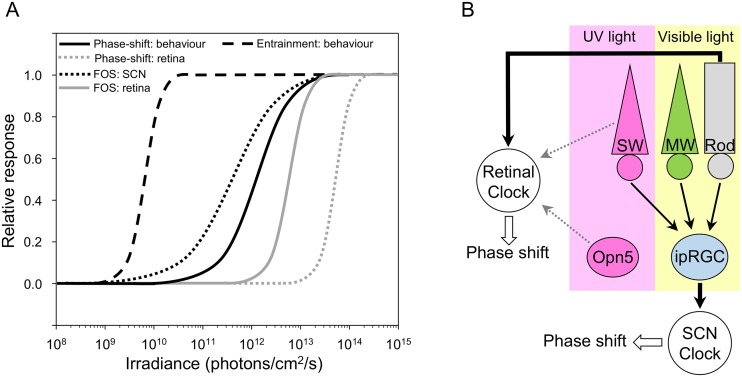
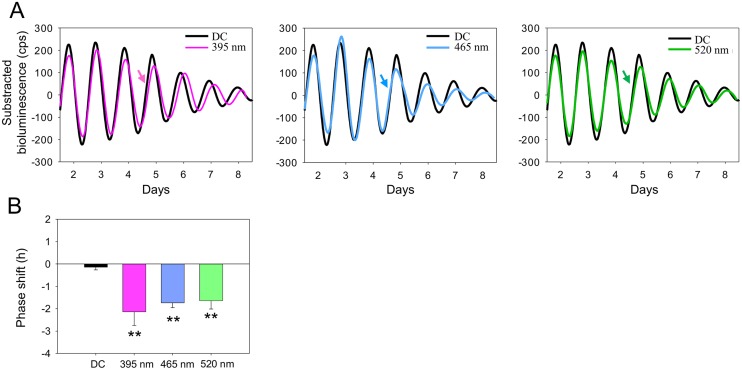
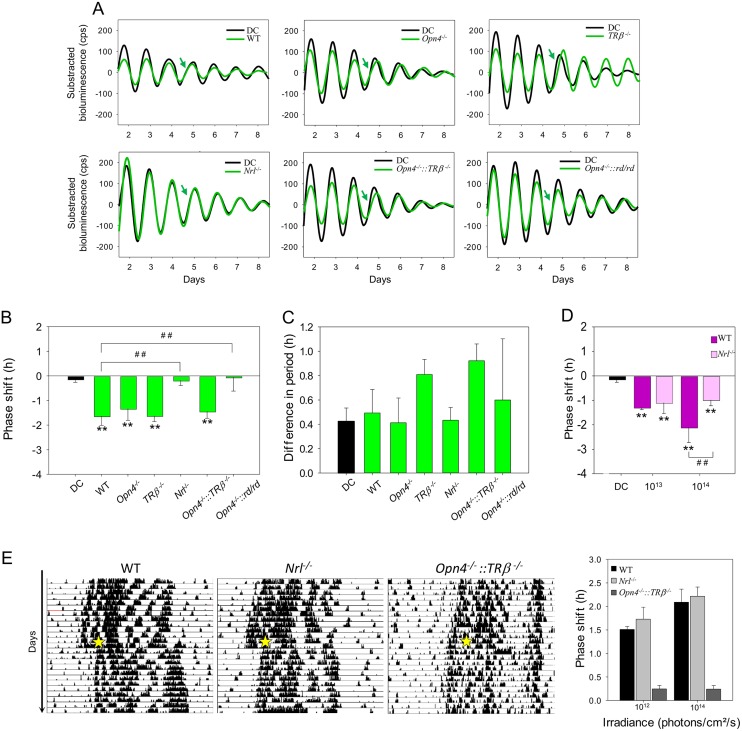
While rods, cones, and intrinsically photosensitive melanopsin-containing ganglion cells (ipRGCs) all drive light entrainment of the master circadian pacemaker of the suprachiasmatic nucleus, recent studies have proposed that entrainment of the mouse retinal clock is exclusively mediated by a UV-sensitive photopigment, neuropsin (OPN5). Here, we report that the retinal circadian clock can be phase shifted by short duration and relatively low-irradiance monochromatic light in the visible part of the spectrum, up to 520 nm. Phase shifts exhibit a classical photon dose-response curve. Comparing the response of mouse models that specifically lack middle-wavelength (MW) cones, melanopsin, and/or rods, we found that only the absence of rods prevented light-induced phase shifts of the retinal clock, whereas light-induced phase shifts of locomotor activity are normal. In a "rod-only" mouse model, phase shifting response of the retinal clock to light is conserved. At shorter UV wavelengths, our results also reveal additional recruitment of short-wavelength (SW) cones and/or OPN5. These findings suggest a primary role of rod photoreceptors in the light response of the retinal clock in mammals.
虽然棒状细胞、锥状细胞和含有内在感光性黑素细胞的神经节细胞(ipRGC)都能驱动视交叉上核的主生物钟的光适应,但最近的研究表明,小鼠视网膜时钟的适应仅由一种对紫外线敏感的视蛋白,即神经肽(OPN5)介导。在这里,我们报告说,在可见光谱范围内,短时间和相对低辐照度的单色光可以使视网膜生物钟发生相位移动,最长可达 520nm。相位移动表现出经典的光子剂量反应曲线。通过比较专门缺乏中波(MW)锥体、黑视素和/或棒状细胞的小鼠模型的反应,我们发现只有棒状细胞的缺失才能阻止光诱导的视网膜时钟相位移动,而光诱导的运动活性的相位移动是正常的。在“仅棒状细胞”的小鼠模型中,光对视网膜时钟的相位移动反应得以保留。在较短的 UV 波长下,我们的结果还揭示了短波长(SW)锥体和/或 OPN5 的额外募集。这些发现表明,在哺乳动物中,棒状细胞光感受器在视网膜时钟的光反应中起着主要作用。