Kraft Jelena J, Peterson Mariko S, Cho Sung Ki, Wang Zhaohui, Hui Alice, Rakotondrafara Aurélie M, Treder Krzysztof, Miller Cathy L, Miller W Allen
Department of Plant Pathology and Microbiology, Iowa State University, Ames, IA 50011, USA.
Department of Genetics, Development and Cell Biology, Iowa State University, Ames, IA 50011, USA.
Pathogens. 2019 Feb 28;8(1):28. doi: 10.3390/pathogens8010028.
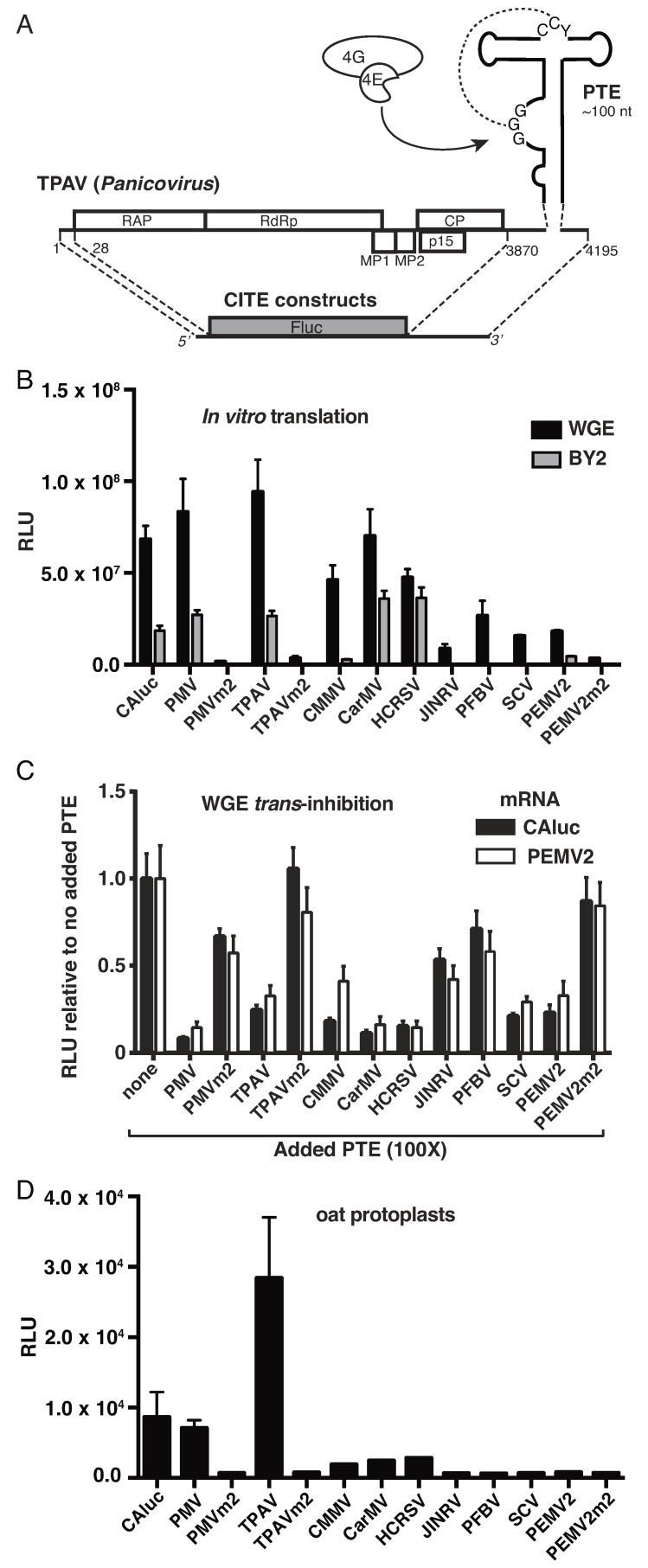
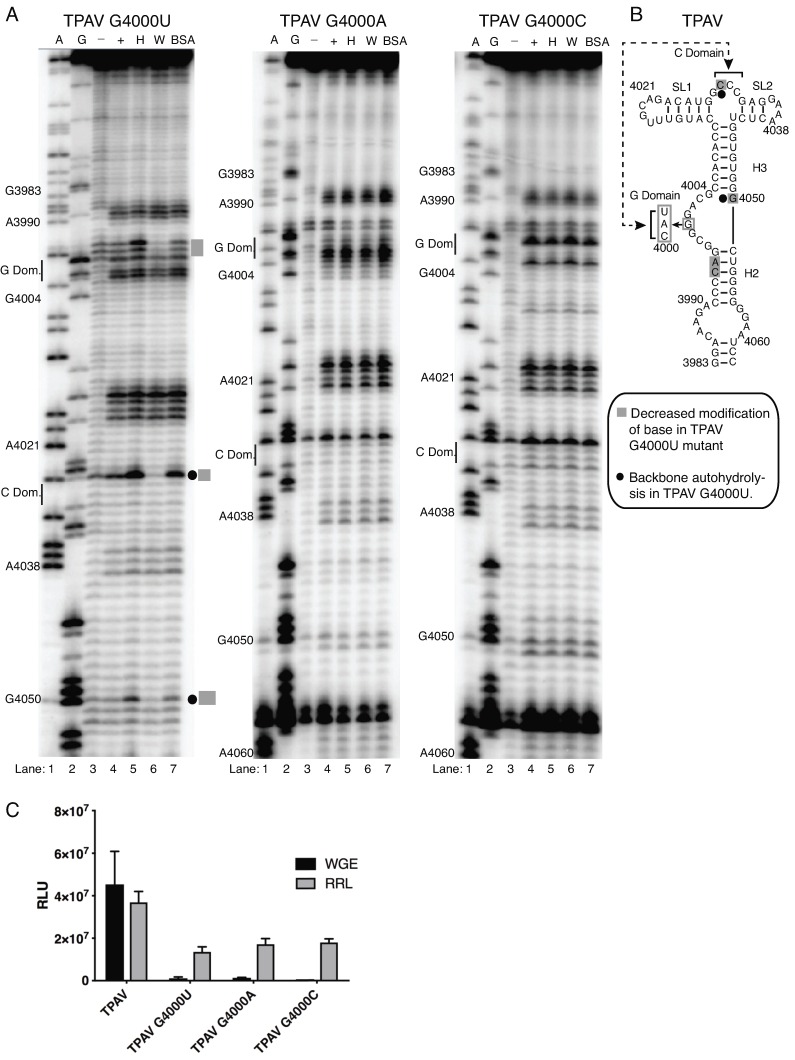
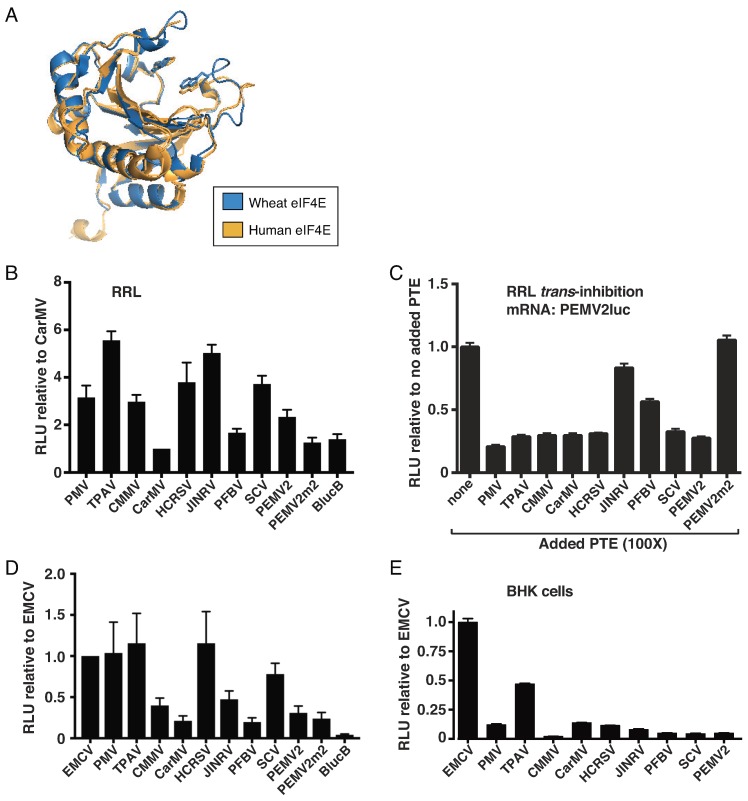
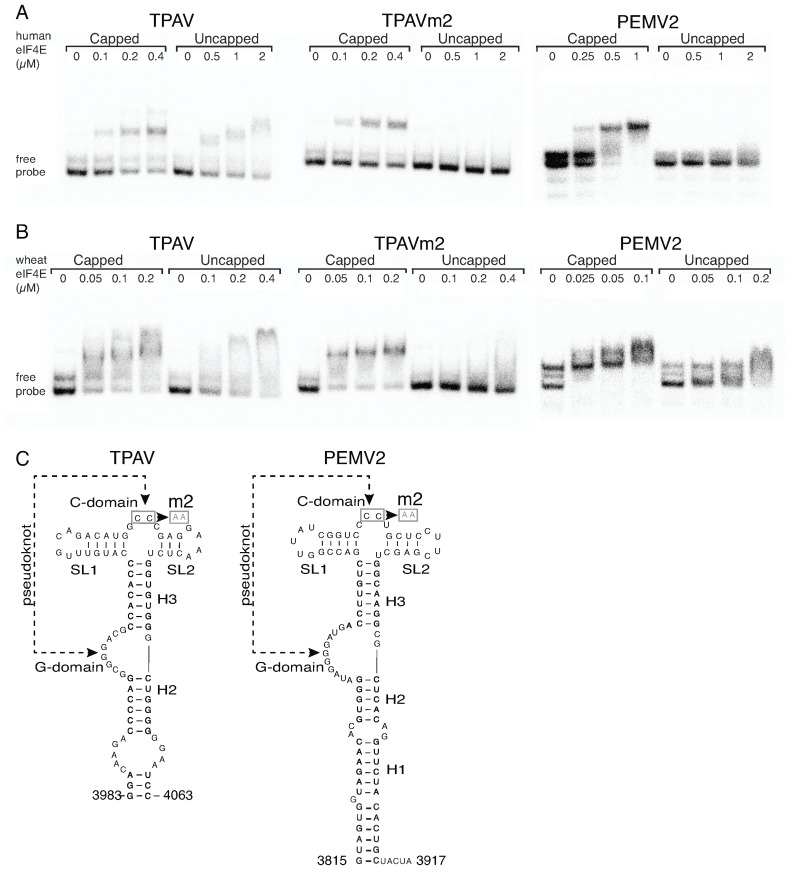
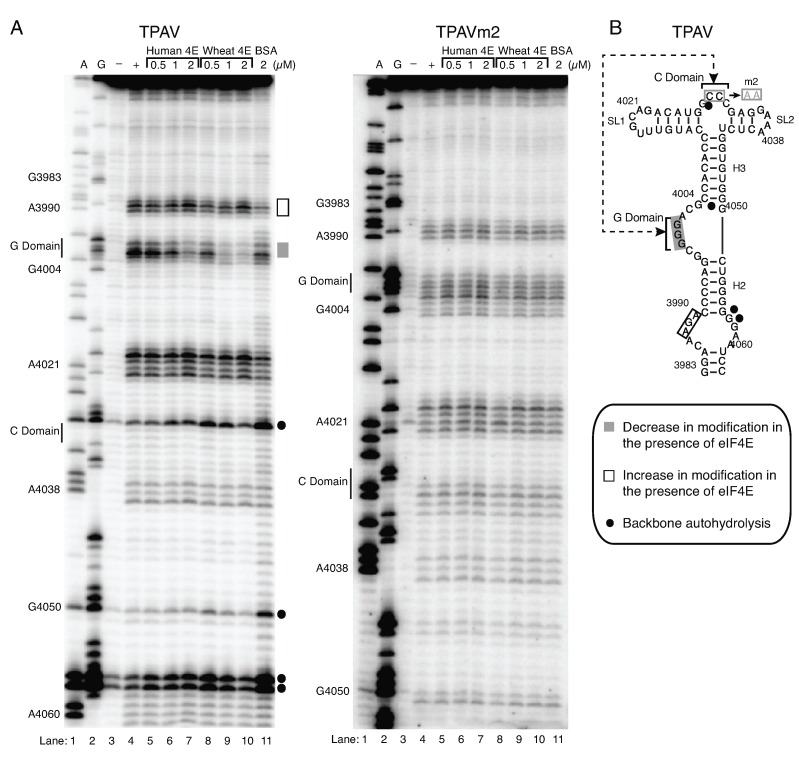
Many plant viral RNA genomes lack a 5' cap, and instead are translated via a cap-independent translation element (CITE) in the 3' untranslated region (UTR). The panicum mosaic virus-like CITE (PTE), found in many plant viral RNAs, binds and requires the cap-binding translation initiation factor eIF4E to facilitate translation. eIF4E is structurally conserved between plants and animals, so we tested cap-independent translation efficiency of PTEs of nine plant viruses in plant and mammalian systems. The PTE from thin paspalum asymptomatic virus (TPAV) facilitated efficient cap-independent translation in wheat germ extract, rabbit reticulocyte lysate, HeLa cell lysate, and in oat and mammalian (BHK) cells. Human eIF4E bound the TPAV PTE but not a PTE that did not stimulate cap-independent translation in mammalian extracts or cells. Selective 2'-hydroxyl acylation analyzed by primer extension (SHAPE) footprinting revealed that both human and wheat eIF4E protected the conserved guanosine (G)-rich domain in the TPAV PTE pseudoknot. The central G plays a key role, as it was found to be required for translation and protection from SHAPE modification by eIF4E. These results provide insight on how plant viruses gain access to the host's translational machinery, an essential step in infection, and raise the possibility that similar PTE-like mechanisms may exist in mRNAs of mammals or their viruses.
许多植物病毒的RNA基因组缺乏5'帽结构,而是通过3'非翻译区(UTR)中的帽依赖性翻译元件(CITE)进行翻译。在许多植物病毒RNA中发现的黍花叶病毒样CITE(PTE),结合并需要帽结合翻译起始因子eIF4E来促进翻译。eIF4E在植物和动物之间结构保守,因此我们在植物和哺乳动物系统中测试了9种植物病毒PTE的帽依赖性翻译效率。细黍无症状病毒(TPAV)的PTE在小麦胚芽提取物、兔网织红细胞裂解物、HeLa细胞裂解物以及燕麦和哺乳动物(BHK)细胞中促进了高效的帽依赖性翻译。人eIF4E结合TPAV PTE,但不结合在哺乳动物提取物或细胞中不刺激帽依赖性翻译的PTE。通过引物延伸分析的选择性2'-羟基酰化(SHAPE)足迹显示,人和小麦eIF4E都保护TPAV PTE假结中保守的富含鸟苷(G)的结构域。中央G起着关键作用,因为它被发现是翻译所必需的,并且能保护其免受eIF4E的SHAPE修饰。这些结果为植物病毒如何进入宿主翻译机制提供了见解,这是感染过程中的一个关键步骤,并增加了哺乳动物或其病毒的mRNA中可能存在类似PTE样机制的可能性。