Department of Neurology, Yale School of Medicine, New Haven, CT 06511.
Department of Immunobiology, Yale School of Medicine, New Haven, CT 06511.
J Immunol. 2019 Apr 15;202(8):2210-2219. doi: 10.4049/jimmunol.1801295. Epub 2019 Mar 1.
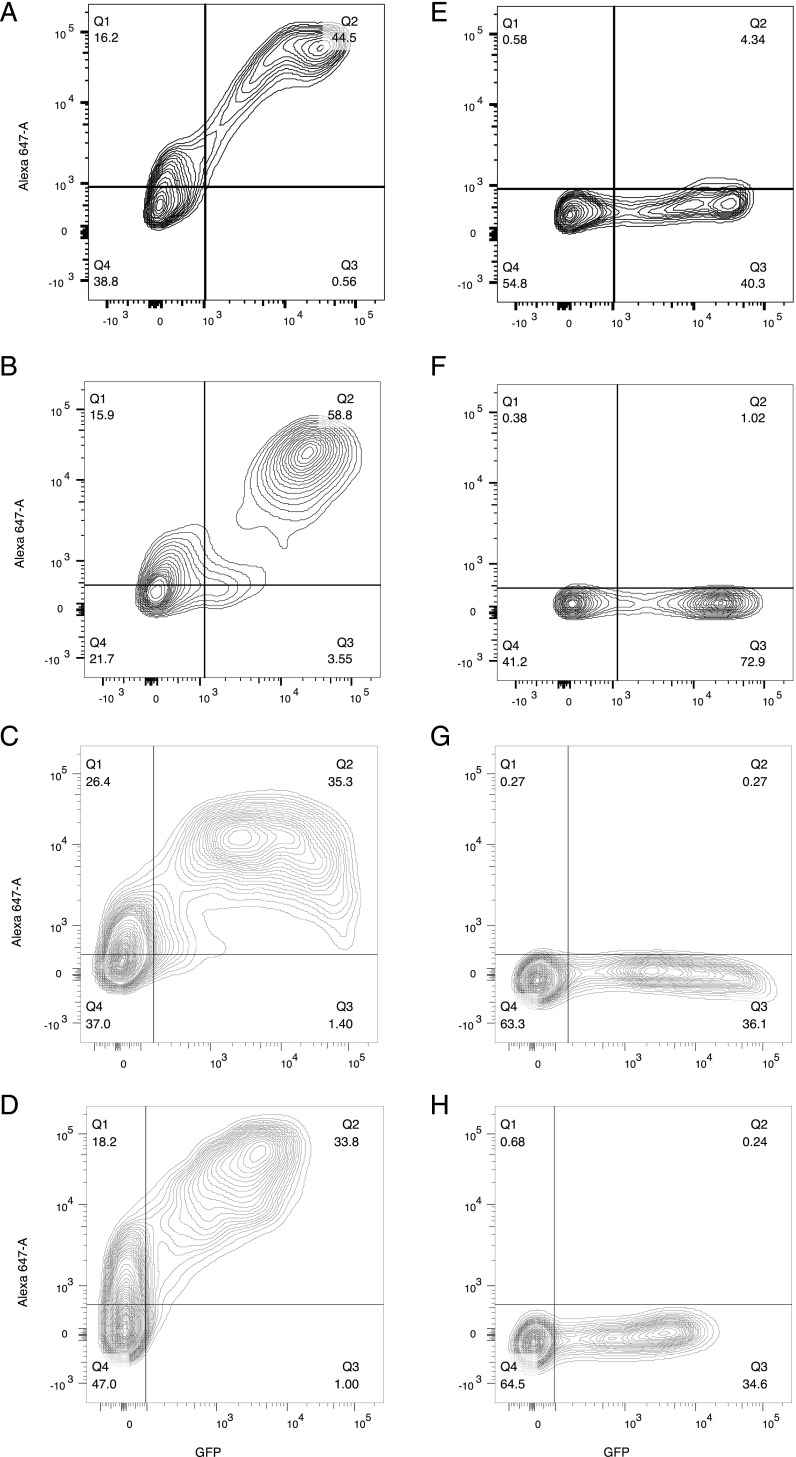
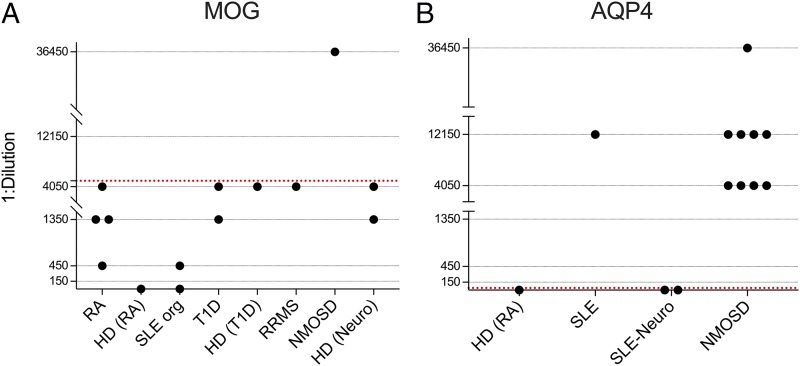
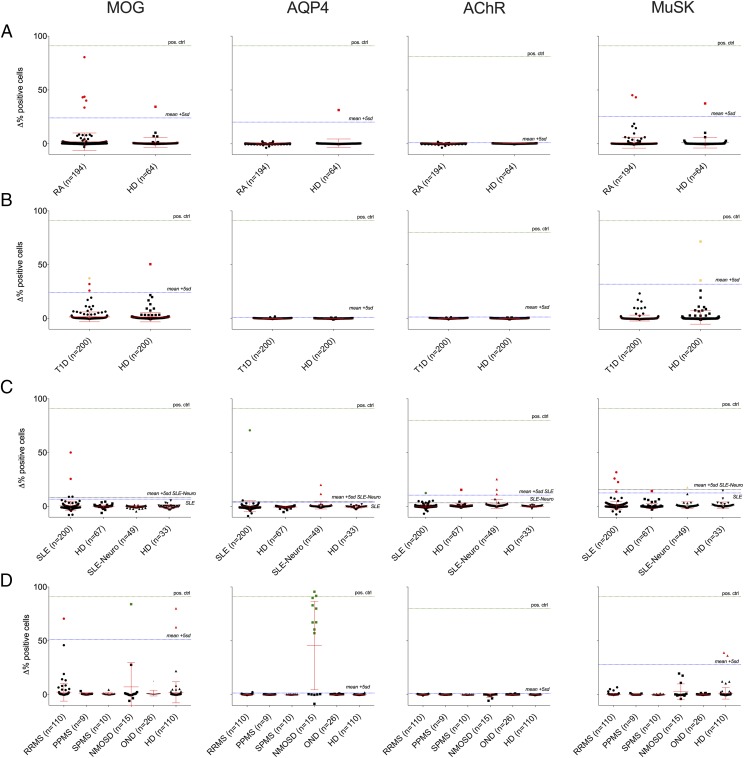
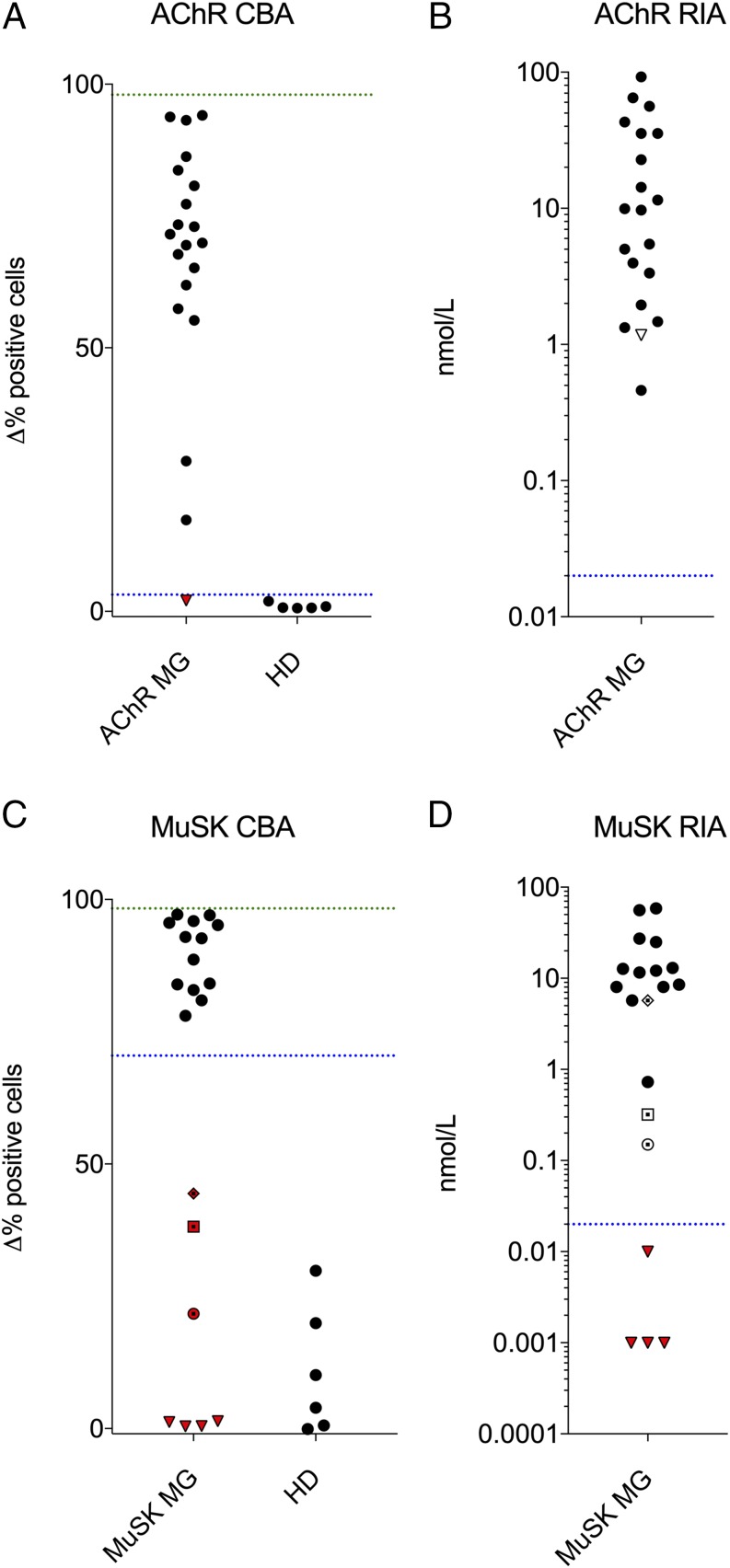
The aim of this study was to test whether autoantibodies against neurologic surface Ags are found in nonneurologic autoimmune diseases, indicating a broader loss of tolerance. Patient and matched healthy donor (HD) sera were derived from four large cohorts: 1) rheumatoid arthritis (RA) ( = 194, HD = 64), 2) type 1 diabetes (T1D) ( = 200, HD = 200), 3) systemic lupus erythematosus (SLE) ( = 200, HD = 67; neuro-SLE = 49, HD = 33), and 4) a control cohort of neurologic autoimmunity (relapsing-remitting multiple sclerosis [MS] = 110, HD = 110; primary progressive MS = 9; secondary progressive MS = 10; neuromyelitis optica spectrum disorders = 15; and other neurologic disorders = 26). Screening of 1287 unique serum samples against four neurologic surface Ags (myelin oligodendrocyte glycoprotein, aquaporin 4, acetylcholine receptor, and muscle-specific kinase) was performed with live cell-based immunofluorescence assays using flow cytometry. Positive samples identified in the screening were further validated using autoantibody titer quantification by serial dilutions or radioimmunoassay. Autoantibodies against neurologic surface Ags were not observed in RA and T1D patients, whereas SLE patients harbored such autoantibodies in rare cases (2/200, 1%). Within the CNS autoimmunity control cohort, autoantibodies against aquaporin 4 and high-titer Abs against myelin oligodendrocyte glycoprotein were, as expected, specific for neuromyelitis optica spectrum disorders. We conclude that neurologic autoantibodies do not cross disease barriers in RA and T1D. The finding of mildly increased neurologic autoantibodies in SLE may be consistent with a broader loss of B cell tolerance in this form of systemic autoimmunity.
本研究旨在检验非神经自身免疫性疾病患者是否存在针对神经表面抗原的自身抗体,以表明存在更广泛的耐受性丧失。从四个大型队列中获得了患者和匹配的健康供体 (HD) 血清:1) 类风湿关节炎 (RA) ( = 194,HD = 64),2) 1 型糖尿病 (T1D) ( = 200,HD = 200),3) 系统性红斑狼疮 (SLE) ( = 200,HD = 67;神经 SLE = 49,HD = 33),和 4) 神经自身免疫的对照组 (复发缓解型多发性硬化症 [MS] = 110,HD = 110;原发性进行性 MS = 9;继发性进行性 MS = 10;视神经脊髓炎谱系障碍 = 15;和其他神经障碍 = 26)。使用流式细胞术进行基于活细胞的免疫荧光分析,对 1287 个独特的血清样本针对四种神经表面抗原 (髓鞘少突胶质细胞糖蛋白、水通道蛋白 4、乙酰胆碱受体和肌肉特异性激酶) 进行了筛选。在筛选中确定的阳性样本使用通过系列稀释或放射免疫测定进行的自身抗体滴度定量进一步验证。RA 和 T1D 患者中未观察到针对神经表面抗原的自身抗体,而 SLE 患者则罕见存在此类自身抗体 (2/200,1%)。在中枢神经系统自身免疫对照组中,水通道蛋白 4 的自身抗体和髓鞘少突胶质细胞糖蛋白的高滴度 Ab 是视神经脊髓炎谱系障碍的特异性抗体。我们得出结论,神经自身抗体不会跨越 RA 和 T1D 的疾病障碍。在 SLE 中发现轻度增加的神经自身抗体可能与这种全身性自身免疫中更广泛的 B 细胞耐受丧失一致。