Genomic Stability Unit, Laboratorio Nazionale-Consorzio Interuniversitario per le Biotecnologie (LNCIB), Padriciano 99, 34149, Trieste, Italy.
Department of Life Sciences, Università degli Studi di Trieste, Via E. Weiss 2, 34127, Trieste, Italy.
Nat Commun. 2019 Mar 1;10(1):1001. doi: 10.1038/s41467-019-08863-1.
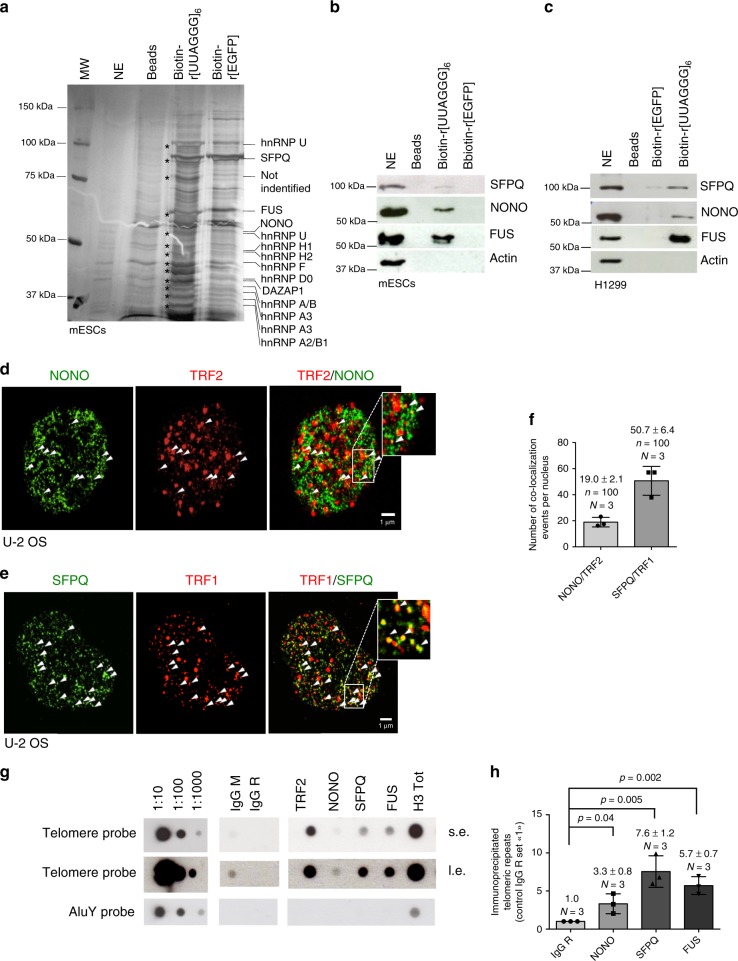
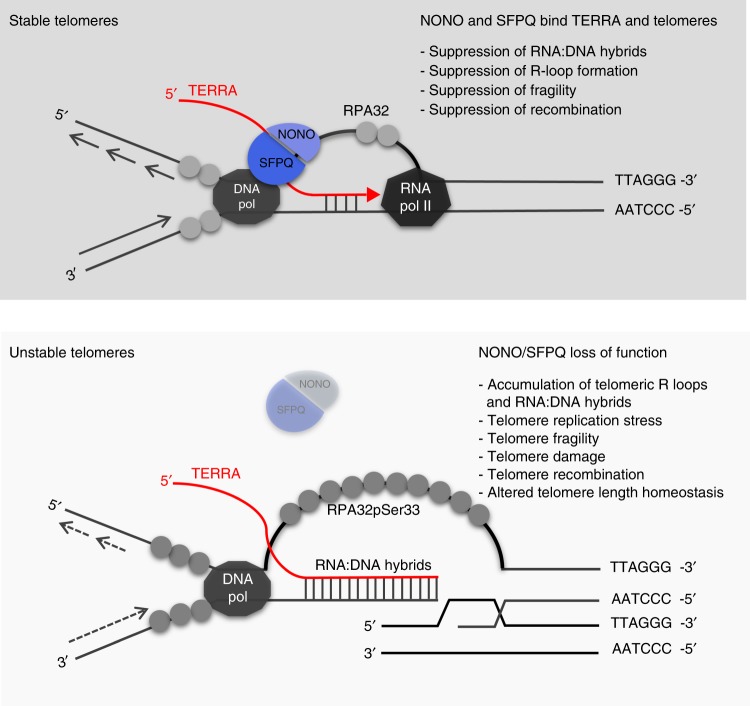
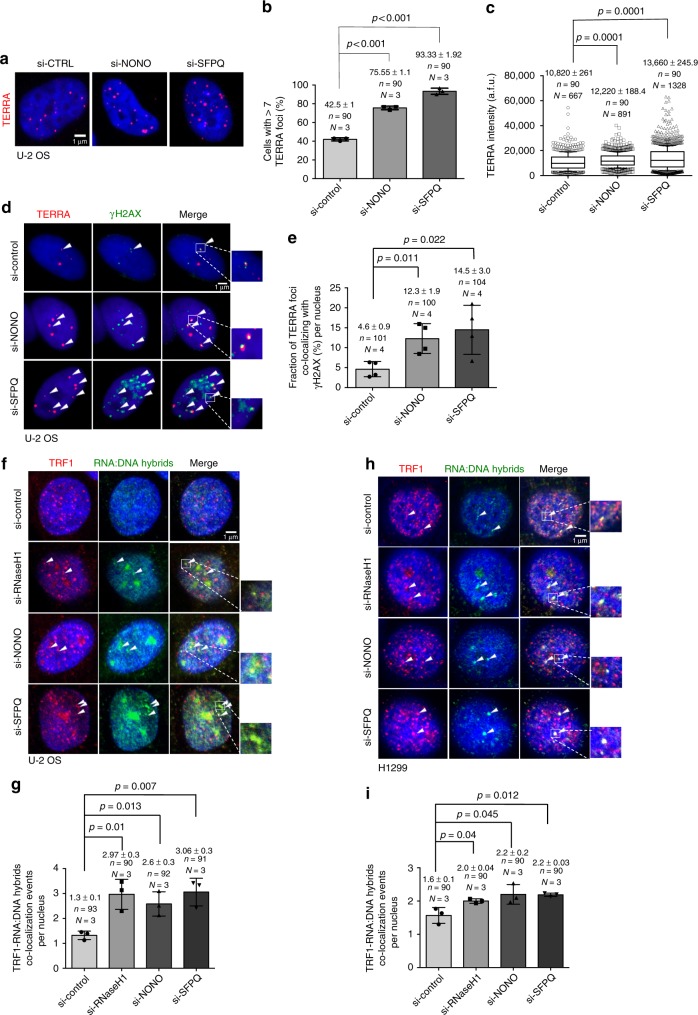
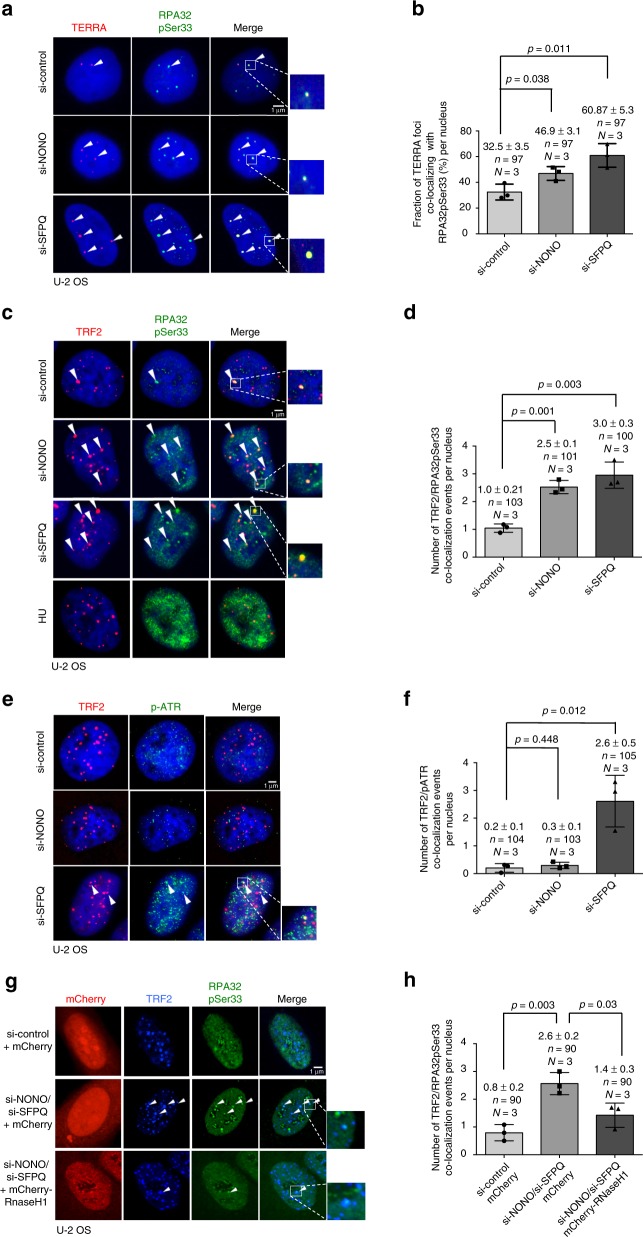
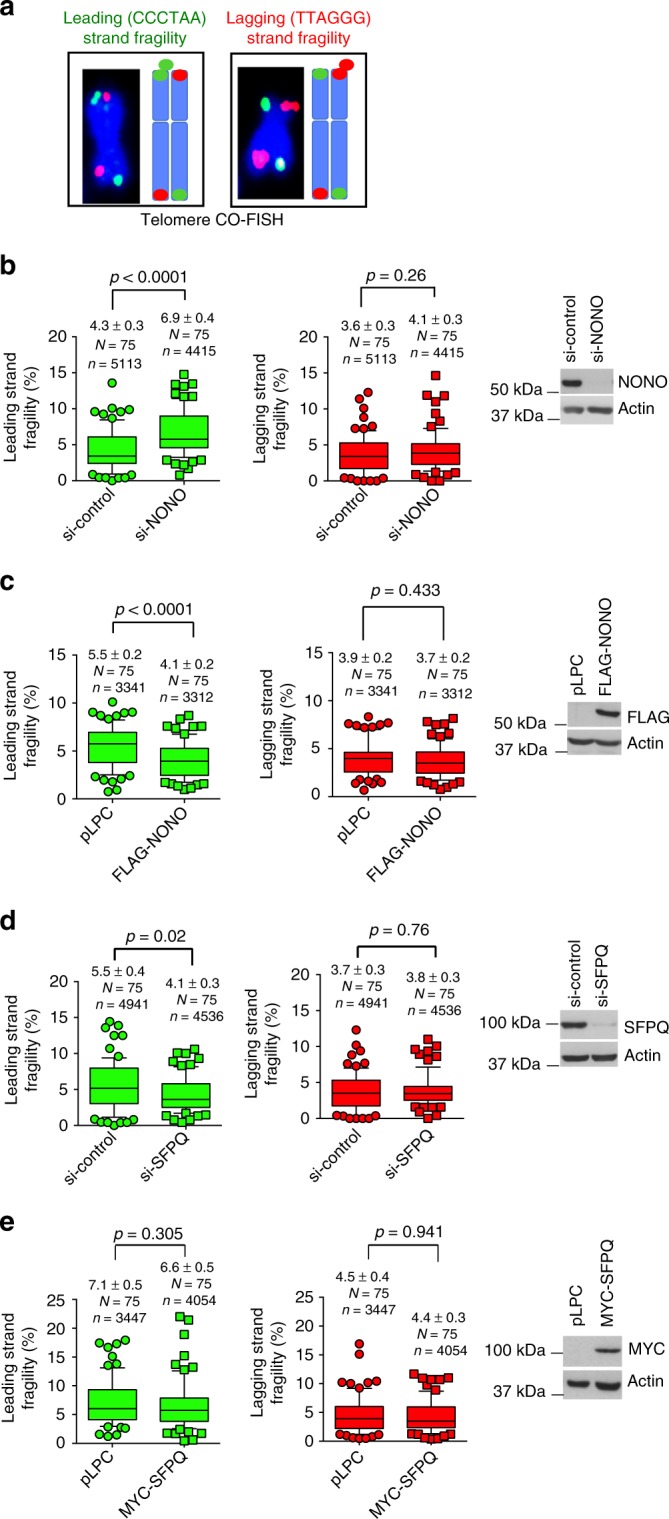
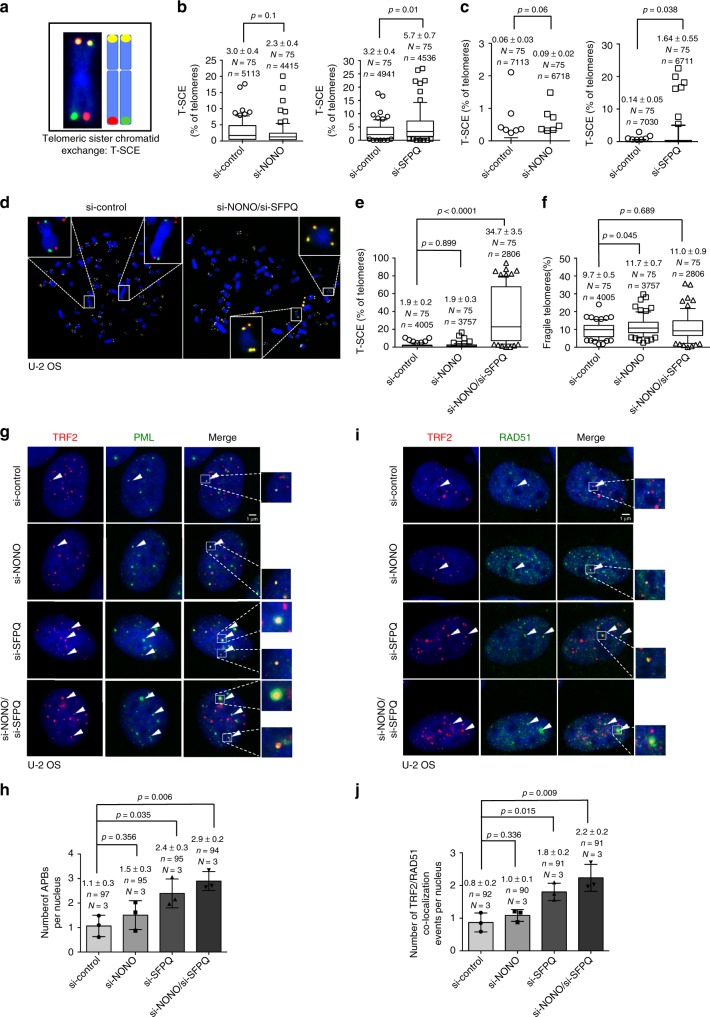
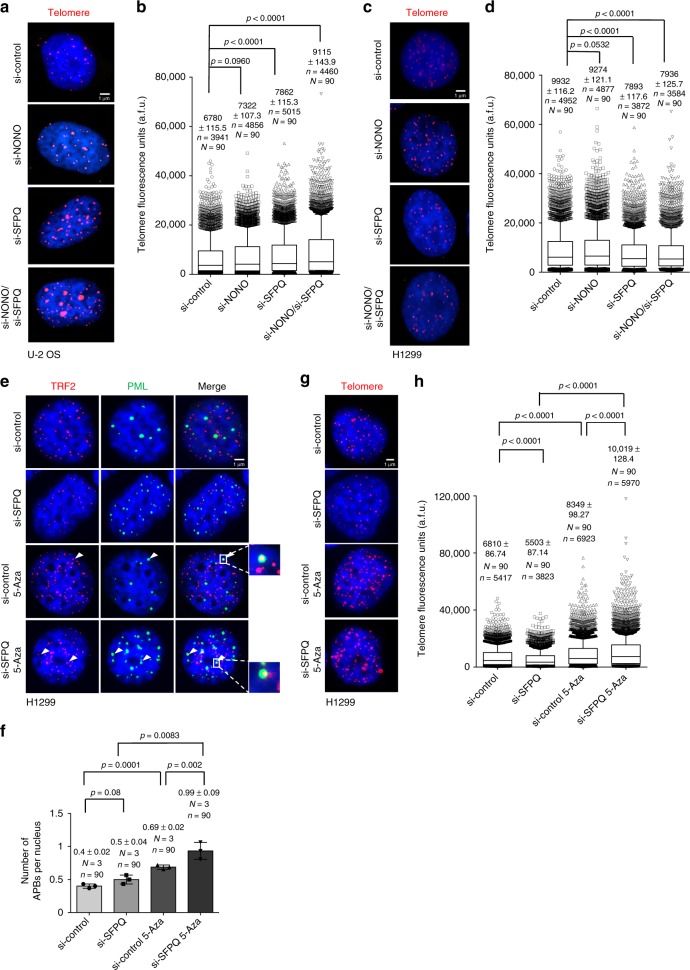
In vertebrates, the telomere repeat containing long, non-coding RNA TERRA is prone to form RNA:DNA hybrids at telomeres. This results in the formation of R-loop structures, replication stress and telomere instability, but also contributes to alternative lengthening of telomeres (ALT). Here, we identify the TERRA binding proteins NONO and SFPQ as novel regulators of RNA:DNA hybrid related telomere instability. NONO and SFPQ locate at telomeres and have a common role in suppressing RNA:DNA hybrids and replication defects at telomeres. NONO and SFPQ act as heterodimers to suppress fragility and homologous recombination at telomeres, respectively. Combining increased telomere fragility with unleashing telomere recombination upon NONO/SFPQ loss of function causes massive recombination events, involving 35% of telomeres in ALT cells. Our data identify the RNA binding proteins SFPQ and NONO as novel regulators at telomeres that collaborate to ensure telomere integrity by suppressing telomere fragility and homologous recombination triggered by RNA:DNA hybrids.
在脊椎动物中,端粒重复含有长的非编码 RNA TERRA,容易在端粒处形成 RNA:DNA 杂交体。这导致 R 环结构的形成、复制应激和端粒不稳定,但也有助于端粒的替代性延长(ALT)。在这里,我们确定 TERRA 结合蛋白 NONO 和 SFPQ 是 RNA:DNA 杂交相关端粒不稳定的新型调节因子。NONO 和 SFPQ 定位于端粒上,在抑制端粒处的 RNA:DNA 杂交体和复制缺陷方面具有共同作用。NONO 和 SFPQ 分别作为异源二聚体来抑制端粒的脆弱性和同源重组。将端粒脆性的增加与 NONO/SFPQ 功能丧失时端粒重组的释放相结合,导致大量的重组事件,涉及 ALT 细胞中 35%的端粒。我们的数据确定 RNA 结合蛋白 SFPQ 和 NONO 是端粒上的新型调节因子,通过抑制由 RNA:DNA 杂交体触发的端粒脆弱性和同源重组,合作以确保端粒的完整性。