Department of Orthopedics, Qilu Hospital, Shandong University, Jinan, Shandong 250012, PR China.
Department of Pathology, Qilu Hospital, Shandong University, Jinan, Shandong 250012, PR China; Cheeloo College of Medicine, Shandong University, Jinan, Shandong 250012. PR China.
EBioMedicine. 2019 Mar;41:556-570. doi: 10.1016/j.ebiom.2019.02.035. Epub 2019 Feb 28.
Osteoarthritis (OA) is a common degenerative disease, and tumor necrosis factor (TNF-α) is known to play a critical role in OA. Cortistatin (CST) is a neuropeptide discovered over 20 years ago, which plays a vital role in inflammatory reactions. However, it is unknown whether CST is involved in cartilage degeneration and OA development.
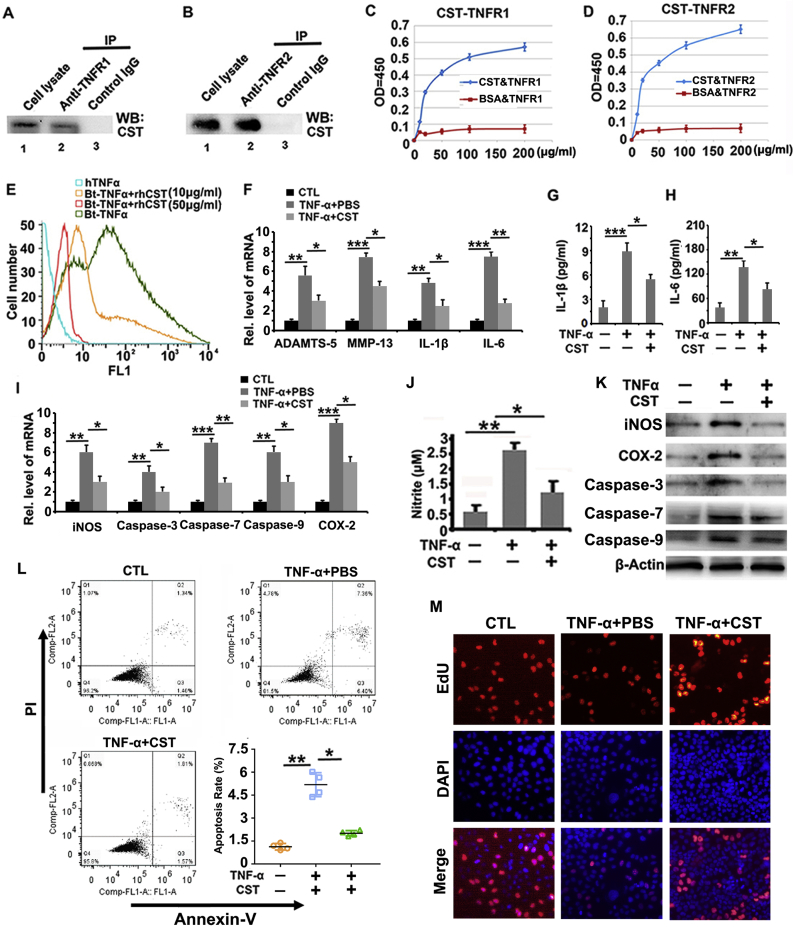
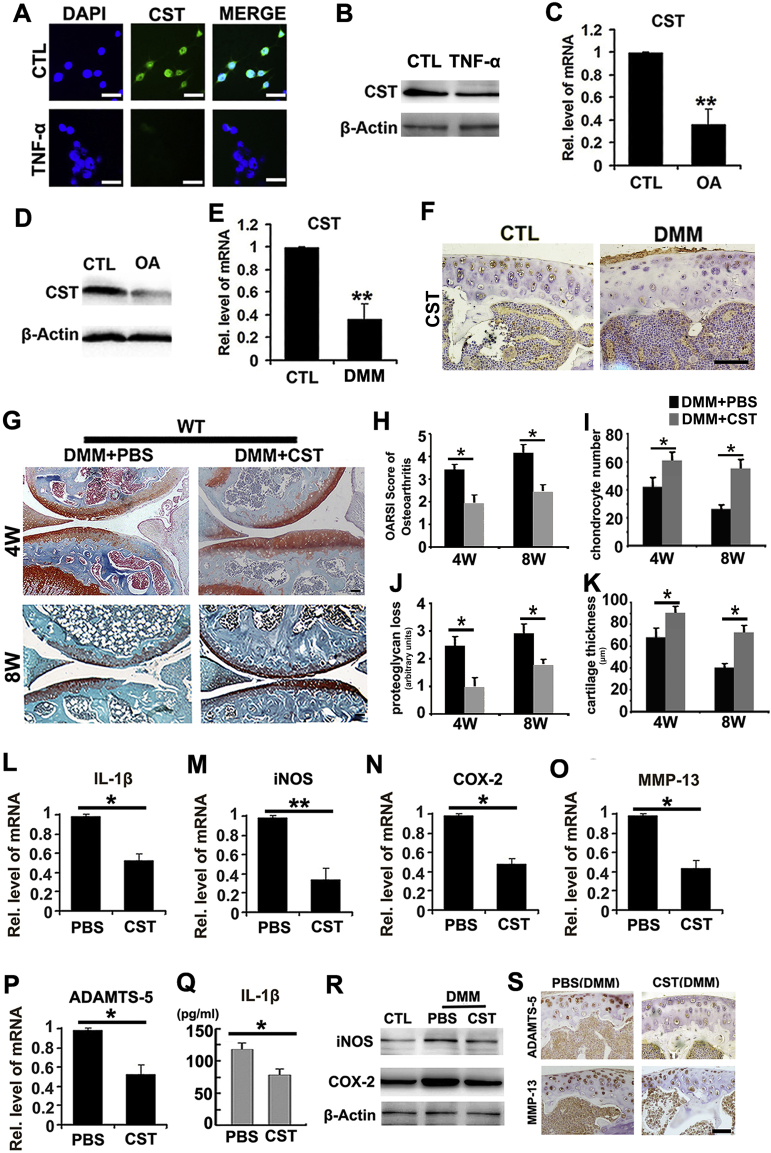
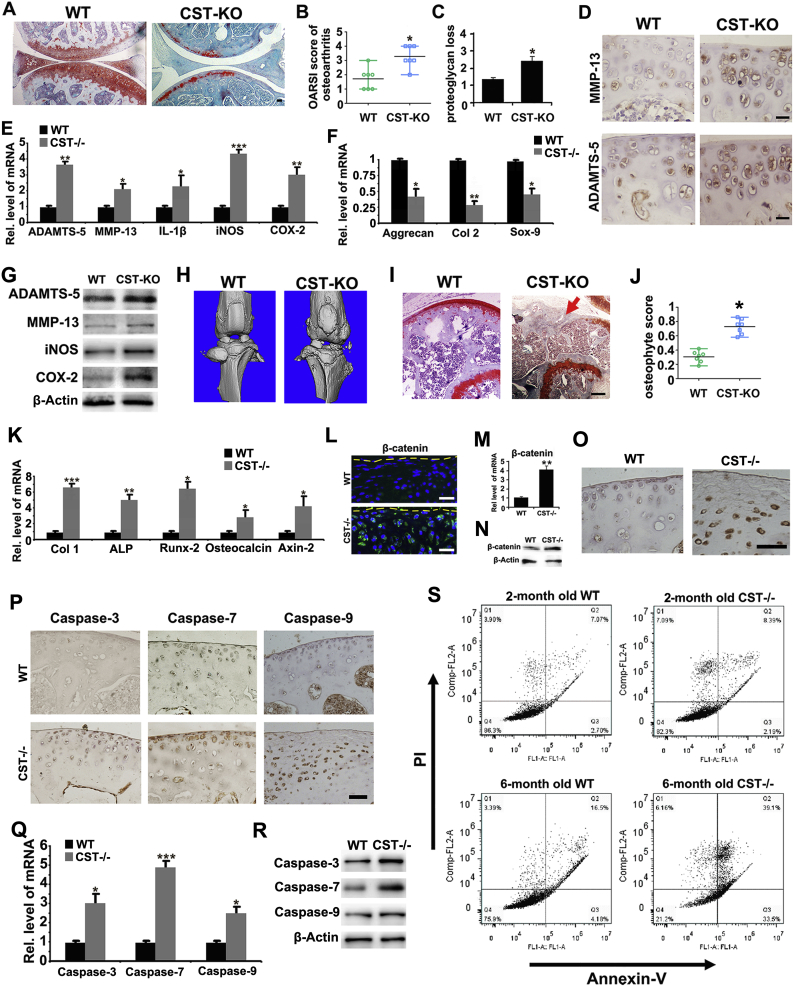
The interaction between CST and TNF-α receptors was investigated through Coimmunoprecipitation and Biotin-based solid-phase binding assay. Western blot, Real-time PCR, ELISA, immunofluorescence staining, nitrite production assay and DMMB assay of GAG were performed for the primary chondrocyte experiments. Surgically induced and spontaneous OA models were established and western blot, flow cytometry, Real-time PCR, ELISA, immunohistochemistry and fluorescence in vivo imaging were performed for in vivo experiments.
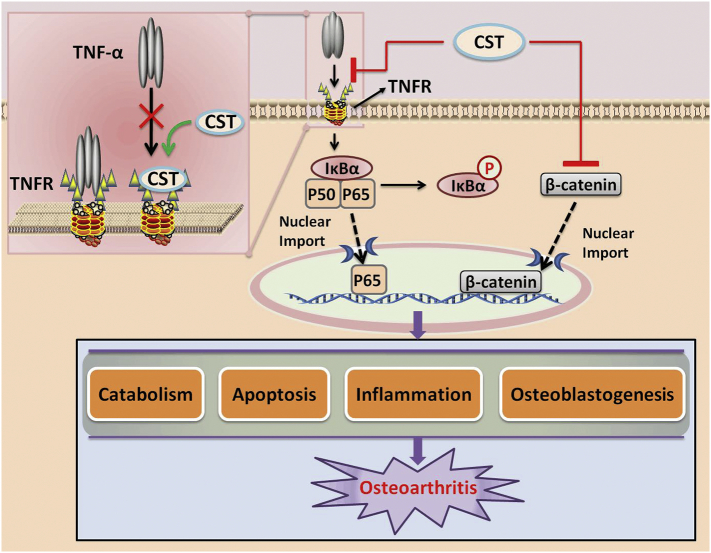
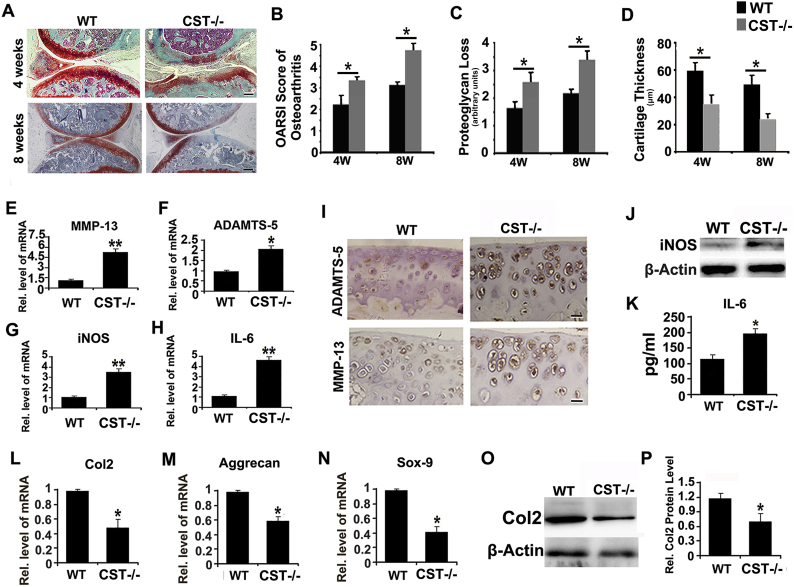
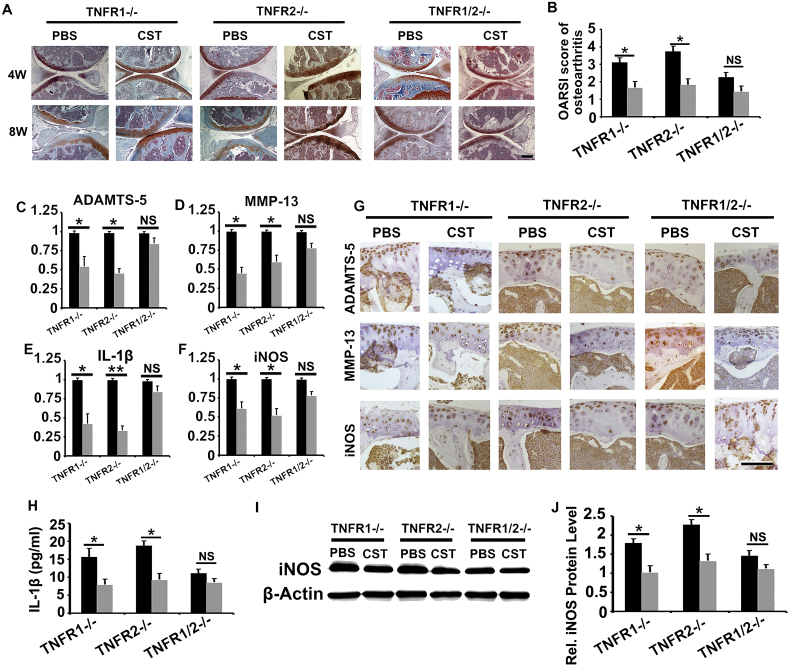
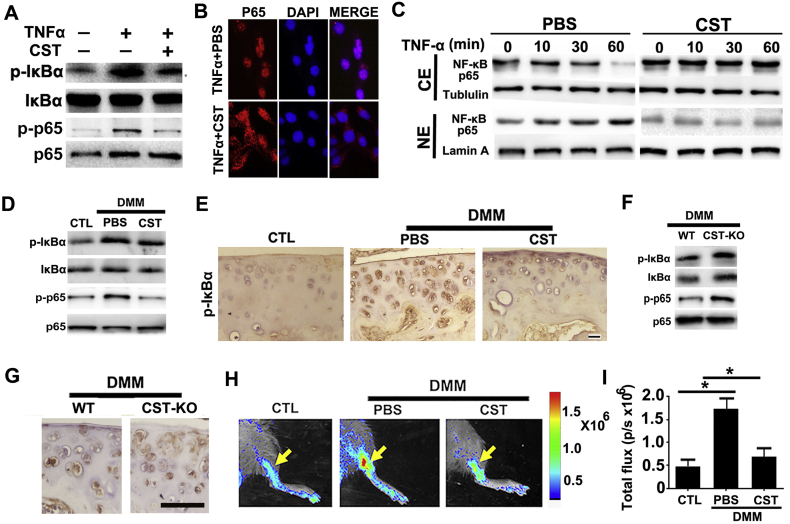
CST competitively bound to TNFR1 as well as TNFR2. CST suppressed proinflammatory function of TNF-α. Both spontaneous and surgically induced OA models indicated that deficiency of CST led to an accelerated OA-like phenotype, while exogenous CST attenuated OA development in vivo. Additionally, TNFR1- and TNFR2-knockout mice were used for analysis and indicated that TNFRs might be involved in the protective role of CST in OA. CST inhibited activation of the NF-κB signaling pathway in OA.
This study provides new insight into the pathogenesis and therapeutic strategy of cartilage degenerative diseases, including OA. FUND: The National Natural Science Foundation of China, the Natural Science Foundation of Shandong Province, Key Research and Development Projects of Shandong Province and the Cross-disciplinary Fund of Shandong University.
骨关节炎(OA)是一种常见的退行性疾病,已知肿瘤坏死因子(TNF-α)在 OA 中起关键作用。皮质抑素(CST)是 20 多年前发现的一种神经肽,在炎症反应中起着至关重要的作用。然而,尚不清楚 CST 是否参与软骨退化和 OA 的发展。
通过共免疫沉淀和基于生物素的固相结合测定研究了 CST 与 TNF-α 受体的相互作用。进行了原代软骨细胞实验的 Western blot、Real-time PCR、ELISA、免疫荧光染色、亚硝酸盐产生测定和 GAG 的 DMMB 测定。建立了手术诱导和自发性 OA 模型,并进行了 Western blot、流式细胞术、Real-time PCR、ELISA、免疫组织化学和体内荧光成像的体内实验。
CST 与 TNFR1 和 TNFR2 竞争性结合。CST 抑制 TNF-α 的促炎功能。自发性和手术诱导的 OA 模型表明,CST 缺乏导致 OA 样表型加速,而外源性 CST 减轻了体内 OA 的发展。此外,还使用了 TNFR1 和 TNFR2 敲除小鼠进行分析,表明 TNFRs 可能参与 CST 在 OA 中的保护作用。CST 抑制 OA 中 NF-κB 信号通路的激活。
本研究为软骨退行性疾病(包括 OA)的发病机制和治疗策略提供了新的见解。
国家自然科学基金、山东省自然科学基金、山东省重点研发计划和山东大学交叉学科基金。