Yang Chunxia, Li Suping, Ma Jack X, Li Yi, Zhang Aixia, Sun Ning, Wang Yanfang, Xu Yong, Zhang Kerang
Department of Psychiatry, First Hospital of Shanxi Medical University, Taiyuan, China.
McGovern Medical School, University of Texas Health Science Center at Houston, Houston, TX, United States.
Front Genet. 2019 Feb 15;10:74. doi: 10.3389/fgene.2019.00074. eCollection 2019.
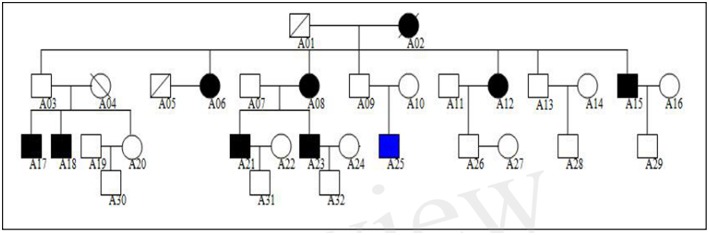
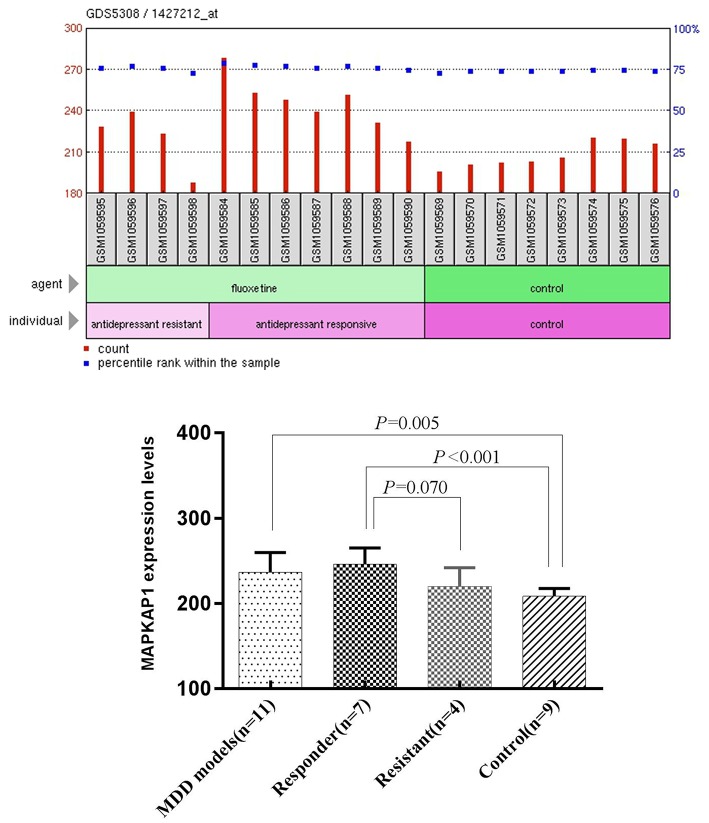
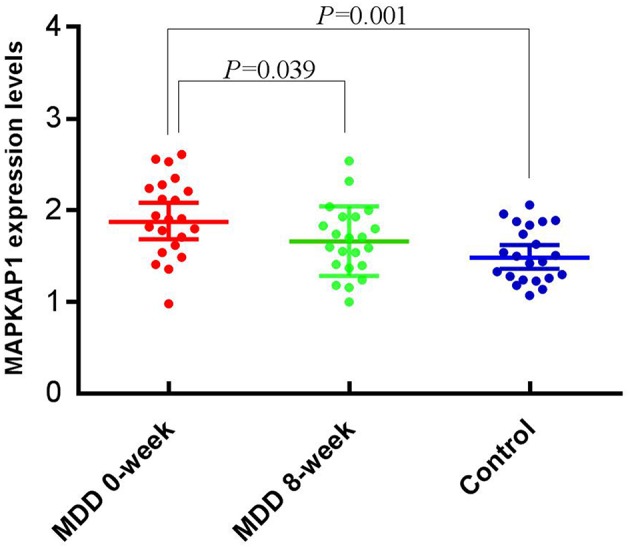
Mood disorder is ranked seventh among the worldwide causes of non-fatal disease burden and is generally believed to be a heritable disease. However, there is still a substantial portion of the heritability yet to be discovered, despite the success of genome-wide association studies (GWAS) for mood disorder. A proportion of the missing heritability may be accounted for by rare coding variants segregating in families enriched with mood disorder. To identify novel variants segregating with mood disorder, we performed whole-exome sequencing on genomic DNA for a multigenerational family with nine members affected with mood disorder. We prioritized potential causal variants within the family based on segregation with mood disorder, predicted functional effects, and prevalence in human populations. In addition, for the top-ranked candidate variant, we conducted validation to explore the pathogenesis of mood disorder. We identified and ranked 26 candidate variants based on their segregation pattern and functional annotations. The top-ranked variant, rs78809014, is located in intron 7 of the MAPKAP1 gene. The expression levels of MAPKAP1 in peripheral blood of both major depression disorder (MDD) patients and depressive-like mice ventral dentate gyrus were significantly higher than that in the corresponding controls. In addition, the expression level of MAPKAP1 were correlated with antidepressant response. Although the exact mechanisms in the family remain to be elucidated, our data strongly indicate a probable role of the variant, rs78809014, in the regulatory process of the expression of MAPKAP1 and thus in the development of mood disorder in familial mood disorder.
情绪障碍在全球非致命性疾病负担的病因中排名第七,通常被认为是一种遗传性疾病。然而,尽管全基因组关联研究(GWAS)在情绪障碍研究方面取得了成功,但仍有很大一部分遗传性尚未被发现。一部分缺失的遗传性可能由在情绪障碍高发家庭中分离的罕见编码变异所解释。为了识别与情绪障碍分离的新变异,我们对一个有9名成员患有情绪障碍的多代家庭的基因组DNA进行了全外显子组测序。我们根据与情绪障碍的分离情况、预测的功能效应以及在人群中的患病率,对家庭中的潜在致病变异进行了优先级排序。此外,对于排名最高的候选变异,我们进行了验证,以探索情绪障碍的发病机制。我们根据分离模式和功能注释识别并排名了26个候选变异。排名最高的变异rs78809014位于MAPKAP1基因的第7内含子中。在重度抑郁症(MDD)患者和抑郁样小鼠腹侧齿状回的外周血中,MAPKAP1的表达水平均显著高于相应对照组。此外,MAPKAP1的表达水平与抗抑郁反应相关。尽管该家庭的确切机制仍有待阐明,但我们的数据强烈表明,变异rs78809014可能在MAPKAP1表达的调控过程中发挥作用,从而在家族性情绪障碍的情绪障碍发展中发挥作用。