Clinical and Experimental Sciences, Faculty of Medicine, University of Southampton, Southampton, UK.
Data Science Institute, Imperial College, London, UK.
Metabolomics. 2018 Sep 17;14(10):123. doi: 10.1007/s11306-018-1412-2.
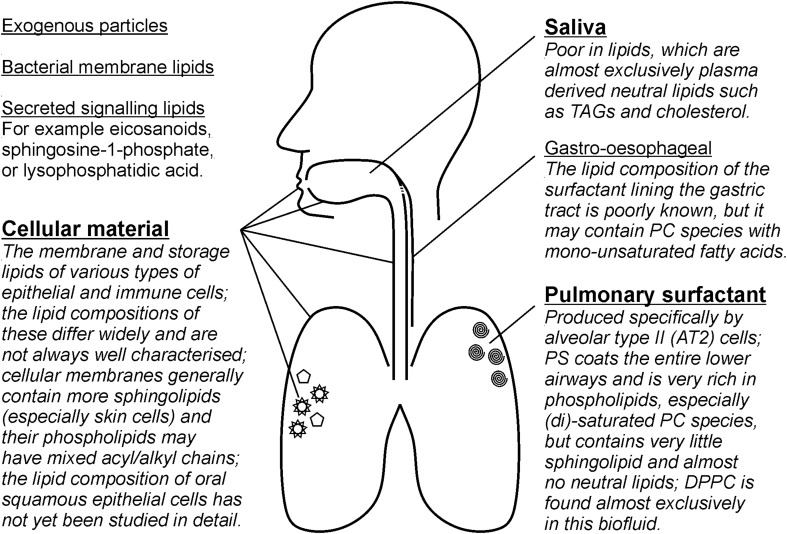
Lung epithelial lining fluid (ELF)-sampled through sputum induction-is a medium rich in cells, proteins and lipids. However, despite its key role in maintaining lung function, homeostasis and defences, the composition and biology of ELF, especially in respect of lipids, remain incompletely understood.
To characterise the induced sputum lipidome of healthy adult individuals, and to examine associations between different ELF lipid phenotypes and the demographic characteristics within the study cohort.
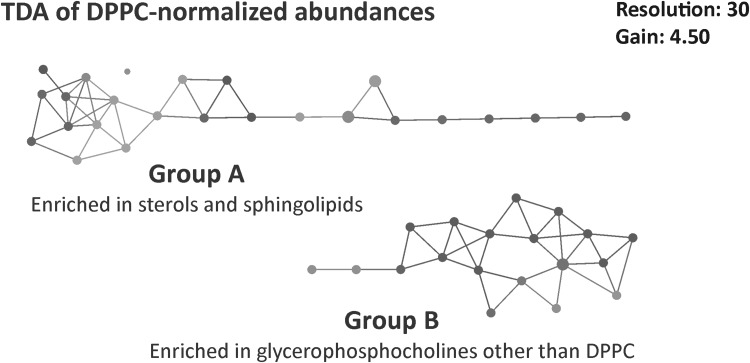
Induced sputum samples were obtained from 41 healthy non-smoking adults, and their lipid compositions analysed using a combination of untargeted shotgun and liquid chromatography mass spectrometry methods. Topological data analysis (TDA) was used to group subjects with comparable sputum lipidomes in order to identify distinct ELF phenotypes.
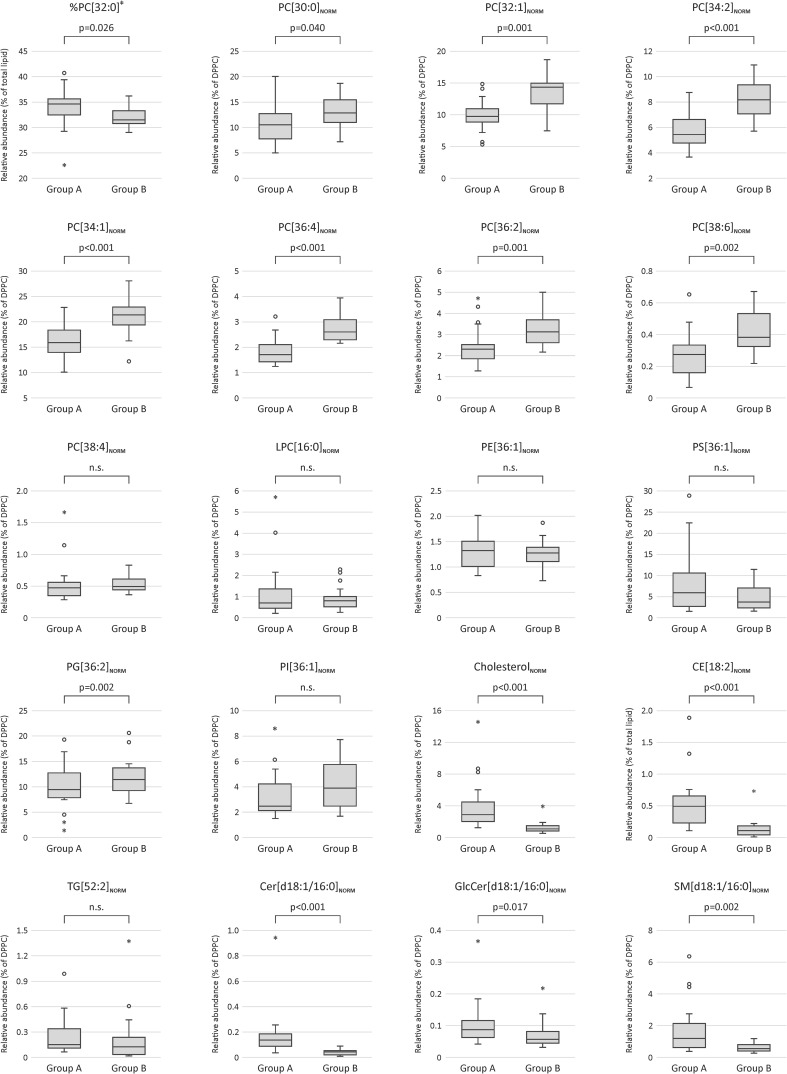
The induced sputum lipidome was diverse, comprising a range of different molecular classes, including at least 75 glycerophospholipids, 13 sphingolipids, 5 sterol lipids and 12 neutral glycerolipids. TDA identified two distinct phenotypes differentiated by a higher total lipid content and specific enrichments of diacyl-glycerophosphocholines, -inositols and -glycerols in one group, with enrichments of sterols, glycolipids and sphingolipids in the other. Subjects presenting the lipid-rich ELF phenotype also had significantly higher BMI, but did not differ in respect of other demographic characteristics such as age or gender.
We provide the first evidence that the ELF lipidome varies significantly between healthy individuals and propose that such differences are related to weight status, highlighting the potential impact of (over)nutrition on lung lipid metabolism.
通过痰液诱导采集的肺上皮衬液(ELF)是一种富含细胞、蛋白质和脂质的介质。然而,尽管它在维持肺功能、内稳态和防御方面起着关键作用,但 ELF 的组成和生物学特性,尤其是脂质方面,仍不完全清楚。
描述健康成年个体诱导痰液的脂质组学特征,并研究不同 ELF 脂质表型与研究队列中人口统计学特征之间的关联。
从 41 名健康不吸烟的成年人中获得诱导痰液样本,并使用非靶向 shotgun 和液相色谱质谱联用方法分析其脂质组成。拓扑数据分析(TDA)用于对具有相似痰液脂质组学的受试者进行分组,以识别不同的 ELF 表型。
诱导痰液的脂质组学具有多样性,包括多种不同的分子类别,至少包含 75 种甘油磷脂、13 种鞘脂、5 种甾醇脂质和 12 种中性甘油脂质。TDA 鉴定出两种不同的表型,一种表型的总脂质含量较高,并且特定的二酰基甘油磷酸胆碱、-肌醇和-甘油含量丰富,另一种表型则富含甾醇、糖脂和鞘脂。具有富含脂质的 ELF 表型的受试者的 BMI 也显著较高,但在年龄、性别等其他人口统计学特征方面没有差异。
我们首次提供了证据表明,健康个体之间的 ELF 脂质组学存在显著差异,并提出这种差异与体重状况有关,这突显了(过度)营养对肺脂质代谢的潜在影响。