Department of Veterinary Biosciences, College of Veterinary Medicine, The Ohio State University, Columbus, OH 43210, USA.
Department of Veterinary Clinical Sciences, College of Veterinary Medicine, The Ohio State University, Columbus, OH 43210, USA.
Viruses. 2019 Mar 2;11(3):213. doi: 10.3390/v11030213.
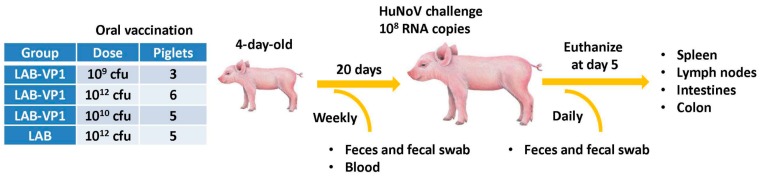
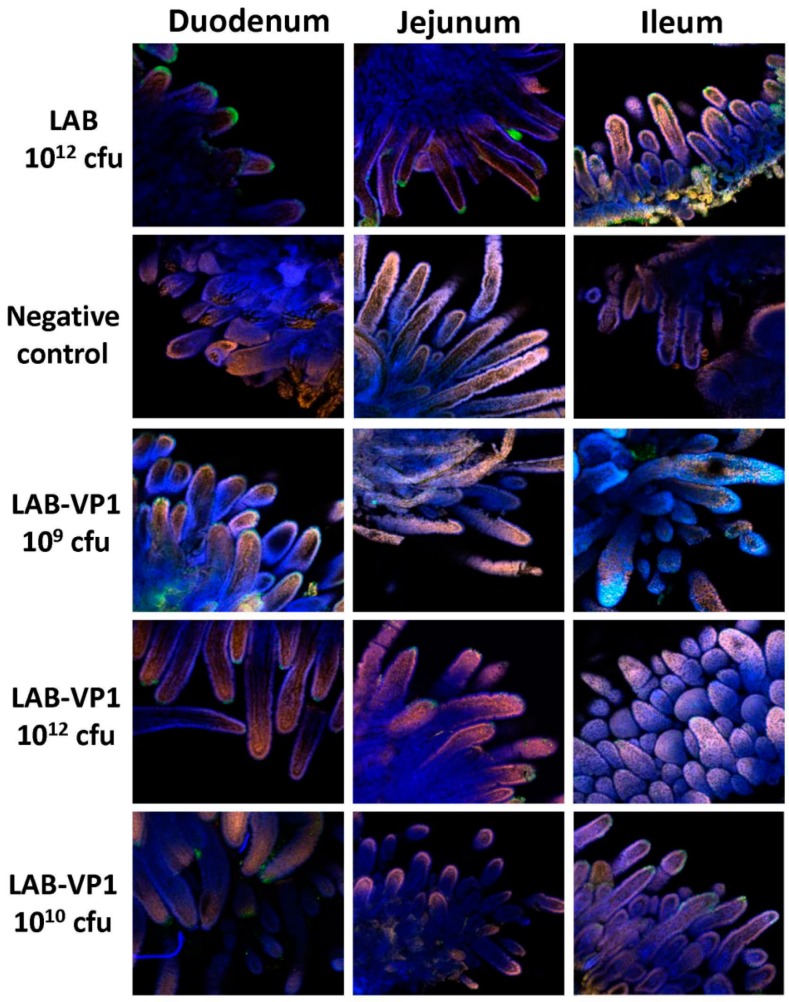
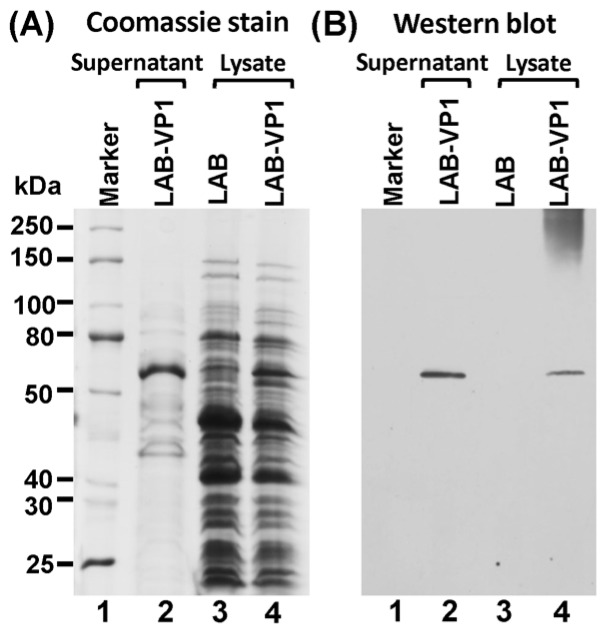
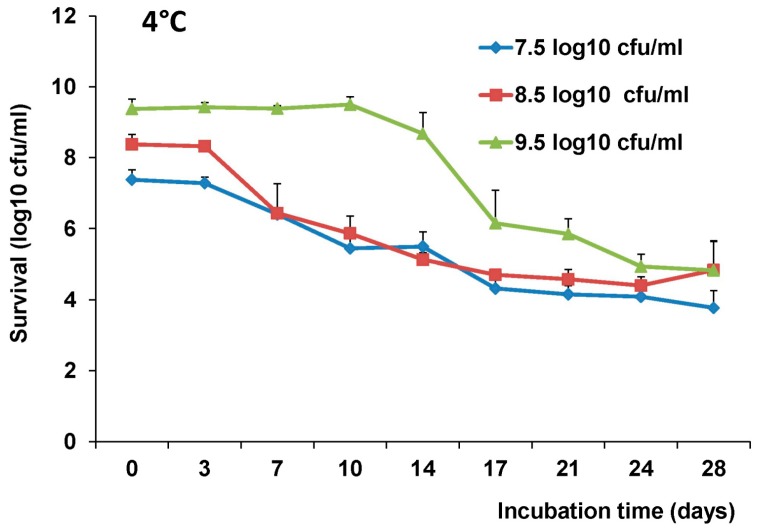
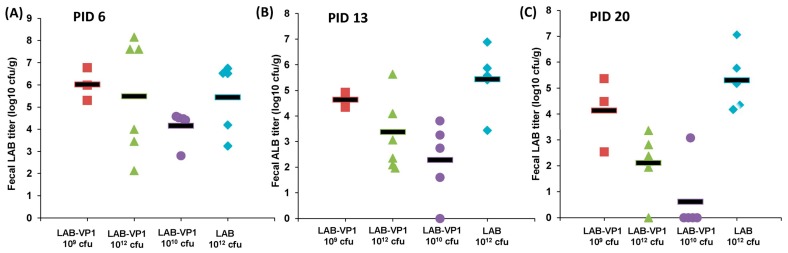
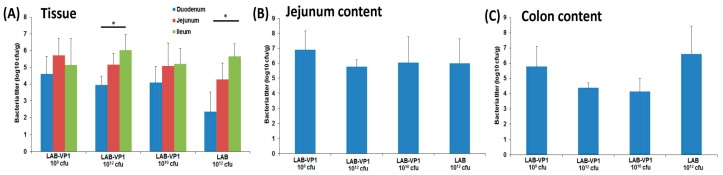
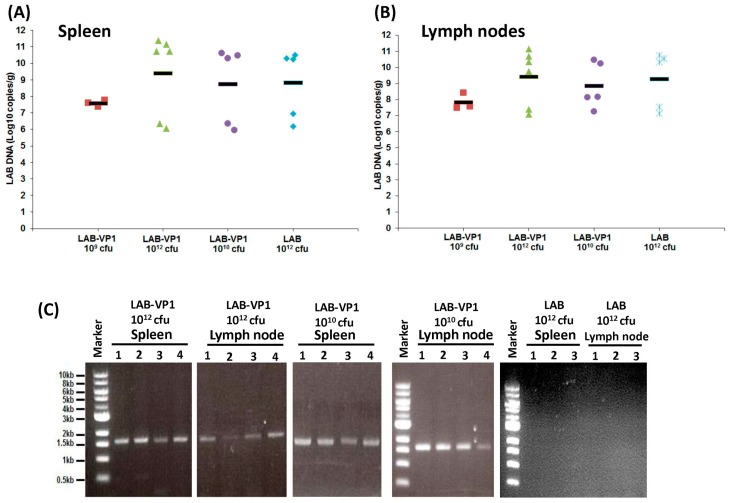
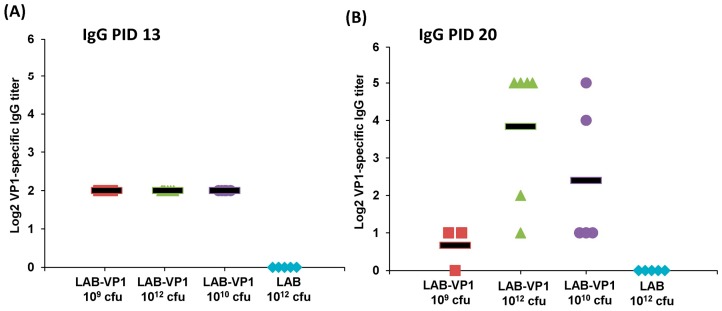
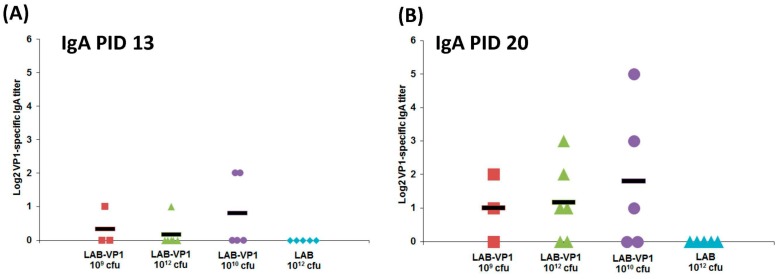
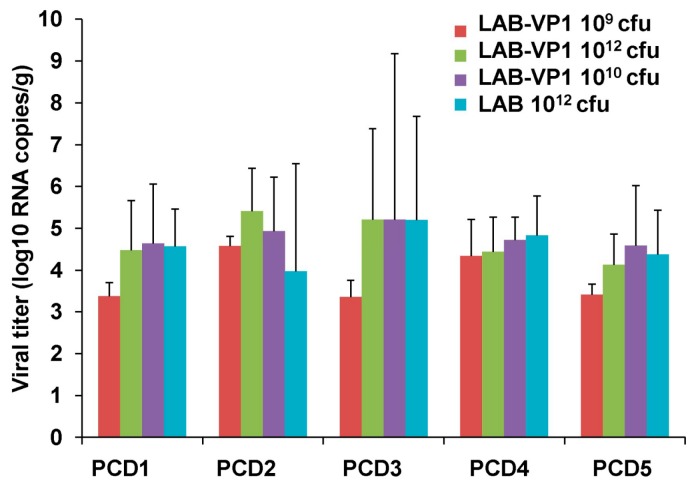
Human noroviruses (HuNoVs) are responsible for more than 95% of the non-bacterial acute gastroenteritis epidemics in the world. The CDC estimates that every year 21 million individuals suffer from HuNoV-induced gastroenteritis in the United States. Currently, there is no FDA-approved vaccine for HuNoVs. Development of an effective vaccine has been hampered by the lack of an efficient cell culture system for HuNoVs and a suitable small animal model for pathogenesis study. In this study, we developed lactic acid bacteria (LAB) as a vector to deliver HuNoV antigen. A LAB strain () carrying VP1 gene of a HuNoV GII.4 virus (LAB-VP1) was constructed. It was found that HuNoV VP1 protein was highly expressed by LAB vector and was secreted into media supernatants. To test whether LAB-based HuNoV vaccine candidate is immunogenic, 4-day-old gnotobiotic piglets were orally inoculated with various doses of LAB-VP1. It was found that LABs were persistent in the small intestine of piglets and shed in pig feces for at least 25 days post inoculation. LAB DNA and VP1 were detected in mesenteric lymph nodes and spleen tissue in LAB-VP1 inoculated groups. HuNoV-specific IgG and IgA were detectable in serum and feces respectively at day 13 post-inoculation, and further increased at later time points. After being challenged with HuNoV GII.4 strain, a large amount of HuNoV antigens were observed in the duodenum, jejunum, and ileum sections of the intestine in the LAB control group. In contrast, significantly less, or no, HuNoV antigens were detected in the LAB-VP1 immunized groups. Collectively, these results demonstrate that a LAB-based HuNoV vaccine induces protective immunity in gnotobiotic piglets.
人类诺如病毒(HuNoVs)是导致全球 95%以上非细菌性急性肠胃炎流行的罪魁祸首。美国疾病控制与预防中心(CDC)估计,每年有 2100 万人在美国感染 HuNoV 引起的肠胃炎。目前,尚无 FDA 批准的 HuNoV 疫苗。由于缺乏有效的 HuNoV 细胞培养系统和适合的发病机制研究的小动物模型,有效的疫苗开发受到了阻碍。在本研究中,我们开发了乳酸菌(LAB)作为递送 HuNoV 抗原的载体。构建了携带 HuNoV GII.4 病毒 VP1 基因的 LAB 株(LAB-VP1)。结果发现,HuNoV VP1 蛋白由 LAB 载体高度表达,并分泌到培养基上清液中。为了测试 LAB 基 HuNoV 疫苗候选物是否具有免疫原性,将 4 天大的无菌仔猪经口接种不同剂量的 LAB-VP1。结果发现,LAB 在仔猪小肠中持续存在,并在接种后至少 25 天从猪粪便中排出。在 LAB-VP1 接种组的肠系膜淋巴结和脾组织中检测到 LAB DNA 和 VP1。接种后第 13 天,血清和粪便中可检测到 HuNoV 特异性 IgG 和 IgA,随后在后续时间点进一步增加。用 HuNoV GII.4 株攻毒后,在 LAB 对照组的十二指肠、空肠和回肠切片中观察到大量 HuNoV 抗原。相比之下,在 LAB-VP1 免疫组中,HuNoV 抗原的量明显减少或未检测到。总之,这些结果表明,LAB 基 HuNoV 疫苗可诱导无菌仔猪产生保护性免疫。