Program in Integrative Cell Signaling and Neurobiology of Metabolism, Department of Comparative Medicine, USA.
Program in Integrative Cell Signaling and Neurobiology of Metabolism, Department of Comparative Medicine, USA; Interdepartmental Neuroscience Program, USA.
Mol Metab. 2019 Jun;24:120-138. doi: 10.1016/j.molmet.2019.02.005. Epub 2019 Feb 21.
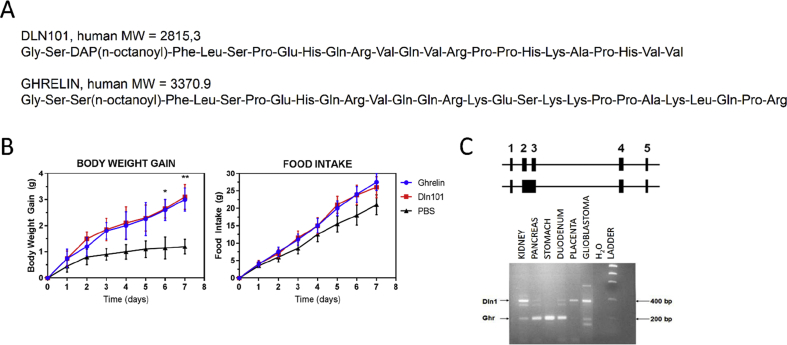
Dopamine neurons in the Substantia nigra (SN) play crucial roles in control of voluntary movement. Extensive degeneration of this neuronal population is the cause of Parkinson's disease (PD). Many factors have been linked to SN DA neuronal survival, including neuronal pacemaker activity (responsible for maintaining basal firing and DA tone) and mitochondrial function. Dln-101, a naturally occurring splice variant of the human ghrelin gene, targets the ghrelin receptor (GHSR) present in the SN DA cells. Ghrelin activation of GHSR has been shown to protect SN DA neurons against 1-methyl-4-phenyl-1,2,5,6 tetrahydropyridine (MPTP) treatment. We decided to compare the actions of Dln-101 with ghrelin and identify the mechanisms associated with neuronal survival.
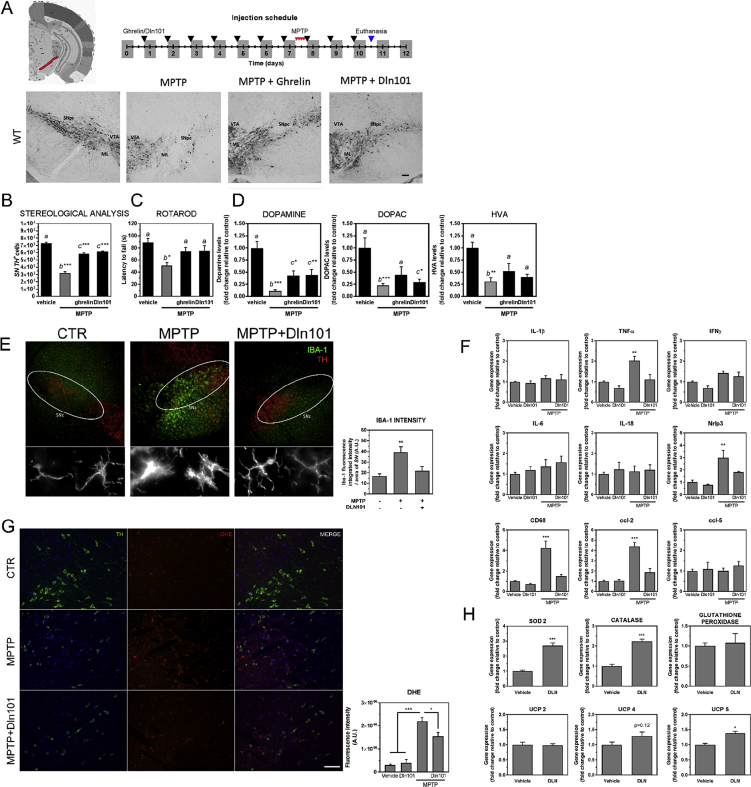
Histologial, biochemical, and behavioral parameters were used to evaluate neuroprotection. Inflammation and redox balance of SN DA cells were evaluated using histologial and real-time PCR analysis. Designer Receptors Exclusively Activated by Designer Drugs (DREADD) technology was used to modulate SN DA neuron electrical activity and associated survival. Mitochondrial dynamics in SN DA cells was evaluated using electron microscopy data.
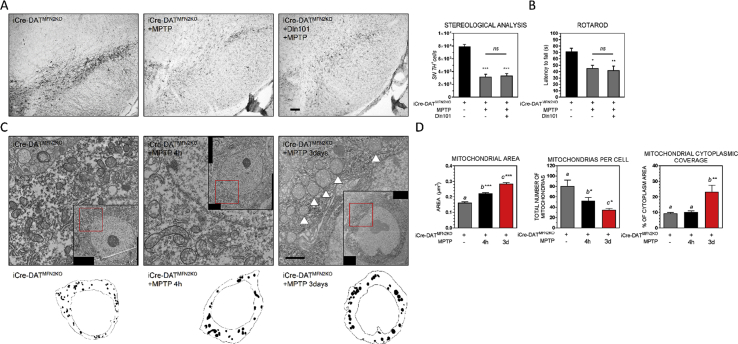
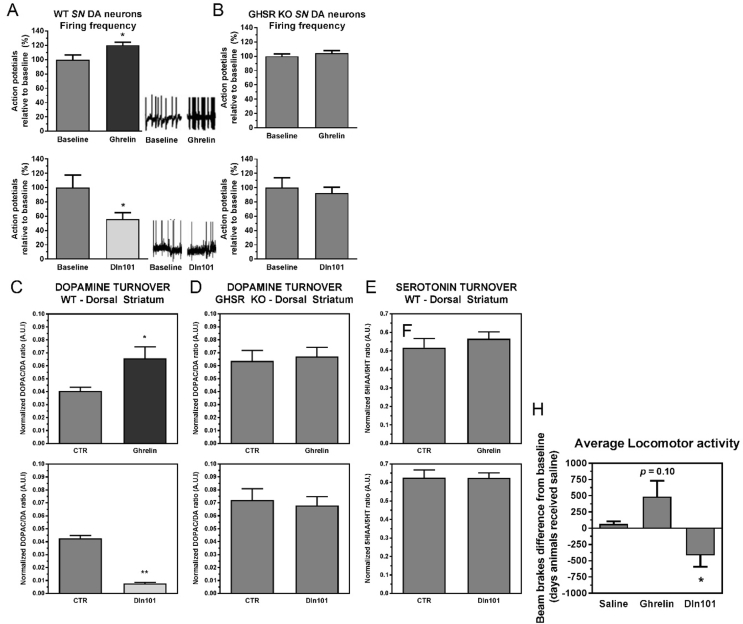
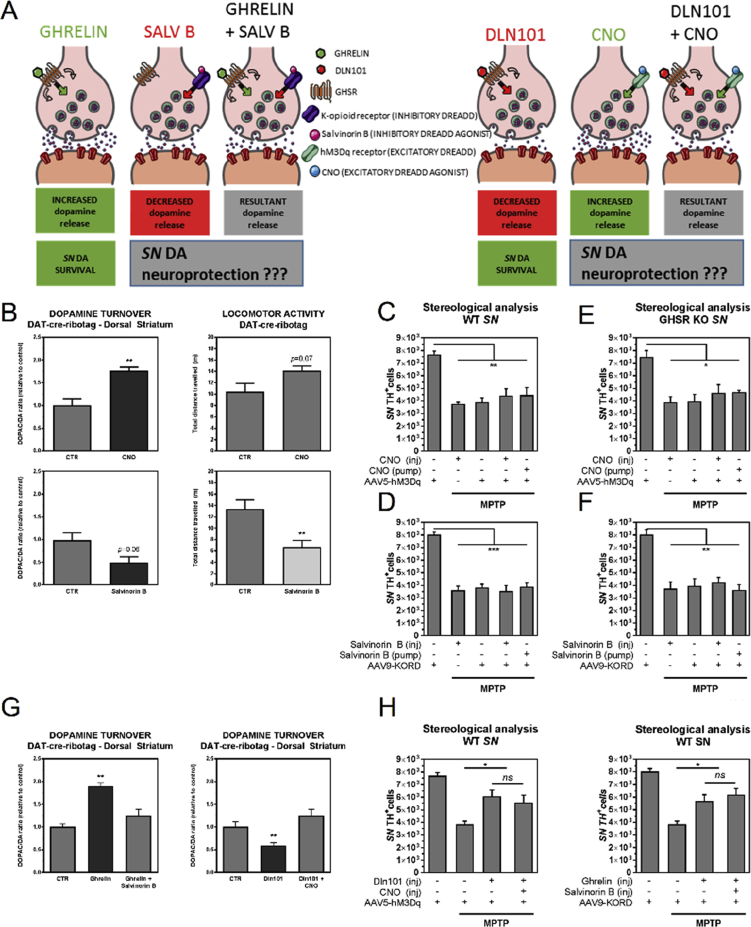
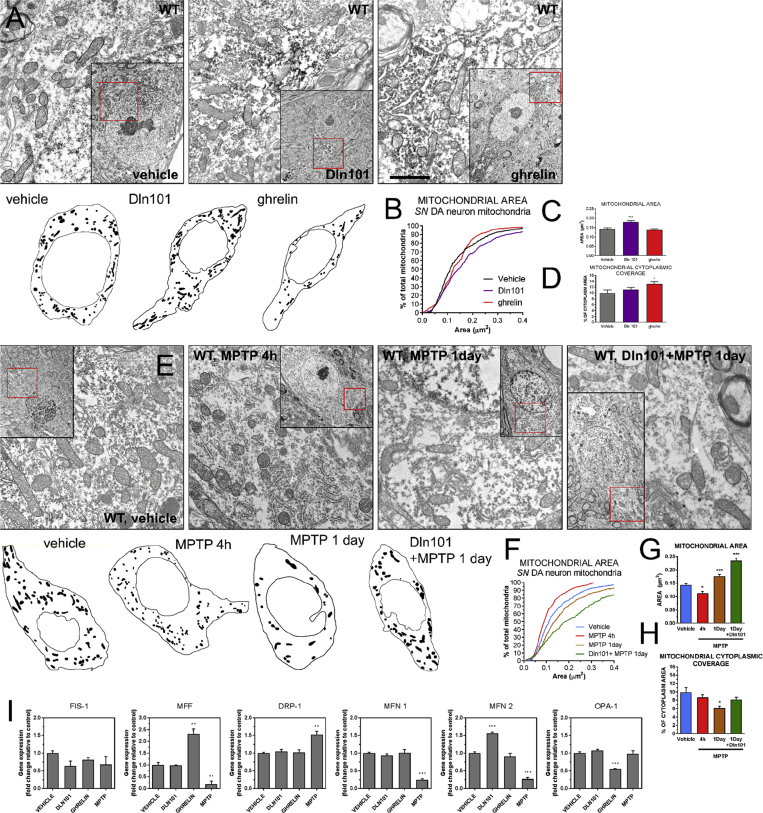
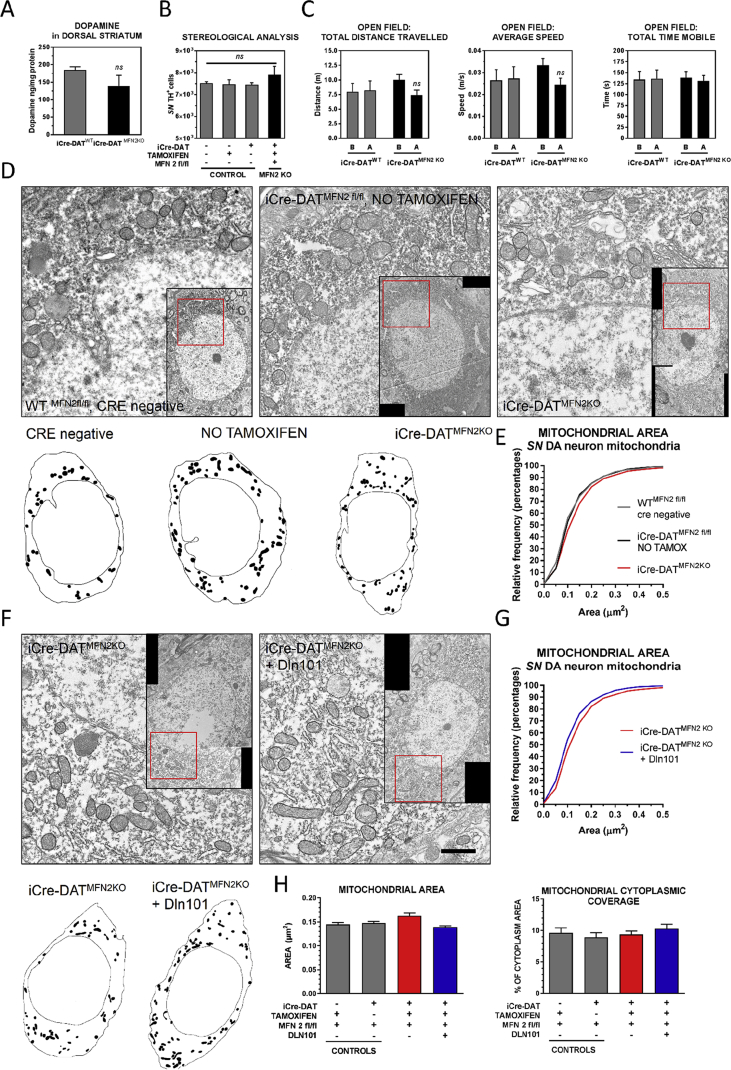
Here, we report that the human isoform displays an equivalent neuroprotective factor. However, while exogenous administration of mouse ghrelin electrically activates SN DA neurons increasing dopamine output, as well as locomotion, the human isoform significantly suppressed dopamine output, with an associated decrease in animal motor behavior. Investigating the mechanisms by which GHSR mediates neuroprotection, we found that dopamine cell-selective control of electrical activity is neither sufficient nor necessary to promote SN DA neuron survival, including that associated with GHSR activation. We found that Dln101 pre-treatment diminished MPTP-induced mitochondrial aberrations in SN DA neurons and that the effect of Dln101 to protect dopamine cells was dependent on mitofusin 2, a protein involved in the process of mitochondrial fusion and tethering of the mitochondria to the endoplasmic reticulum.
Taken together, these observations unmasked a complex role of GHSR in dopamine neuronal protection independent on electric activity of these cells and revealed a crucial role for mitochondrial dynamics in some aspects of this process.
位于黑质(SN)的多巴胺神经元在控制自主运动中起着至关重要的作用。该神经元群体的广泛退化是帕金森病(PD)的原因。许多因素与 SN DA 神经元的存活有关,包括神经元起搏活动(负责维持基础放电和 DA 音调)和线粒体功能。Dln-101 是人类生长激素释放肽基因的天然剪接变体,靶向存在于 SN DA 细胞中的生长激素释放肽受体(GHSR)。已经表明,生长激素释放肽激活 GHSR 可保护 SN DA 神经元免受 1-甲基-4-苯基-1,2,5,6 四氢吡啶(MPTP)处理。我们决定比较 Dln-101 与生长激素释放肽的作用,并确定与神经元存活相关的机制。
使用组织学、生化和行为参数来评估神经保护作用。使用组织学和实时 PCR 分析评估 SN DA 细胞的炎症和氧化还原平衡。使用设计的受体专门激活设计的药物(DREADD)技术来调节 SN DA 神经元的电活动和相关存活。使用电子显微镜数据评估 SN DA 细胞中的线粒体动力学。
在这里,我们报告说人类同种型显示出等效的神经保护因子。然而,虽然外源性给予鼠生长激素释放肽可使 SN DA 神经元电激活,增加多巴胺输出,并增加动物运动行为,但人类同种型显着抑制多巴胺输出,并伴有动物运动行为减少。研究 GHSR 介导神经保护的机制,我们发现多巴胺细胞选择性地控制电活动既不是促进 SN DA 神经元存活的充分条件,也不是必要条件,包括 GHSR 激活的作用。我们发现,Dln101 预处理可减轻 SN DA 神经元中 MPTP 诱导的线粒体异常,并且 Dln101 保护多巴胺细胞的作用依赖于线粒体融合蛋白 2,该蛋白参与线粒体融合过程和将线粒体与内质网连接。
总之,这些观察结果揭示了 GHSR 在多巴胺神经元保护中的复杂作用,独立于这些细胞的电活动,并揭示了线粒体动力学在该过程的某些方面的关键作用。