Horak Peter, Weischenfeldt Joachim, von Amsberg Gunhild, Beyer Burkhard, Schütte Andreas, Uhrig Sebastian, Gieldon Laura, Klink Barbara, Feuerbach Lars, Hübschmann Daniel, Kreutzfeldt Simon, Heining Christoph, Maier Sebastian, Hutter Barbara, Penzel Roland, Schlesner Matthias, Eils Roland, Sauter Guido, Stenzinger Albrecht, Brors Benedikt, Schröck Evelin, Glimm Hanno, Fröhling Stefan, Schlomm Thorsten
Department of Translational Medical Oncology, National Center for Tumor Diseases (NCT) Heidelberg and German Cancer Research Center (DKFZ), 69120 Heidelberg, Germany.
DKFZ-Heidelberg Center for Personalized Oncology (HIPO), 69120 Heidelberg, Germany.
Cold Spring Harb Mol Case Stud. 2019 Apr 1;5(2). doi: 10.1101/mcs.a003657. Print 2019 Apr.
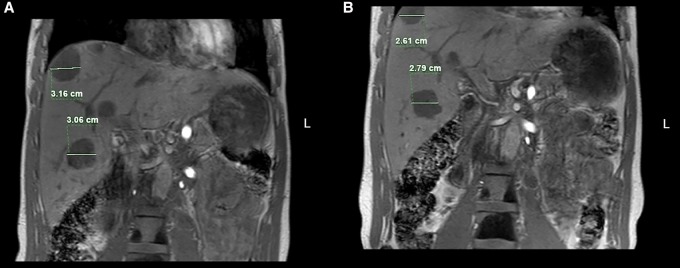
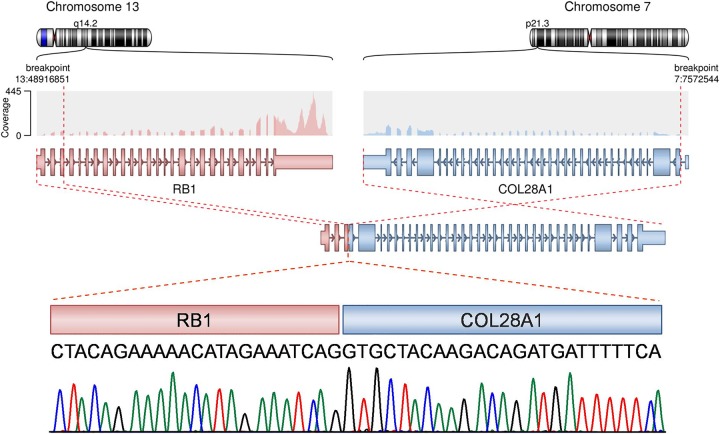
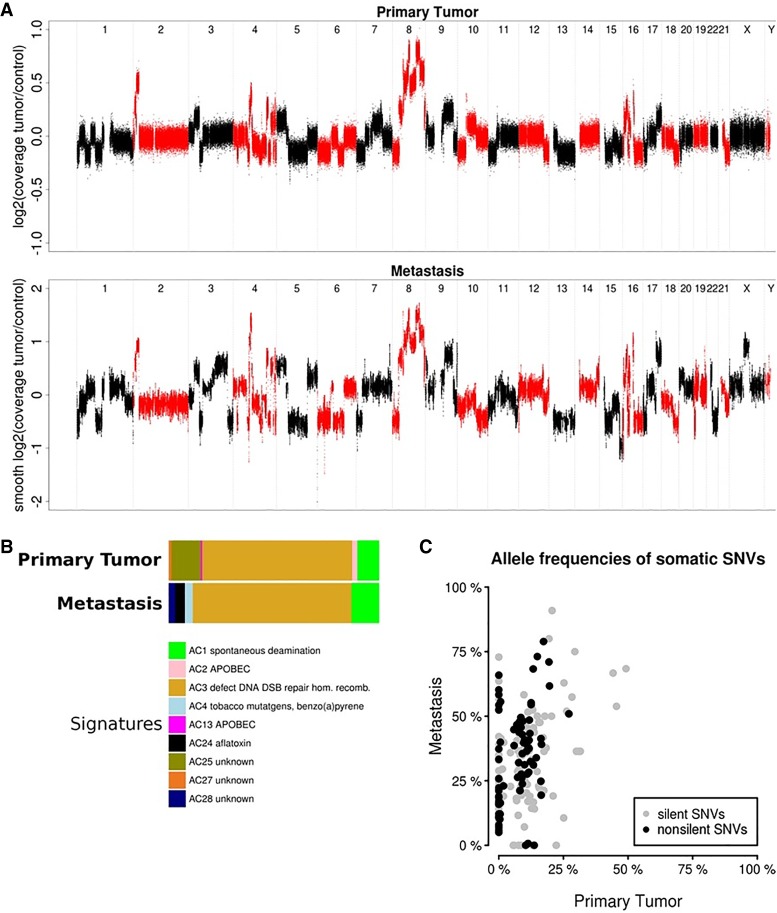
Prostate cancers harboring DNA repair gene alterations are particularly sensitive to PARP inhibitor treatment. We report a case of an advanced prostate cancer patient profiled within the NCT-MASTER (Molecularly Aided Stratification for Tumor Eradication Research) precision oncology program using next-generation sequencing. Comprehensive genomic and transcriptomic analysis identified a pathogenic germline variant as well as a mutational signature associated with disturbed homologous recombination together with structural genomic rearrangements. A molecular tumor board identified a potential benefit of targeted therapy and recommended PARP inhibition and platinum-based chemotherapy. Single-agent treatment with the PARP inhibitor olaparib as well as subsequent combination with platinum-based chemotherapy resulted in disease stabilization and substantial improvement of clinical symptoms. Upon progression, we performed whole-exome and RNA sequencing of a liver metastasis, which demonstrated up-regulation of several genes characteristic for the neuroendocrine prostate cancer phenotype as well as a novel translocation resulting in an in-frame, loss-of-function fusion of We suggest that multidimensional genomic characterization of prostate cancer patients undergoing PARP inhibitor therapy will be necessary to capture and understand predictive biomarkers of PARP inhibitor sensitivity and resistance.
携带DNA修复基因改变的前列腺癌对PARP抑制剂治疗尤为敏感。我们报告了一例晚期前列腺癌患者的病例,该患者在NCT-MASTER(肿瘤根除研究的分子辅助分层)精准肿瘤学项目中使用下一代测序进行了分析。全面的基因组和转录组分析确定了一种致病的种系变异,以及与同源重组紊乱相关的突变特征和结构基因组重排。一个分子肿瘤委员会确定了靶向治疗的潜在益处,并推荐了PARP抑制和铂类化疗。使用PARP抑制剂奥拉帕利进行单药治疗以及随后与铂类化疗联合使用,导致疾病稳定并显著改善了临床症状。疾病进展后,我们对肝转移灶进行了全外显子组和RNA测序,结果显示神经内分泌前列腺癌表型的几个特征基因上调,以及一种新的易位,导致一个读码框内、功能丧失的融合。我们认为,对接受PARP抑制剂治疗的前列腺癌患者进行多维度基因组特征分析对于捕捉和理解PARP抑制剂敏感性和耐药性的预测生物标志物是必要的。