Departments of Emergency Medicine, Chang Gung Memorial Hospital Linkou, Taoyuan, Taiwan.
Departments of Cardiology, Chang Gung Memorial Hospital Linkou, Taoyuan, Taiwan.
PLoS One. 2019 Mar 5;14(3):e0213187. doi: 10.1371/journal.pone.0213187. eCollection 2019.
Patients with chronic obstructive pulmonary disease (COPD) less often receive β-blockers after acute myocardial infarction (AMI). This may influence their outcomes after AMI. This study evaluated the efficacy of β-blockers after AMI in patients with COPD, compared with non-dihydropyridine calcium channel blockers (NDCCBs) and absence of these two kinds of treatment.
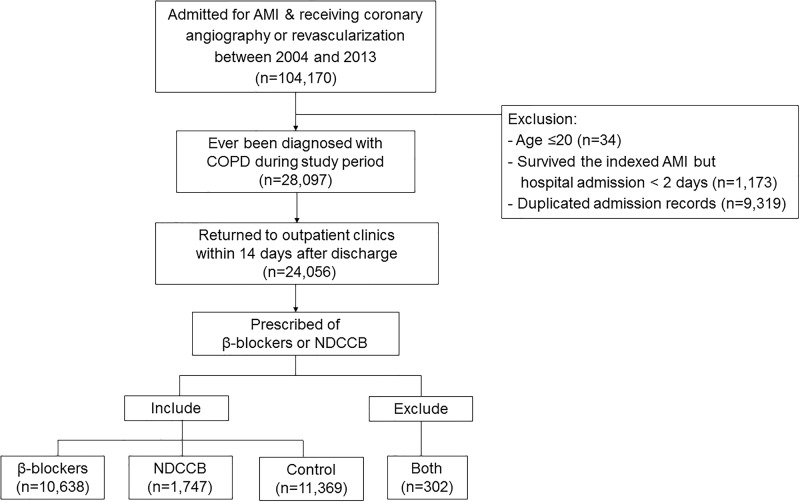
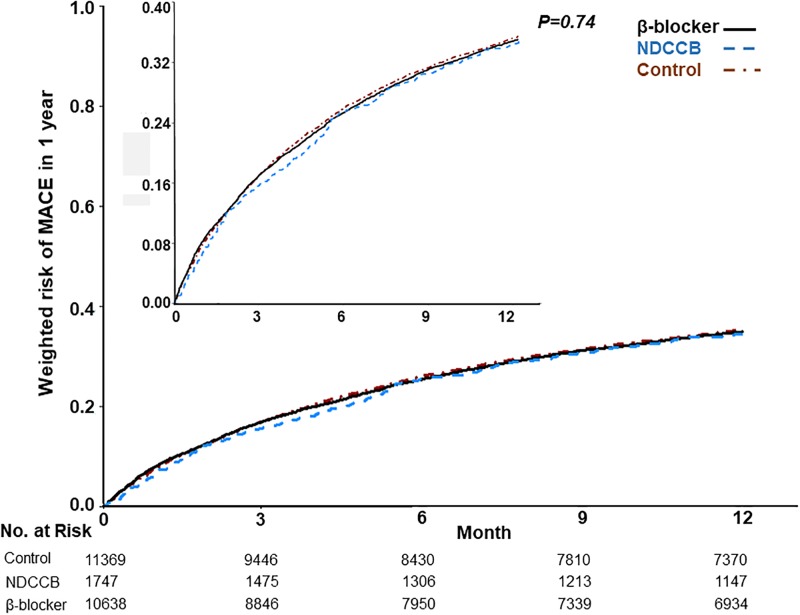
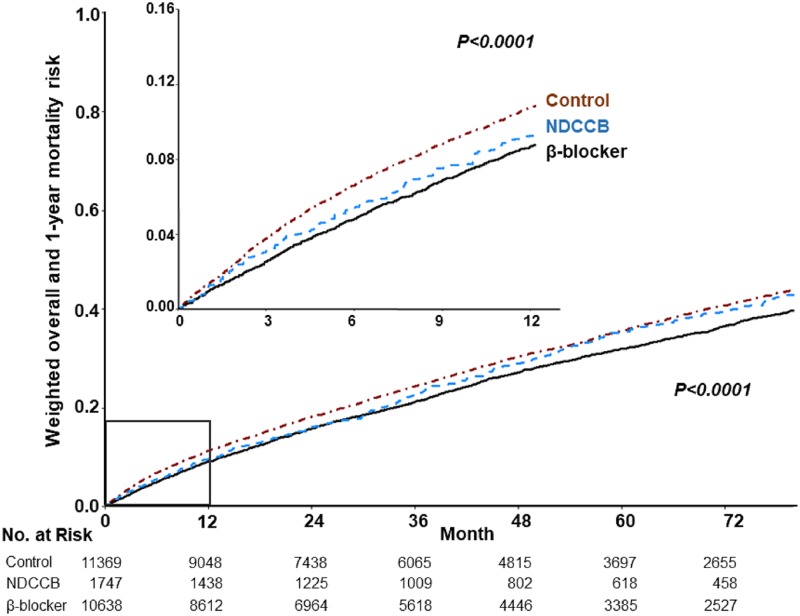
We conducted a nationwide population-based cohort study using data retrieved from Taiwan National Health Insurance Research Database. We collected 28,097 patients with COPD who were hospitalized for AMI between January 2004 and December 2013. After hospital discharge, 24,056 patients returned to outpatient clinics within 14 days (the exposure window). Those who received both β-blockers and NDCCBs (n = 302) were excluded, leaving 23,754 patients for analysis. Patients were classified into the β-blocker group (n = 10,638, 44.8%), the NDCCB group, (n = 1,747, 7.4%) and the control group (n = 11,369, 47.9%) based on their outpatient prescription within the exposure window. The β-blockers group of patients had lower overall mortality risks (adjusted hazard ratio [95% confidence interval]: 0.91 [0.83-0.99] versus the NDCCB group; 0.88 [0.84-0.93] versus the control group), but the risk of major adverse cardiac events within 1 year was not statistically different. β-blockers decreased risks of re-hospitalization for COPD and other respiratory diseases by 12-32%.
The use of β-blockers after AMI was associated with a reduced mortality risk in patients with COPD. β-blockers did not increase the risk of COPD exacerbations.
慢性阻塞性肺疾病(COPD)患者在急性心肌梗死(AMI)后较少接受β受体阻滞剂治疗。这可能会影响他们AMI 后的结局。本研究评估了 COPD 患者在 AMI 后使用β受体阻滞剂的疗效,与非二氢吡啶类钙通道阻滞剂(NDCCB)和不使用这两种治疗方法进行比较。
我们使用台湾全民健康保险研究数据库的数据进行了一项全国性基于人群的队列研究。我们收集了 2004 年 1 月至 2013 年 12 月期间因 AMI 住院的 28097 例 COPD 患者。出院后,24056 例患者在 14 天内(暴露窗口)返回门诊。排除同时使用β受体阻滞剂和 NDCCB 的患者(n=302),剩余 23754 例患者进行分析。根据暴露窗口内的门诊处方,患者分为β受体阻滞剂组(n=10638,44.8%)、NDCCB 组(n=1747,7.4%)和对照组(n=11369,47.9%)。β受体阻滞剂组患者的总死亡率风险较低(调整后的危险比[95%置信区间]:0.91[0.83-0.99]与 NDCCB 组相比;0.88[0.84-0.93]与对照组相比),但 1 年内主要不良心脏事件的风险无统计学差异。β受体阻滞剂可使 COPD 和其他呼吸系统疾病的再住院风险降低 12%-32%。
AMI 后使用β受体阻滞剂与 COPD 患者的死亡率降低相关。β受体阻滞剂不会增加 COPD 恶化的风险。