Department of Biology, McMaster University, Hamilton, Ontario, Canada.
Michael G. DeGroote Institute for Infectious Disease Research, McMaster University, Hamilton, Ontario, Canada.
mBio. 2019 Mar 5;10(2):e00171-19. doi: 10.1128/mBio.00171-19.
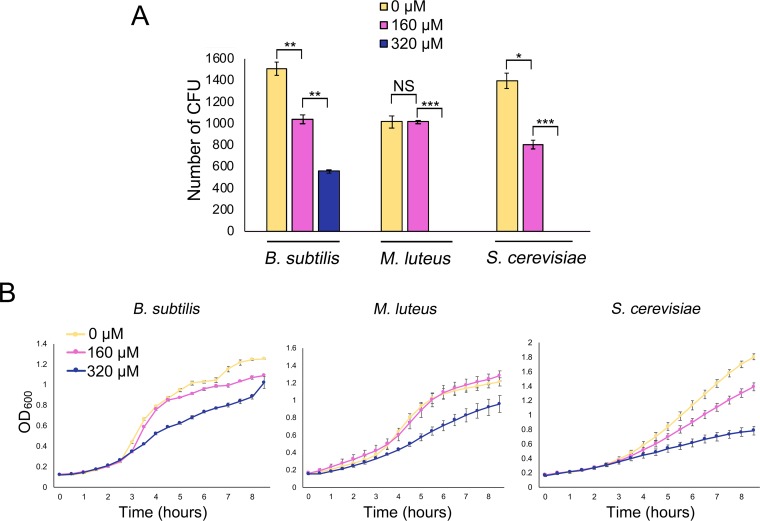
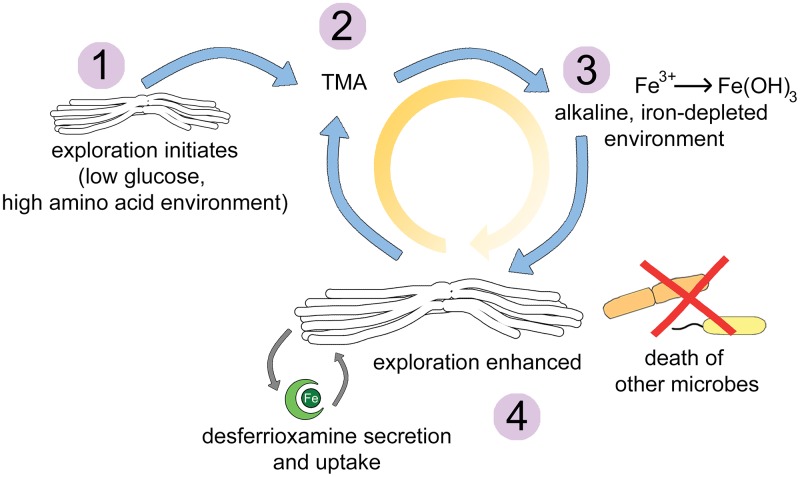
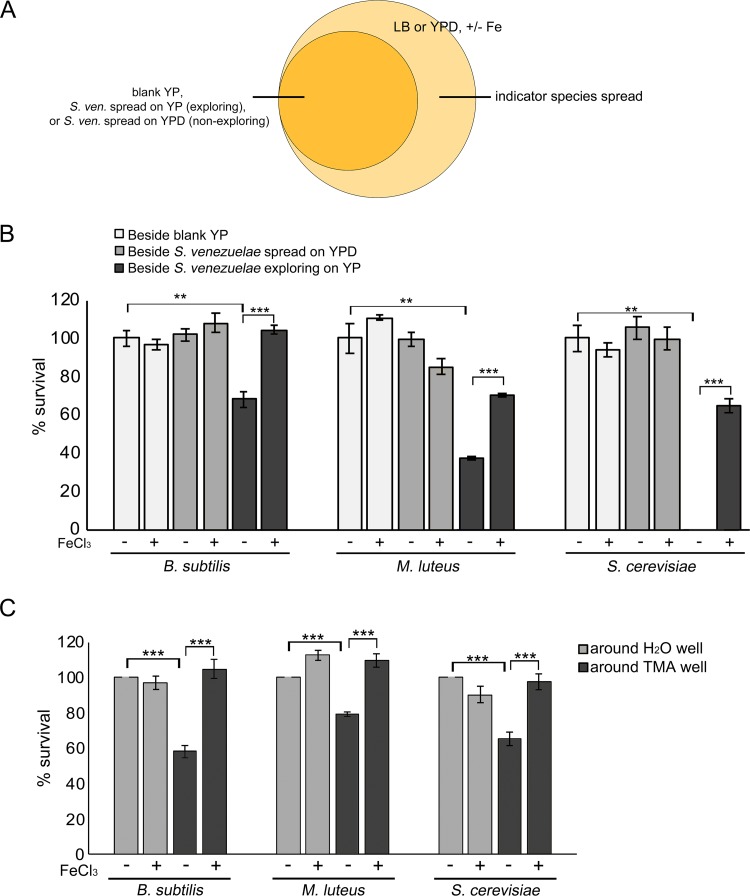
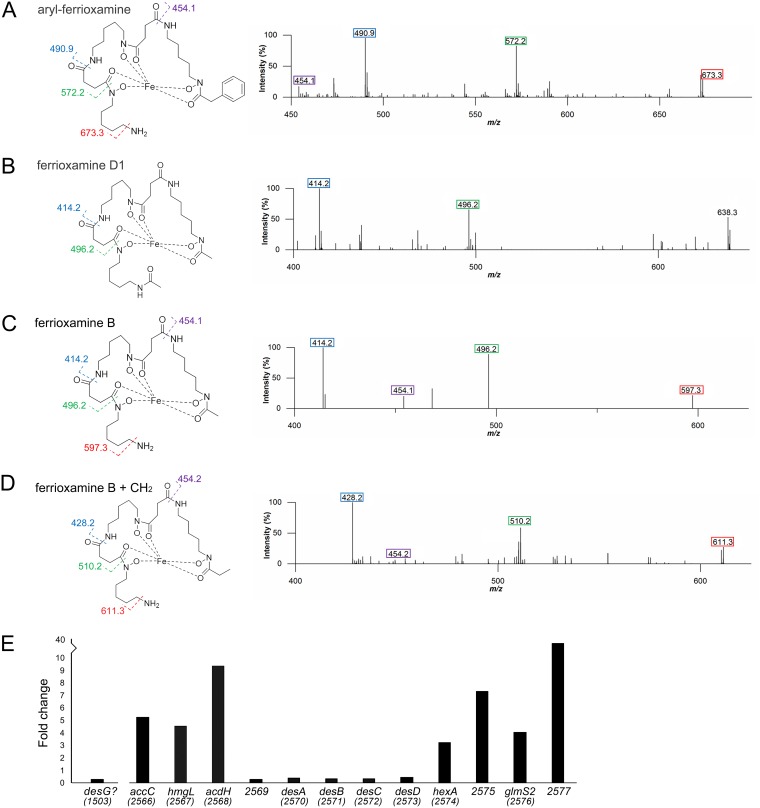
Bacteria and fungi produce a wide array of volatile organic compounds (VOCs), and these can act as chemical cues or as competitive tools. Recent work has shown that the VOC trimethylamine (TMA) can promote a new form of growth, termed "exploration." Here, we report that TMA also serves to alter nutrient availability in the area surrounding exploring cultures: TMA dramatically increases the environmental pH and, in doing so, reduces iron availability. This, in turn, compromises the growth of other soil bacteria and fungi. In response to this low-iron environment, secretes a suite of differentially modified siderophores and upregulates genes associated with siderophore uptake. Further reducing iron levels by limiting siderophore uptake or growing cultures in the presence of iron chelators enhanced exploration. Exploration was also increased when was grown in association with the related low-iron- and TMA-tolerant bacteria, due to competition for available iron. We are only beginning to appreciate the role of VOCs in natural communities. This work reveals a new role for VOCs in modulating iron levels in the environment and implies a critical role for VOCs in modulating the behavior of microbes and the makeup of their communities. It further adds a new dimension to our understanding of the interspecies interactions that influence exploration and highlights the importance of iron in exploration modulation. Microbial growth and community interactions are influenced by a multitude of factors. A new mode of growth-exploration-is promoted by interactions with the yeast and requires the emission of trimethylamine (TMA), a pH-raising volatile compound. We show here that TMA emission also profoundly alters the environment around exploring cultures. It specifically reduces iron availability, and this in turn adversely affects the viability of surrounding microbes. Paradoxically, bacteria thrive in these iron-depleted niches, both rewiring their gene expression and metabolism to facilitate iron uptake and increasing their exploration rate. Growth in close proximity to other microbes adept at iron uptake also enhances exploration. Collectively, the data from this work reveal a new role for bacterial volatile compounds in modulating nutrient availability and microbial community behavior. The results further expand the repertoire of interspecies interactions and nutrient cues that impact exploration and provide new mechanistic insight into this unique mode of bacterial growth.
细菌和真菌会产生多种挥发性有机化合物(VOC),这些化合物可以作为化学信号,也可以作为竞争工具。最近的研究表明,挥发性有机化合物三甲胺(TMA)可以促进一种新的生长形式,称为“探索”。在这里,我们报告 TMA 还可以改变探索培养物周围环境的养分可用性:TMA 会显著增加环境 pH 值,从而降低铁的可用性。反过来,这会影响其他土壤细菌和真菌的生长。为了应对这种低铁环境,会分泌一系列差异修饰的铁载体,并上调与铁载体摄取相关的基因。通过限制铁载体摄取或在铁螯合剂存在的情况下培养来进一步降低铁水平,会增强探索。当与相关的低铁和 TMA 耐受细菌共生时,探索也会增加,这是由于对可用铁的竞争。我们才刚刚开始了解 VOC 在自然群落中的作用。这项工作揭示了 VOC 在调节环境中铁水平方面的新作用,并暗示 VOC 在调节微生物行为及其群落组成方面起着关键作用。它进一步为我们理解影响探索的种间相互作用增加了一个新的维度,并强调了铁在探索调节中的重要性。微生物的生长和群落相互作用受到多种因素的影响。一种新的生长形式——探索,是通过与酵母的相互作用而促进的,需要释放三甲胺(TMA),一种能提高 pH 值的挥发性化合物。我们在这里表明,TMA 的排放也会极大地改变探索培养物周围的环境。它特别降低了铁的可用性,这反过来又会对周围微生物的生存能力产生不利影响。矛盾的是,能在这些缺铁的小生境中茁壮成长,它们不仅重新布线其基因表达和新陈代谢以促进铁的摄取,还会提高其探索速率。与擅长铁摄取的其他微生物紧密生长也会增强探索。总的来说,这项工作的数据揭示了细菌挥发性化合物在调节养分可用性和微生物群落行为方面的新作用。结果进一步扩展了影响探索的种间相互作用和养分信号的范围,并为这种独特的细菌生长方式提供了新的机制见解。