Atakaramians Shaghik, Dong Feng Q, Monro Tanya M, Afshar V Shahraam
School of Electrical Engineering and Telecommunications, UNSW Sydney, Sydney, NSW, 2052, Australia.
Institute of Photonics and Optical Science, School of Physics, The University of Sydney, Sydney, NSW, 2006, Australia.
Sci Rep. 2019 Mar 5;9(1):3568. doi: 10.1038/s41598-018-38115-z.
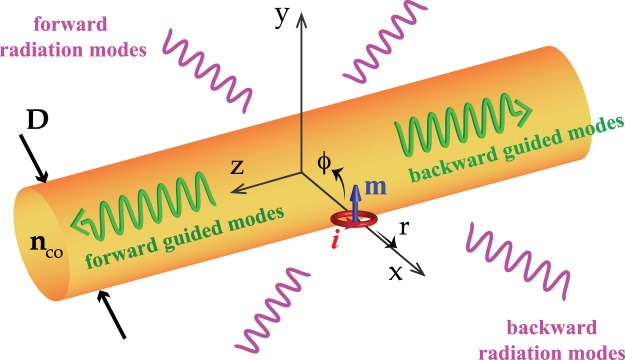
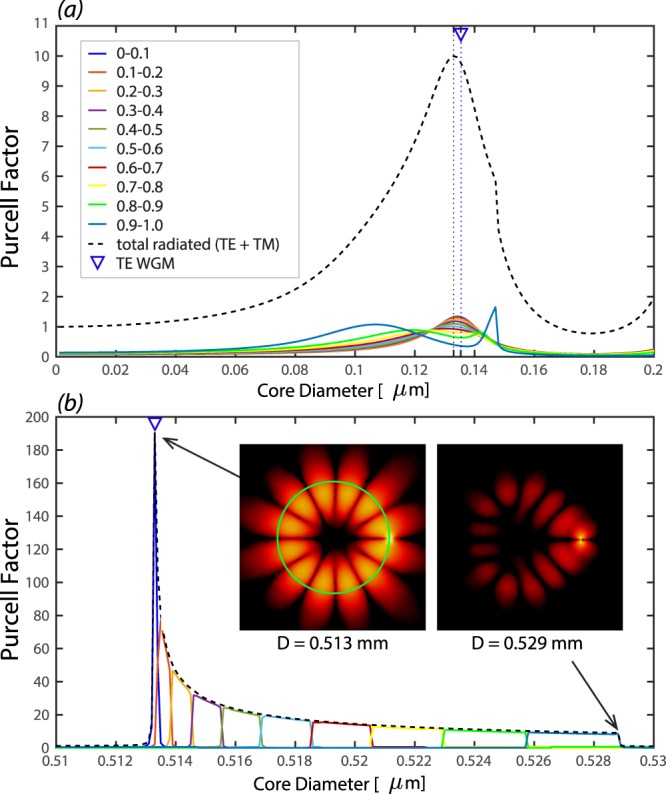
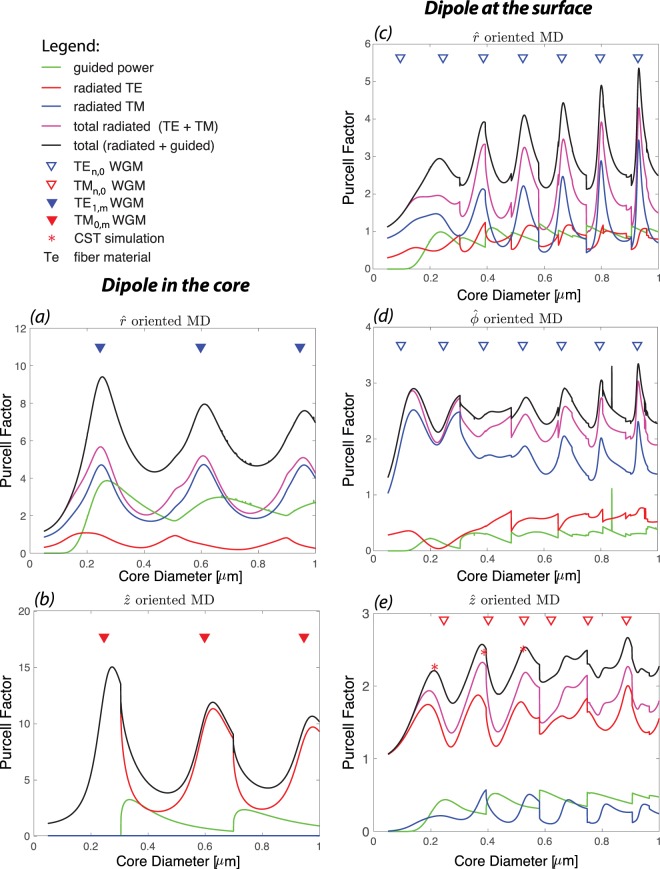
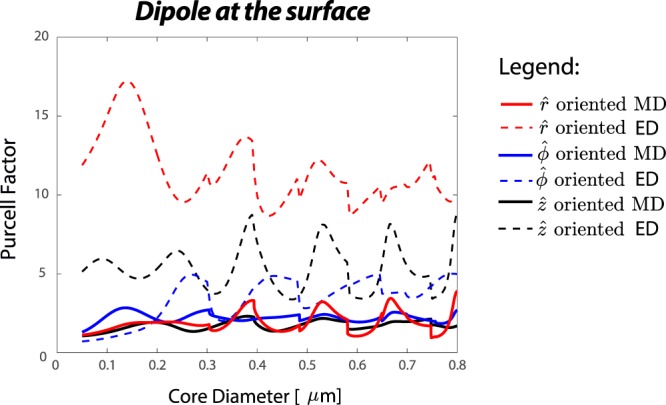
Nanophotonics-photonic structures with subwavelength features-allow accessing high intensity and localized electromagnetic field and hence is an ideal platform for investigating and exploiting strong lightmatter interaction. In particular, such a strong light-matter interaction requires investigating the interaction of a magnetic dipole with the electromagnetic field- a less-explored topic, which has usually been ignored within the framework of electric dipole approximation. Motivated by recent advances in the emerging field of multipolar nanophotonics, here we develop an analytical model that provides a new insight into analyzing a magnetic dipole and a nanofiber. This method enables us to examine the effect of second term in the multipolar expansion of light-matter interaction, magnetic dipole approximation, with individual guided and radiation modes of the nanofiber. This is a critical key in developing nanophotonic integrated devices based on magnetic nature of light for super-imaging, biosensing, and optical computing.
纳米光子学——具有亚波长特征的光子结构——能够实现高强度和局域化的电磁场,因此是研究和利用强光与物质相互作用的理想平台。特别是,这种强光与物质的相互作用需要研究磁偶极子与电磁场的相互作用——这是一个较少被探索的主题,在电偶极子近似框架内通常被忽略。受多极纳米光子学新兴领域近期进展的推动,我们在此开发了一个分析模型,该模型为分析磁偶极子和纳米纤维提供了新的见解。这种方法使我们能够研究光与物质相互作用多极展开中的第二项,即磁偶极子近似,与纳米纤维的各个导模和辐射模的相互作用。这是基于光的磁性开发用于超成像、生物传感和光学计算的纳米光子集成器件的关键所在。