Department of Urology, Hallym University Dongtan Sacred Heart Hospital, Hwaseong, Korea.
Department of Urology, SMG-SNU Boramae Medical Center, Seoul, Korea.
Sci Rep. 2019 Mar 5;9(1):3610. doi: 10.1038/s41598-019-40485-x.
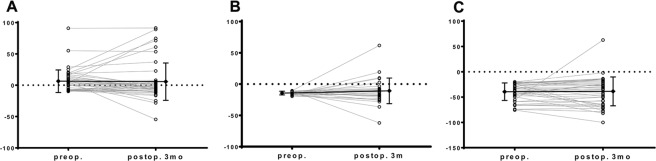
The significant predictors for the postoperative deterioration of separate renal function after minimally invasive stone surgery were investigated in the present prospective and observational study. A total of 117 consecutive patients who underwent retrograde intrarenal surgery or mini-percutaneous nephrolithotomy for renal calculi >10 mm were included in the present study. Perioperative changes in separate renal function were evaluated with Technetium-99m-Diethylene TriaminePenta acetic acid scan prior to intervention and at postoperative 3 months. Based on the functional differences between bilateral renal units, deterioration of separate renal function was graded into the following three groups: normal deterioration (<10%), moderate deterioration (10-20%), and severe deterioration (>20%). A total of 46 patients had a normal separate renal function, while 71 (60.7%) showed abnormal separate function in the involved side, including 29 (24.8%) moderate and 42 (35.9%) severe deterioration. Postoperatively, 48 patients (41.0%) showed aggravation or no recovery of separate renal function. Of the 46 patients with normal separate function, only 9 patients (19.5%) showed postoperative aggravation. Patients with moderate and severe deterioration showed aggravation (n = 7, 24.1%) or no recovery of separate renal function (n = 32, 76.1%, P < 0.001). Preoperative severe deterioration of separate renal function was an independent significant predictor for the postoperative deterioration of renal function (OR: 9.09, 95% CI: 4.007-20.624, P < 0.001). Lower preoperative deterioration of separate renal function showed a high probability of functional recovery. Therefore, it is hypothesized that early intervention might be necessary in cases where the patient exhibits severe aggravation of renal function.
本前瞻性观察研究旨在探讨微创结石手术后孤立肾功能恶化的显著预测因素。共纳入 117 例因肾结石>10mm 而行逆行肾内手术或微经皮肾镜取石术的连续患者。术前和术后 3 个月分别采用锝-99m-二乙三胺五醋酸扫描评估孤立肾功能的变化。根据双侧肾脏功能的差异,孤立肾功能恶化分为以下三组:正常恶化(<10%)、中度恶化(10-20%)和重度恶化(>20%)。共有 46 例患者孤立肾功能正常,71 例(60.7%)受累侧孤立肾功能异常,其中 29 例(24.8%)为中度恶化,42 例(35.9%)为重度恶化。术后,48 例(41.0%)患者孤立肾功能恶化或无恢复。在 46 例孤立肾功能正常的患者中,仅有 9 例(19.5%)术后恶化。中度和重度恶化患者表现为恶化(n=7,24.1%)或无孤立肾功能恢复(n=32,76.1%,P<0.001)。术前孤立肾功能重度恶化是术后肾功能恶化的独立显著预测因素(OR:9.09,95%CI:4.007-20.624,P<0.001)。术前孤立肾功能恶化程度越低,功能恢复的可能性越大。因此,假设对于肾功能严重恶化的患者,可能需要早期干预。