CAS Key Laboratory of Pathogenic Microbiology and Immunology, Institute of Microbiology, Chinese Academy of Sciences, Beijing, 100101, China.
Savaid Medical School, University of Chinese Academy of Sciences, Beijing, 101408, China.
Mol Microbiol. 2019 Jun;111(6):1529-1543. doi: 10.1111/mmi.14235. Epub 2019 Mar 27.
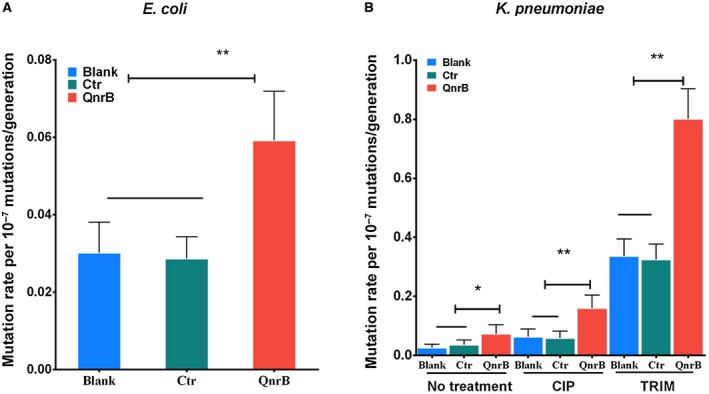
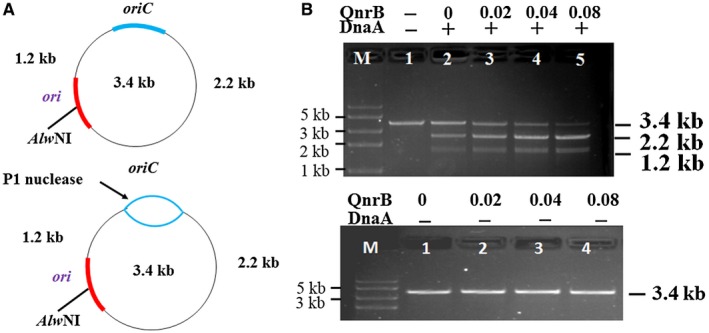
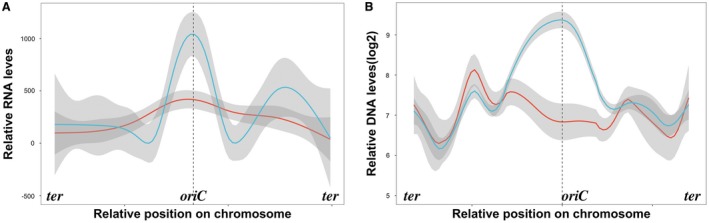
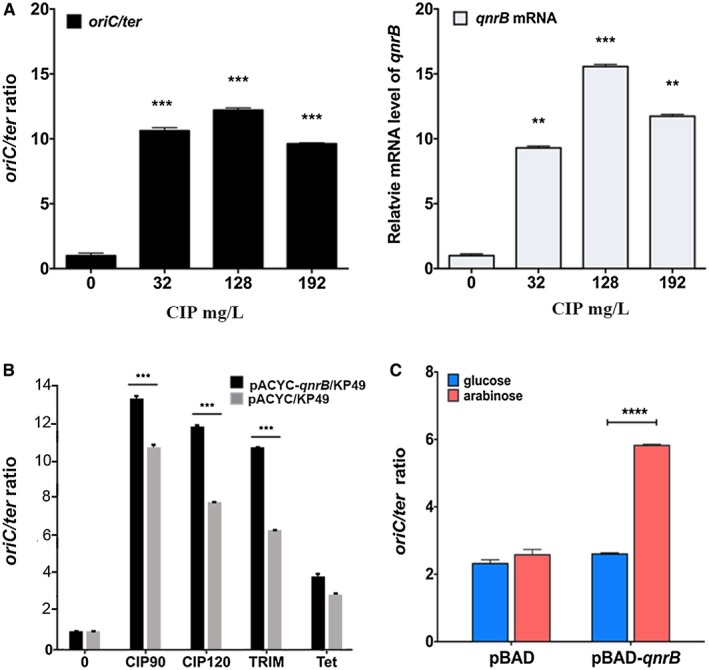
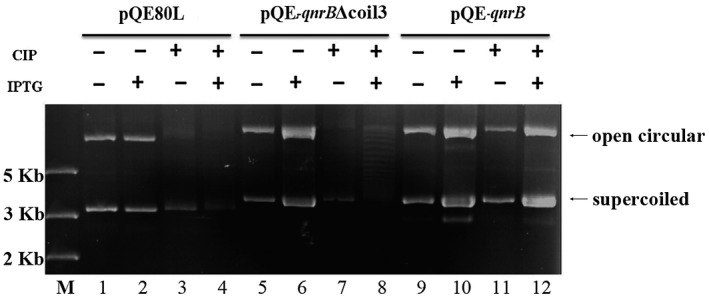
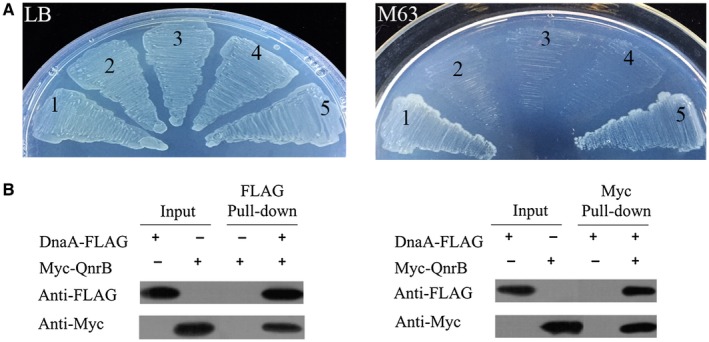
Bacterial antibiotic resistance, a global health threat, is caused by plasmid transfer or genetic mutations. Quinolones are important antibiotics, partially because they are fully synthetic and resistance genes are unlikely to exist in nature; nonetheless, quinolone resistance proteins have been identified. The mechanism by which plasmid-borne quinolone resistance proteins promotes the selection of quinolone-resistant mutants is unclear. Here, we show that QnrB increases the bacterial mutation rate. Transcriptomic and genome sequencing analyses showed that QnrB promoted gene abundance near the origin of replication (oriC). In addition, the QnrB expression level correlated with the replication origin to terminus (oriC/ter) ratio, indicating QnrB-induced DNA replication stress. Our results also show that QnrB is a DnaA-binding protein that may act as an activator of DNA replication initiation. Interaction of QnrB with DnaA promoted the formation of the DnaA-oriC open complex, which leads to DNA replication over-initiation. Our data indicate that plasmid-borne QnrB increases bacterial mutation rates and that genetic changes can alleviate the fitness cost imposed by transmitted plasmids. Derivative mutations may impair antibiotic efficacy and threaten the value of antibiotic treatments. Enhanced understanding of how bacteria adapt to the antibiotic environment will lead to new therapeutic strategies for antibiotic-resistant infections.
细菌对抗生素的耐药性是一个全球性的健康威胁,它是由质粒转移或基因突变引起的。喹诺酮类药物是重要的抗生素,部分原因是它们是完全合成的,自然界中不太可能存在耐药基因;然而,已经鉴定出了喹诺酮类耐药蛋白。质粒携带的喹诺酮类耐药蛋白促进喹诺酮类耐药突变体选择的机制尚不清楚。在这里,我们表明 QnrB 增加了细菌的突变率。转录组和基因组测序分析表明,QnrB 促进了复制起点(oriC)附近基因的丰度。此外,QnrB 的表达水平与复制起点到终点(oriC/ter)的比值相关,表明 QnrB 诱导了 DNA 复制应激。我们的结果还表明,QnrB 是一种 DnaA 结合蛋白,可能作为 DNA 复制起始的激活剂。QnrB 与 DnaA 的相互作用促进了 DnaA-oriC 开放复合物的形成,从而导致 DNA 复制过度起始。我们的数据表明,质粒携带的 QnrB 增加了细菌的突变率,并且遗传变化可以减轻传递质粒带来的适应性代价。衍生突变可能会削弱抗生素的疗效,并威胁抗生素治疗的价值。深入了解细菌如何适应抗生素环境将为治疗抗生素耐药感染提供新的治疗策略。