Department of Vertebrate Ecology and Zoology, Faculty of Biology, University of Gdańsk, Gdańsk, Poland.
Laboratory of Forest Biology, Wrocław University, Wrocław, Poland.
PLoS One. 2019 Mar 6;14(3):e0212668. doi: 10.1371/journal.pone.0212668. eCollection 2019.
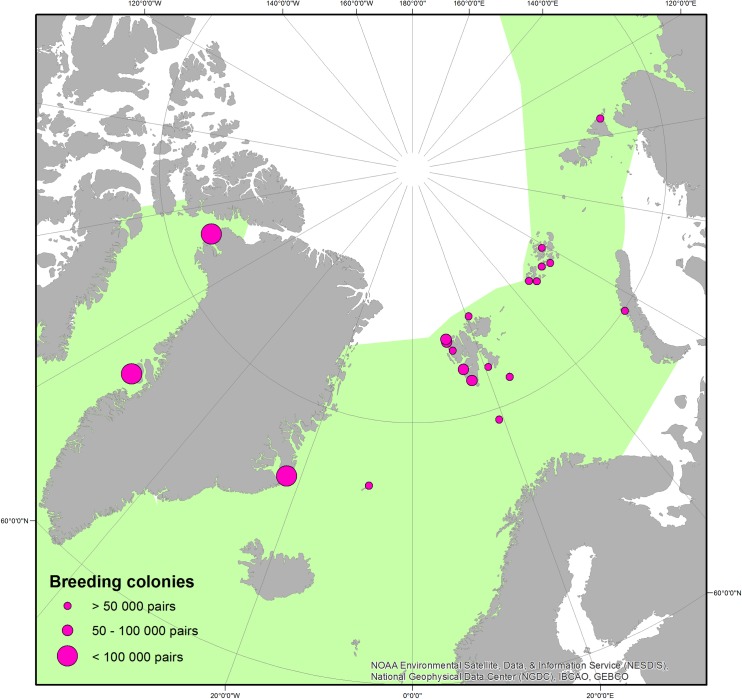
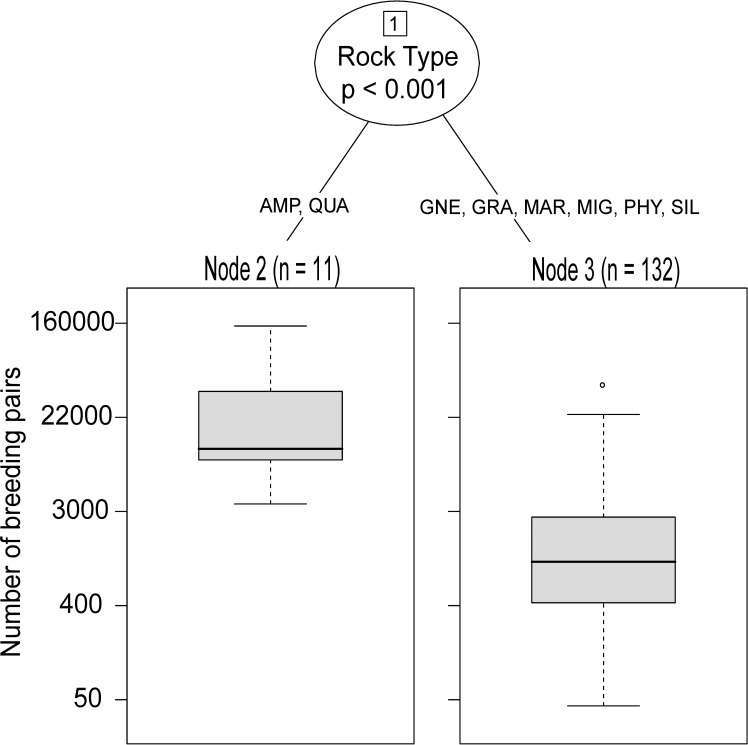
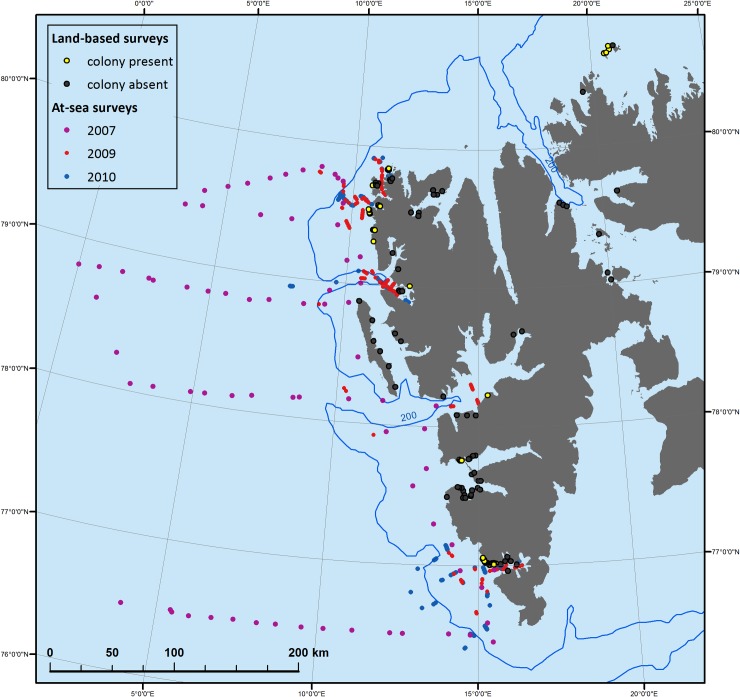
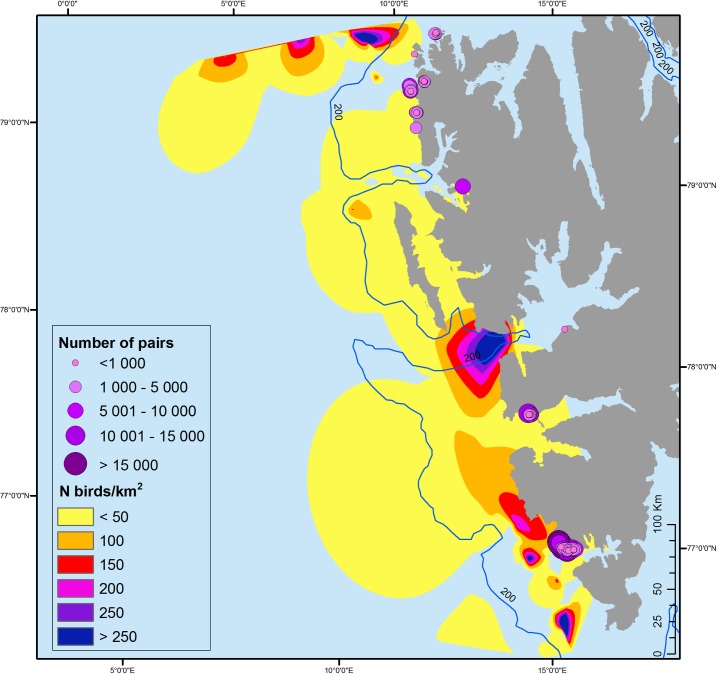
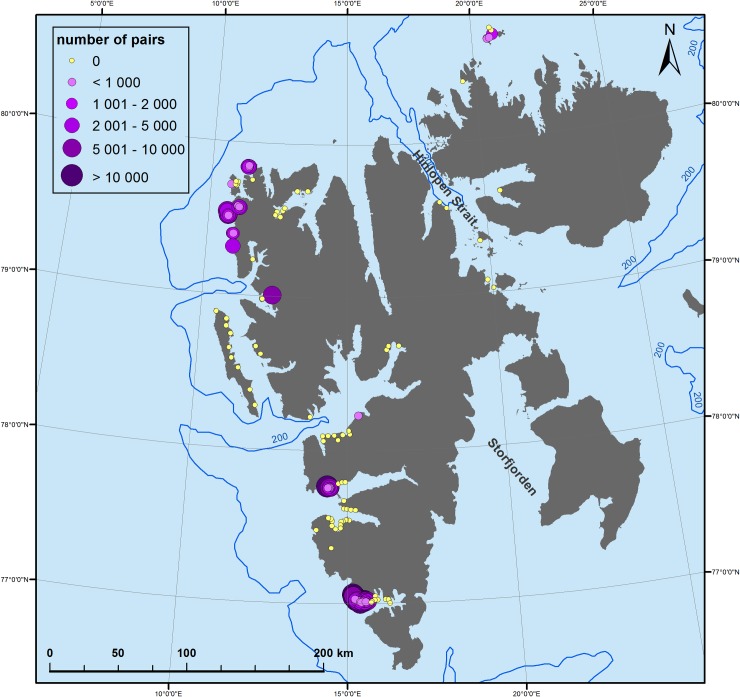
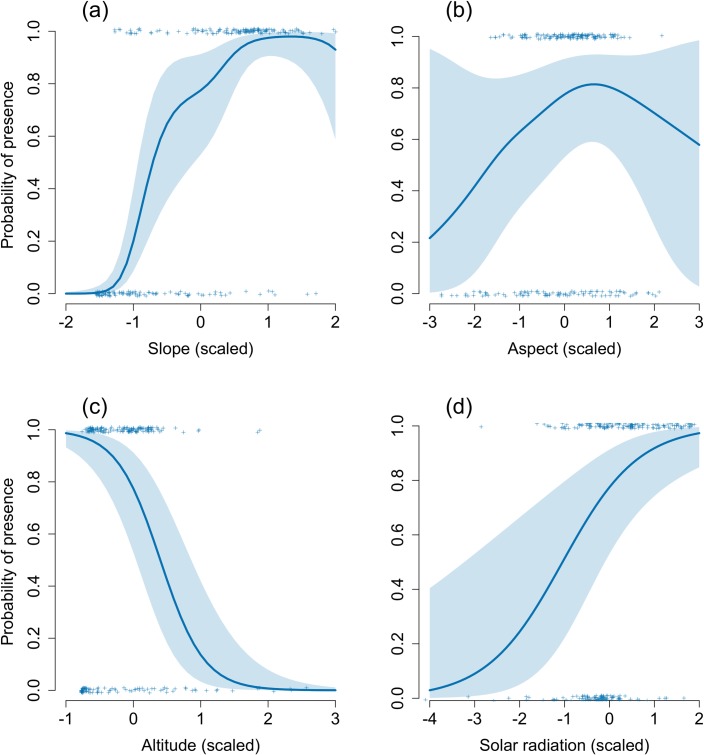
Many seabirds breed in large aggregations, making it difficult to estimate their population size and habitat preferences. This knowledge is particularly important considering their function in food webs and ecosystem services. In this study, we investigated the factors affecting distribution and abundance of the little auk Alle alle, a seabird considered a keystone species of the Arctic ecosystem. We performed the study on the W and the NW coast of Spitsbergen. Using Generalized Additive Models (GAMs) and Conditional Inference Tree (CIT) we examined factors related to presence/absence and size (estimated number of breeding pairs) of the little auk colonies. We also tested the nesting preferences for geographical features such as aspect, slope angle, altitude, solar radiation, rock type, and distance to foraging grounds. Our findings indicate that the occurrence of little auk breeding colonies is non-random and highly attributed to environmental factors. The probability of colony occurrence was significantly associated with altitude (negative relationship; preference to sites situated lower), solar radiation (positive relationship; the higher radiation, the more likely colony occurrence) and slope (positive relationship; the steeper a slope, the more likely colony occurrence), whilst aspect appeared non-significant (though the probability of colony occurrence peaked at southern slopes). Colony size was significantly associated with rock type (larger colonies in amphibolite and quartzite). The distance to foraging grounds did not appear to affect the probability of colony occurrence and size, implying that birds may choose optimal breeding sites at the cost of longer foraging flights. We estimated the Spitsbergen little auk breeding population at 728 529 (5-95% CI: 479 312-986 352). Spitsbergen comprises ca 1.9% (95% CI: 1.2%-2.7%) of the world breeding population and represents the third most important breeding area for the species, following the W and the E coast of Greenland.
许多海鸟在大群体中繁殖,这使得很难估计它们的种群规模和栖息地偏好。考虑到它们在食物网和生态系统服务中的功能,这些知识尤为重要。在这项研究中,我们调查了影响北极海雀(Alle alle)分布和丰度的因素,北极海雀被认为是北极生态系统的关键物种。我们在斯匹次卑尔根岛的 W 海岸和 NW 海岸进行了这项研究。我们使用广义加性模型(GAMs)和条件推断树(CIT)来研究与北极海雀繁殖地的存在/不存在和规模(估计的繁殖对数量)相关的因素。我们还测试了与地理位置相关的筑巢偏好,如方位、坡度角、海拔、太阳辐射、岩石类型和觅食地的距离。我们的研究结果表明,北极海雀繁殖地的出现并非随机,而是高度归因于环境因素。繁殖地出现的可能性与海拔(负相关;偏好位于较低的地点)、太阳辐射(正相关;辐射越高,繁殖地出现的可能性越大)和坡度(正相关;坡度越陡,繁殖地出现的可能性越大)显著相关,而方位似乎不显著(尽管繁殖地出现的可能性在南坡达到峰值)。繁殖地的规模与岩石类型(闪长岩和石英岩的繁殖地更大)显著相关。觅食地的距离似乎不会影响繁殖地出现的可能性和规模,这表明鸟类可能会以更长的觅食飞行距离为代价,选择最佳的繁殖地。我们估计斯匹次卑尔根北极海雀的繁殖种群为 728 529 只(5-95%置信区间:479 312-986 352)。斯匹次卑尔根占世界繁殖种群的 1.9%(95%置信区间:1.2%-2.7%),是该物种的第三大繁殖地,仅次于格陵兰岛的 W 海岸和 E 海岸。