Department of Endocrinology, Affiliated Hospital of Yanan Medical University, Yanan, China.
Department of Endocrinology, Jinshan Hospital of Fudan University, Shanghai, China.
Front Immunol. 2019 Feb 20;10:261. doi: 10.3389/fimmu.2019.00261. eCollection 2019.
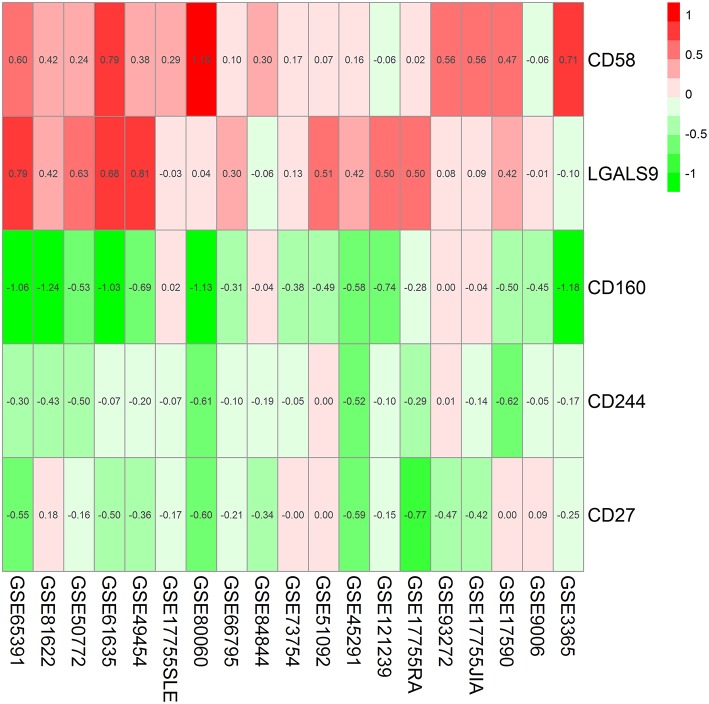
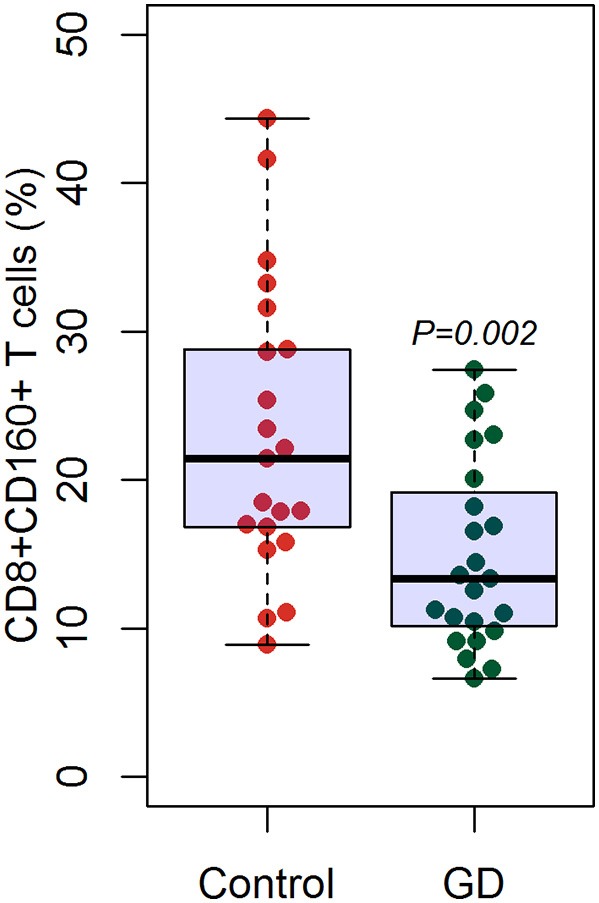
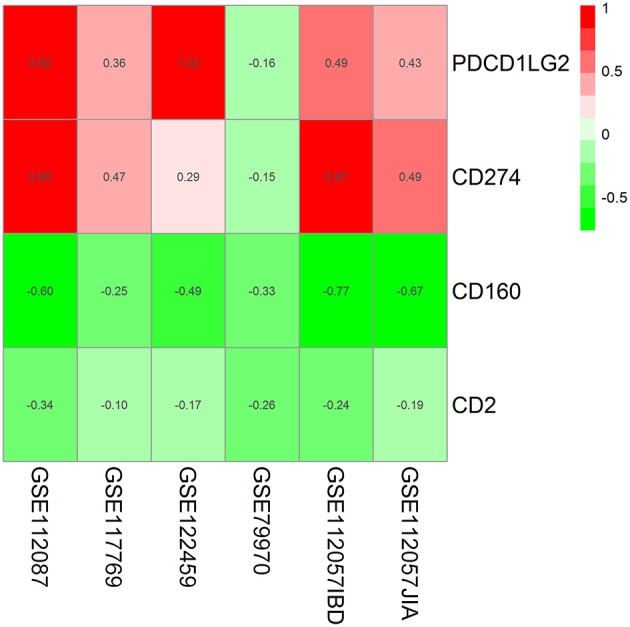
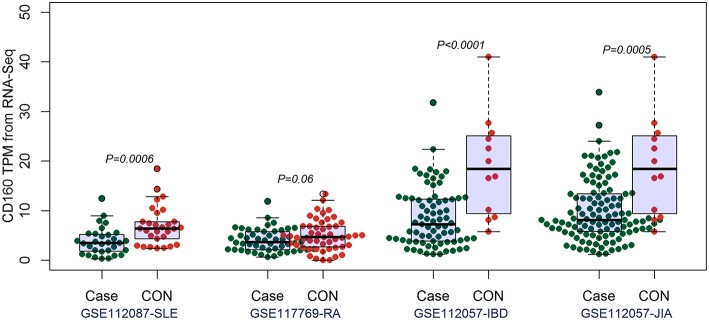
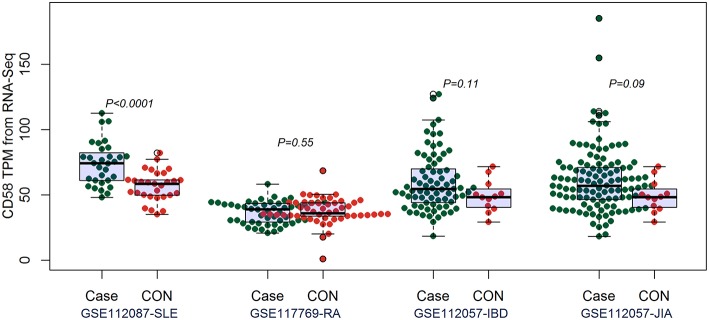
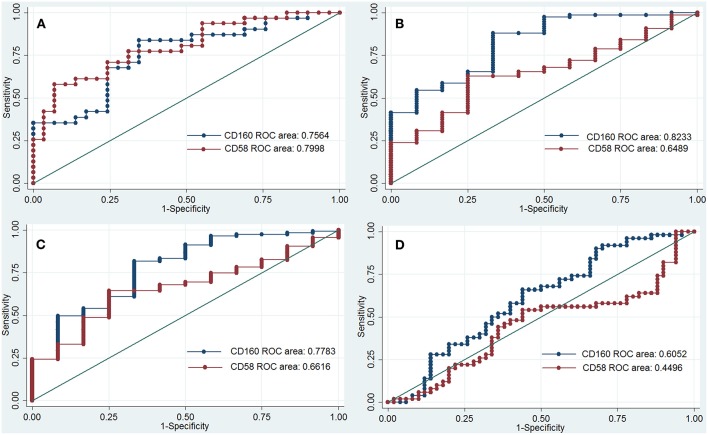
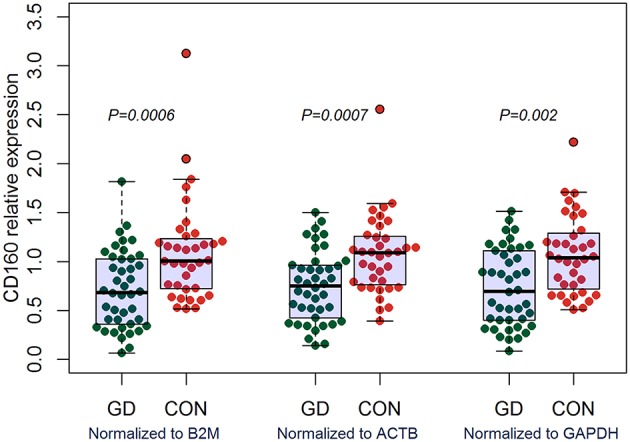
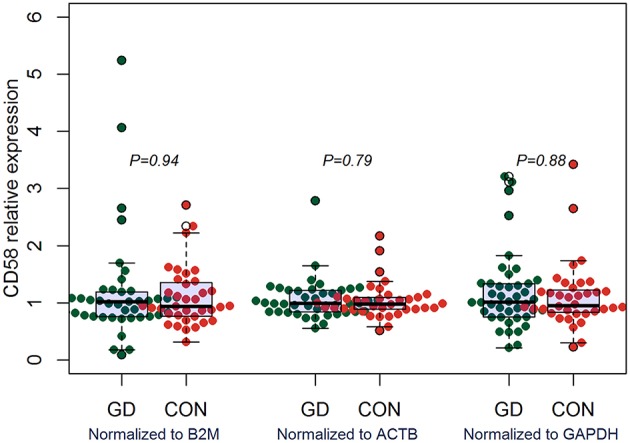
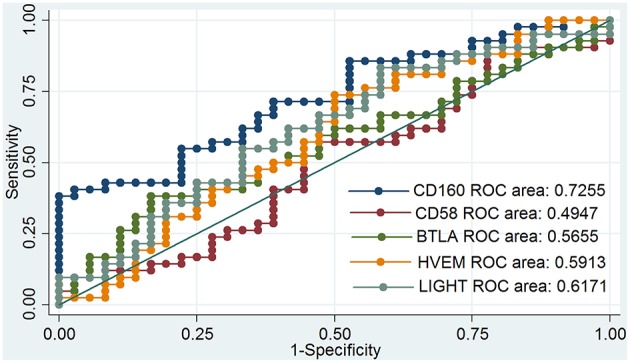
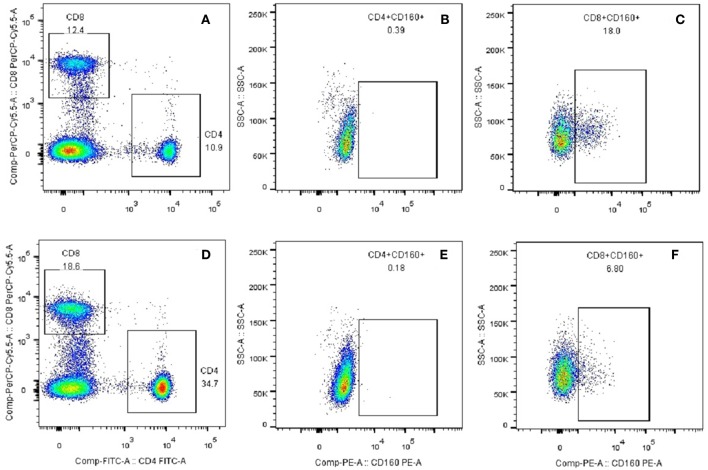
Co-signaling molecules include co-stimulatory and co-inhibitory molecules and play important roles in modulating immune responses. The roles of co-signaling molecules in autoimmune diseases have not been clearly defined. We assessed the expressions of co-stimulatory and co-inhibitory molecules in autoimmune diseases through a bioinformatics-based study. By using datasets of whole-genome transcriptome, the expressions of 54 co-stimulatory or co-inhibitory genes in common autoimmune diseases were analyzed using Robust rank aggregation (RRA) method. Nineteen array datasets and 6 RNA-seq datasets were included in the RRA discovery study and RRA validation study, respectively. Significant genes were further validated in several autoimmune diseases including Graves' disease (GD). RRA discovery study suggested that CD160 was the most significant gene aberrantly expressed in autoimmune diseases (Adjusted = 5.9E-12), followed by CD58 (Adjusted = 5.7E-06) and CD244 (Adjusted = 9.5E-05). RRA validation study also identified CD160 as the most significant gene aberrantly expressed in autoimmune diseases (Adjusted = 5.9E-09). We further found that the aberrant expression of CD160 was statistically significant in multiple autoimmune diseases including GD ( < 0.05), and CD160 had a moderate role in diagnosing those autoimmune diseases. Flow cytometry confirmed that CD160 was differentially expressed on the surface of CD8 T cells between GD patients and healthy controls ( = 0.002), which proved the aberrant expression of CD160 in GD at the protein level. This study suggests that CD160 is the most significant co-signaling gene aberrantly expressed in autoimmune diseases. Treatment strategy targeting CD160-related pathway may be promising for the therapy of autoimmune diseases.
共刺激和共抑制分子等共信号分子在调节免疫反应中起重要作用。共信号分子在自身免疫性疾病中的作用尚未明确。我们通过基于生物信息学的研究评估了自身免疫性疾病中共刺激和共抑制分子的表达。通过使用全基因组转录组数据集,我们使用稳健秩聚合(RRA)方法分析了 54 个常见自身免疫性疾病中的共刺激或共抑制基因的表达。19 个阵列数据集和 6 个 RNA-seq 数据集分别包含在 RRA 发现研究和 RRA 验证研究中。进一步在包括格雷夫斯病(GD)在内的几种自身免疫性疾病中验证了显著基因。RRA 发现研究表明,CD160 是自身免疫性疾病中表达最显著的异常基因(调整后 = 5.9E-12),其次是 CD58(调整后 = 5.7E-06)和 CD244(调整后 = 9.5E-05)。RRA 验证研究也鉴定出 CD160 是自身免疫性疾病中表达最显著的异常基因(调整后 = 5.9E-09)。我们进一步发现,CD160 在包括 GD 在内的多种自身免疫性疾病中的异常表达具有统计学意义( < 0.05),并且 CD160 在诊断这些自身免疫性疾病方面具有中等作用。流式细胞术证实,GD 患者和健康对照者 CD8 T 细胞表面的 CD160 表达存在差异( = 0.002),这证明了 GD 中 CD160 的异常表达在蛋白质水平上。这项研究表明,CD160 是自身免疫性疾病中表达最显著的共信号基因。靶向 CD160 相关途径的治疗策略可能有望成为治疗自身免疫性疾病的方法。