Kruger Marlena C, Chan Yoke Mun, Lau ChinChin, Lau Lee Ting, Chin Yit Siew, Kuhn-Sherlock Barbara, Schollum Linda M, Todd Joanne M
School of Health Sciences, College of Health, Massey University, Palmerston North, New Zealand.
Department of Nutrition and Dietetics, Faculty of Medicine and Health Sciences, Universiti Putra Malaysia, Serdang, Malaysia.
Biores Open Access. 2019 Mar 1;8(1):16-24. doi: 10.1089/biores.2018.0027. eCollection 2019.
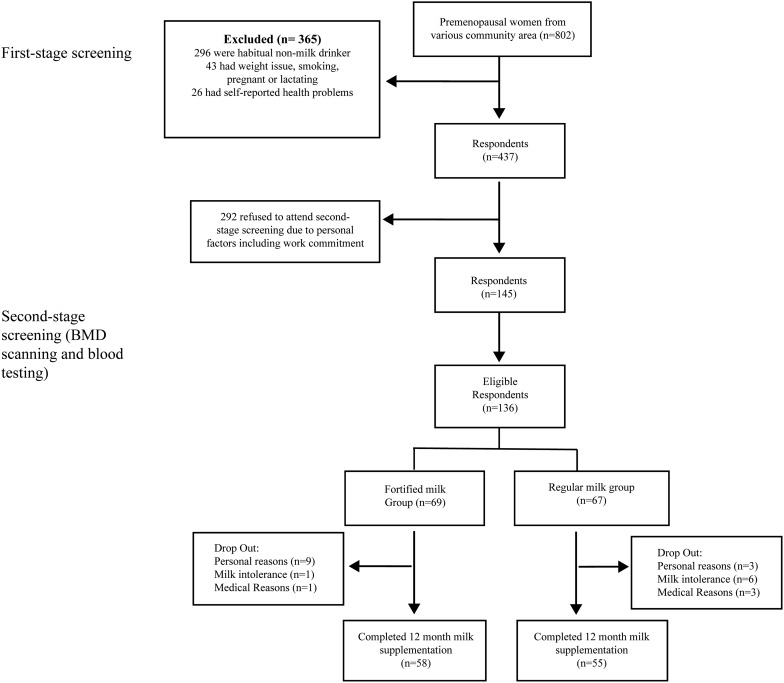
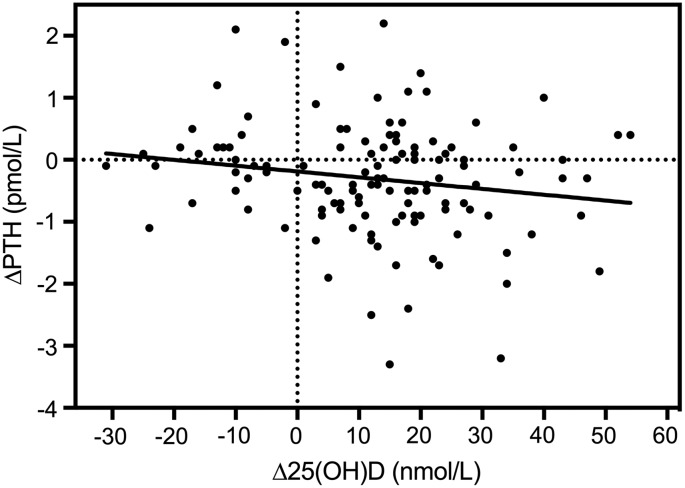
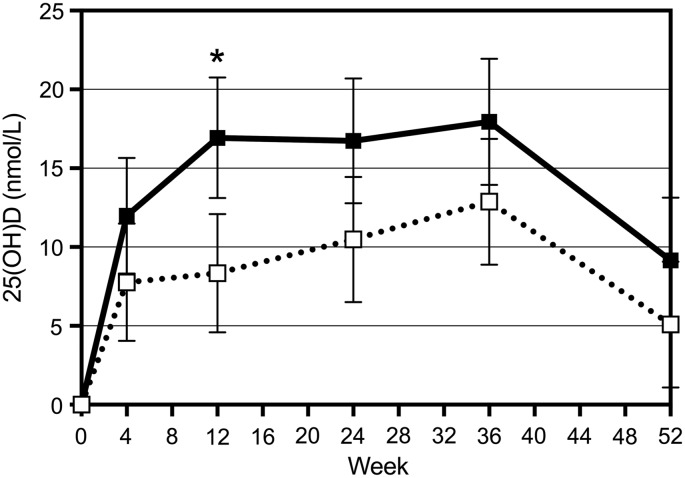
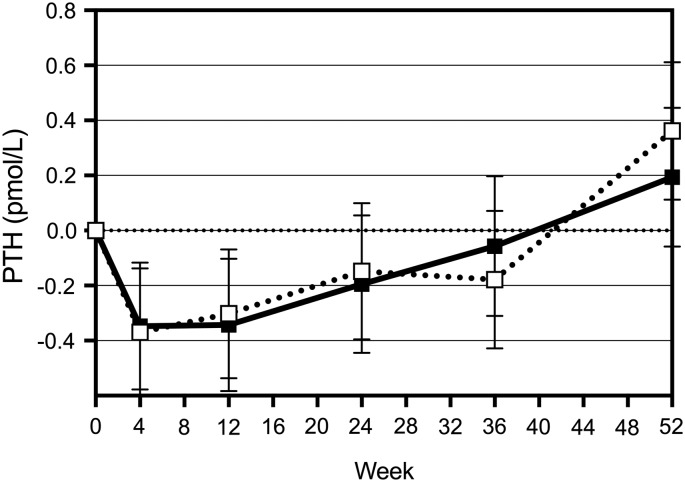
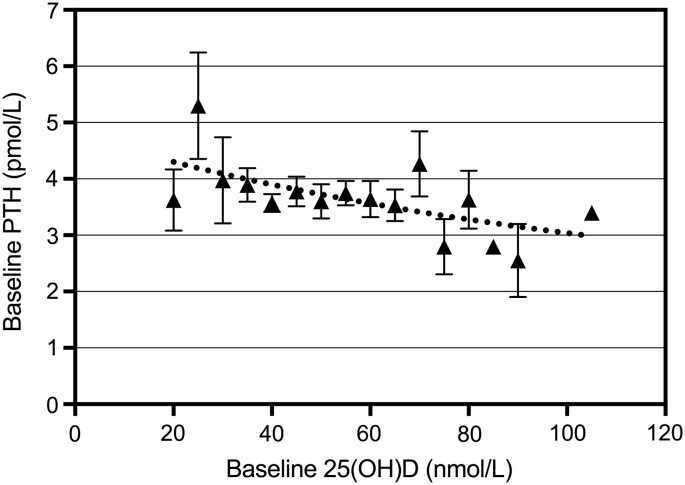
This study compared the effects of a high-calcium vitamin D fortified milk with added FOS-Inulin versus regular milk on serum parathyroid hormone (PTH), vitamin D status, grip strength (GS), as well as bone density in Chinese premenopausal women over 52 weeks. Premenopausal women ( = 133), mean age 41 (±5.1) years were randomized into control ( = 66; regular milk at 500 mg calcium per day) or intervention (Int; = 67; fortified milk at 1200 mg calcium, 15 μg vitamin D, and 4 g FOS-Inulin per day) groups. Assessments were at baseline, weeks 12, 24, 36, and 52 for changes in vitamin D status, levels of PTH, and GS. Bone mineral densities (BMDs) of the lumbar spine (LS), femoral neck (FN), and whole body (WB) were assessed at baseline and week 52 using GE Lunar iDEXA (GE Healthcare, Madison, WI). At baseline, WB lean mass was positively associated with LS BMD ( = 0.30, < 0.001) and FN BMD ( = 0.33, = 0.003). Baseline 25(OH) vitamin D3 levels were 48.6 and 53.2 nmol/L ( = 0.57), respectively, and after the 12 months at 60.8 nmol/L (Int) versus 55.0 nmol/L (controls; < 0.05 for change from baseline for both groups; no difference between groups at week 52). PTH levels decreased in both groups compared to baseline ( < 0.001), with no significant difference between groups. WB bone mineral content (BMC) and FN Z-score increased significantly in the Int group ( = 0.024 and = 0.008). GS was positively associated with body weight, increasing in both groups over 52 weeks. Fortified milk improved vitamin D status, WB BMC, and Z-score of the FN, while regular milk maintained BMD. In addition, vitamin D status and GS improved.
本研究比较了添加低聚果糖-菊粉的高钙维生素D强化牛奶与普通牛奶对52周内中国绝经前女性血清甲状旁腺激素(PTH)、维生素D状态、握力(GS)以及骨密度的影响。绝经前女性(n = 133),平均年龄41(±5.1)岁,被随机分为对照组(n = 66;每天饮用含500毫克钙的普通牛奶)或干预组(Int;n = 67;每天饮用含1200毫克钙、15微克维生素D和4克低聚果糖-菊粉的强化牛奶)。在基线、第12、24、36和52周进行评估,以观察维生素D状态、PTH水平和GS的变化。使用GE Lunar iDEXA(GE医疗集团,威斯康星州麦迪逊)在基线和第52周评估腰椎(LS)、股骨颈(FN)和全身(WB)的骨密度(BMD)。在基线时,WB瘦体重与LS BMD呈正相关(r = 0.30,P < 0.001)和FN BMD呈正相关(r = 0.33,P = 0.003)。基线时25(OH)维生素D3水平分别为48.6和53.2 nmol/L(P = 0.57),12个月后,干预组为60.8 nmol/L,对照组为55.0 nmol/L(两组从基线开始的变化P < 0.05;第52周时两组间无差异)。与基线相比,两组的PTH水平均降低(P < 0.001),两组间无显著差异。干预组的WB骨矿物质含量(BMC)和FN Z评分显著增加(P = 0.024和P = 0.008)。GS与体重呈正相关,两组在52周内均增加。强化牛奶改善了维生素D状态、WB BMC和FN的Z评分,而普通牛奶维持了BMD。此外,维生素D状态和GS有所改善。