Division of Neurobiology, Barrow Neurological Institute, Phoenix, Arizona, United States of America.
PLoS One. 2019 Mar 7;14(3):e0213143. doi: 10.1371/journal.pone.0213143. eCollection 2019.
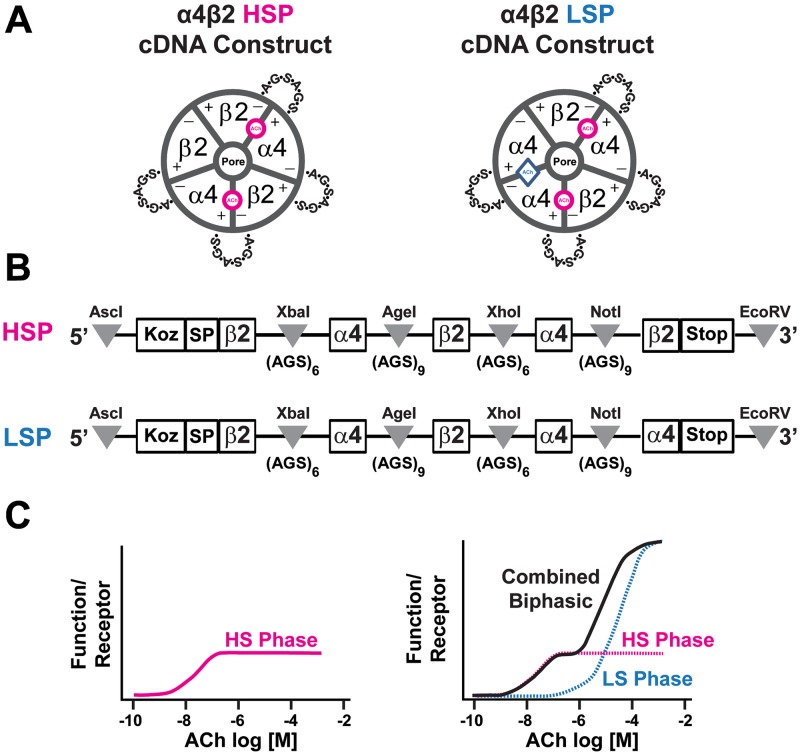
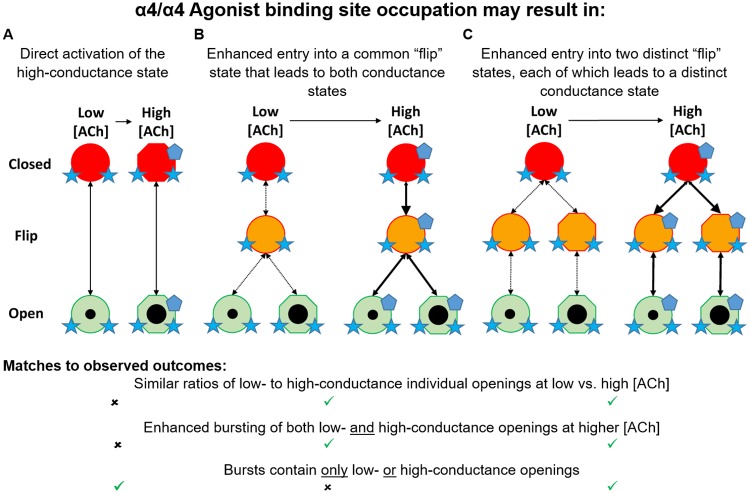
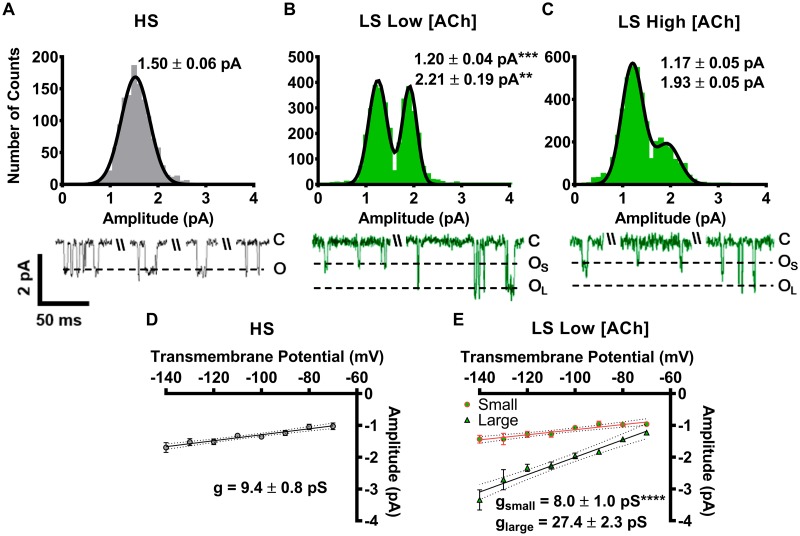
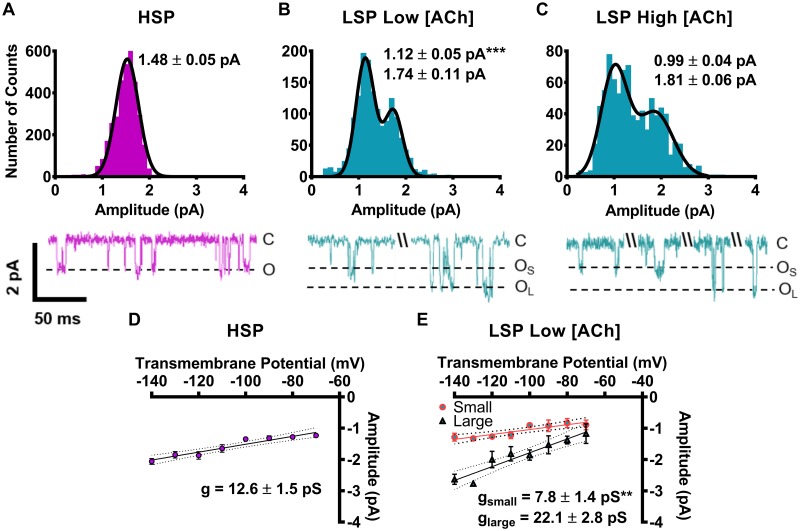
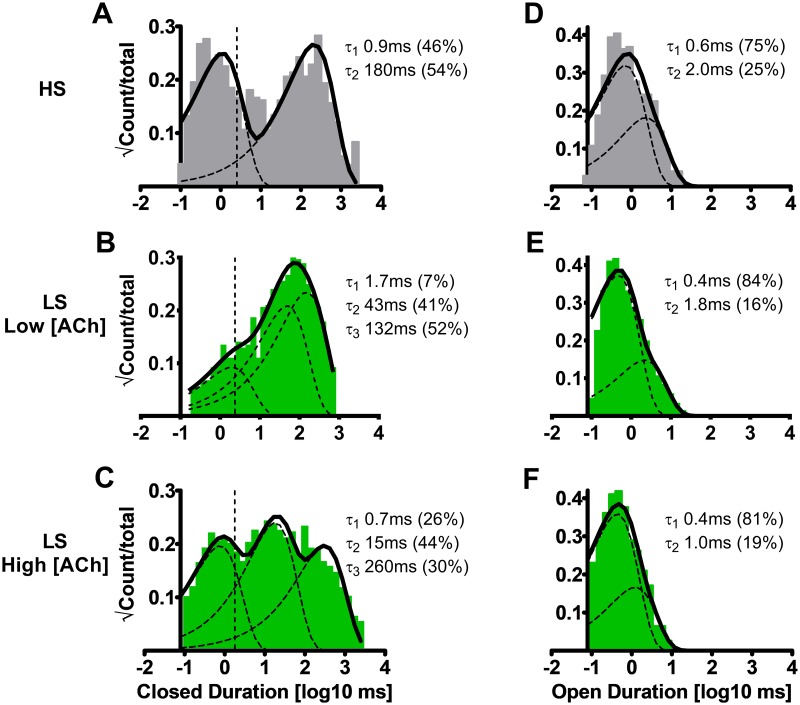
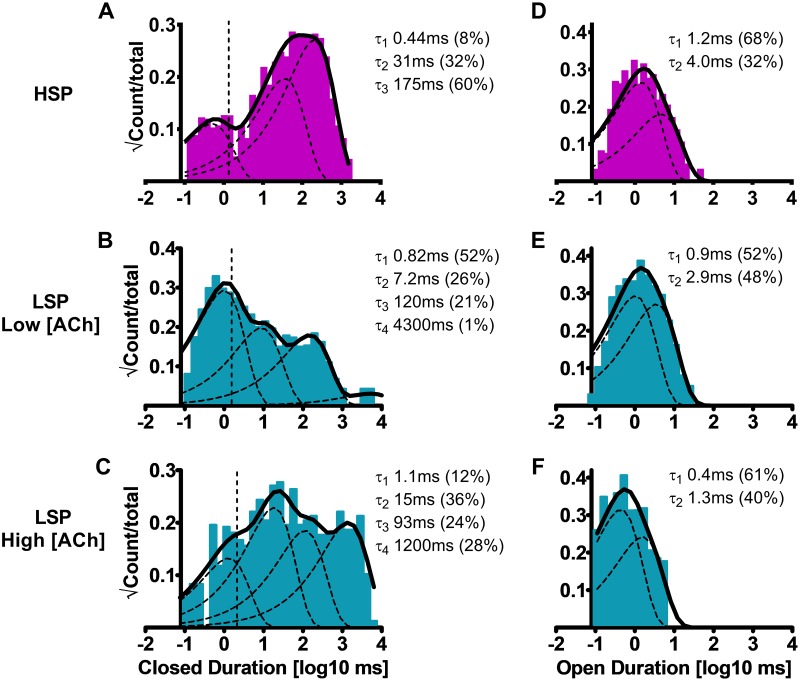
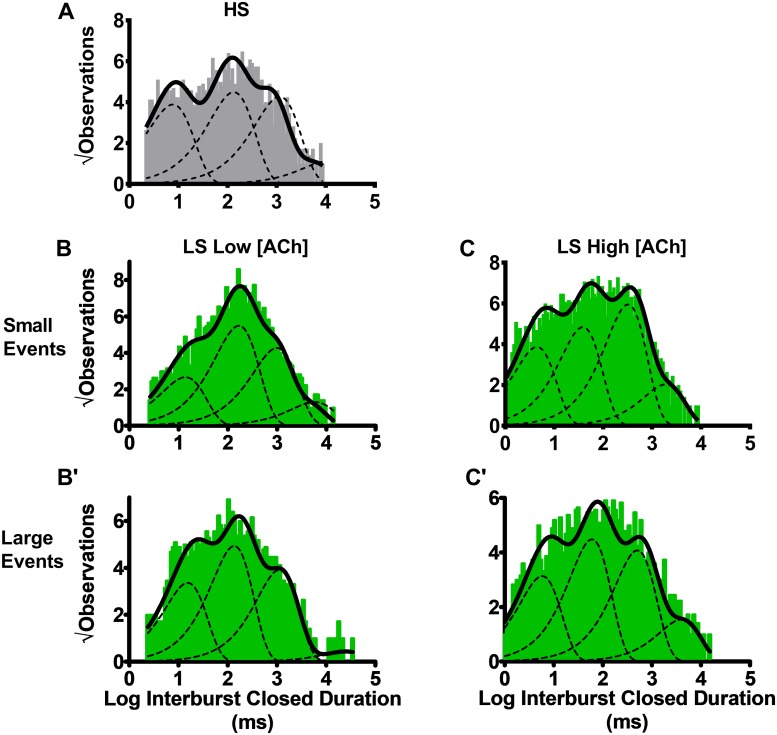
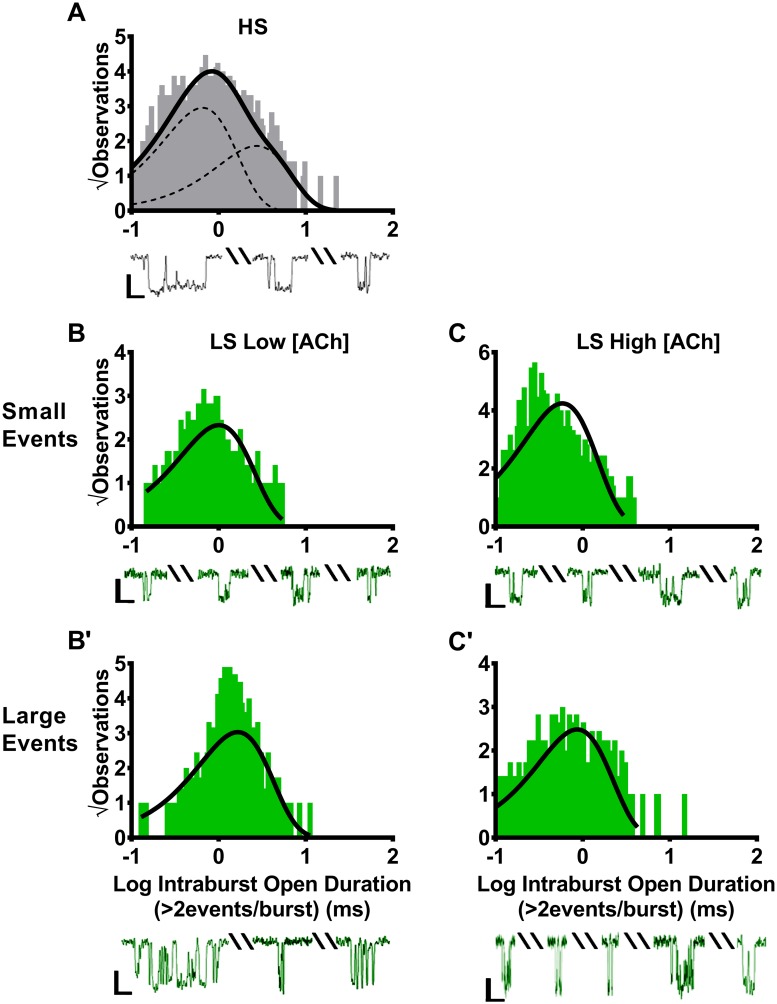
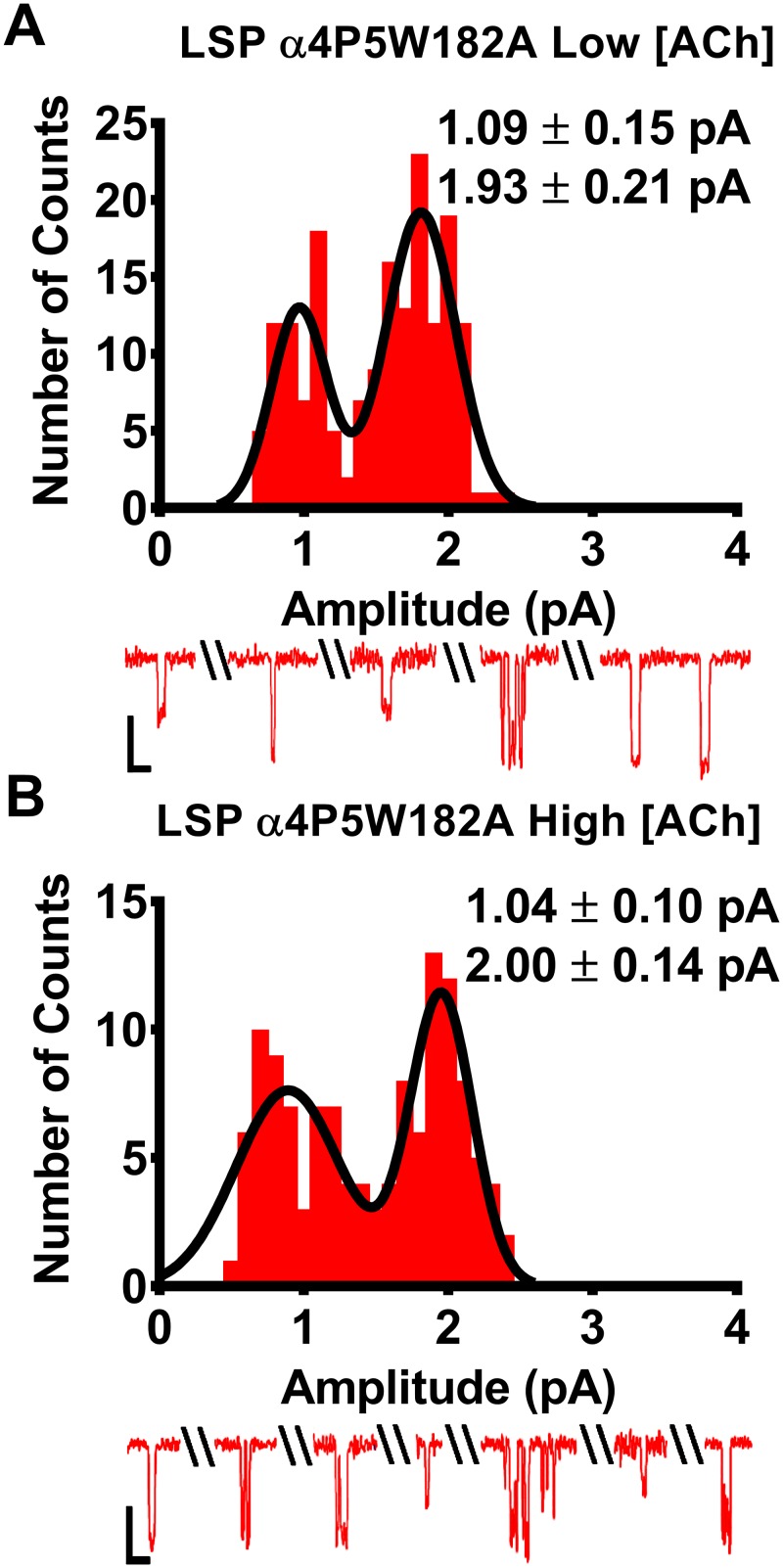
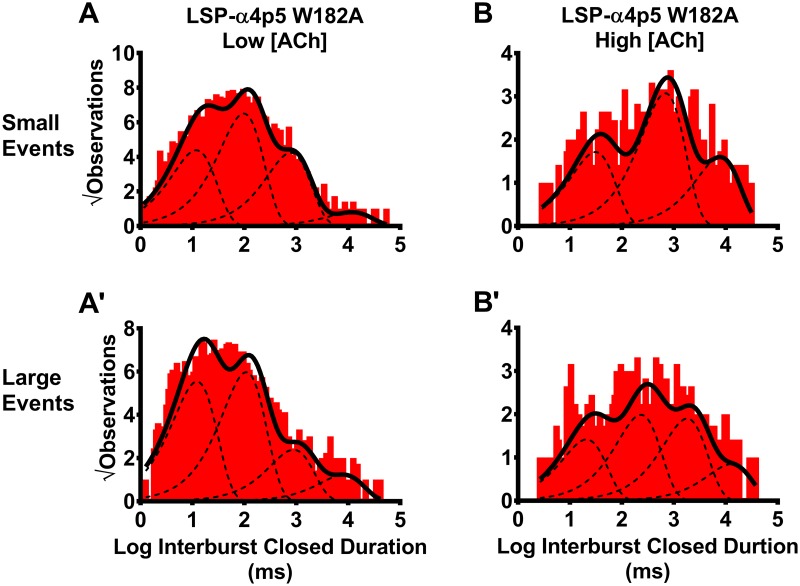
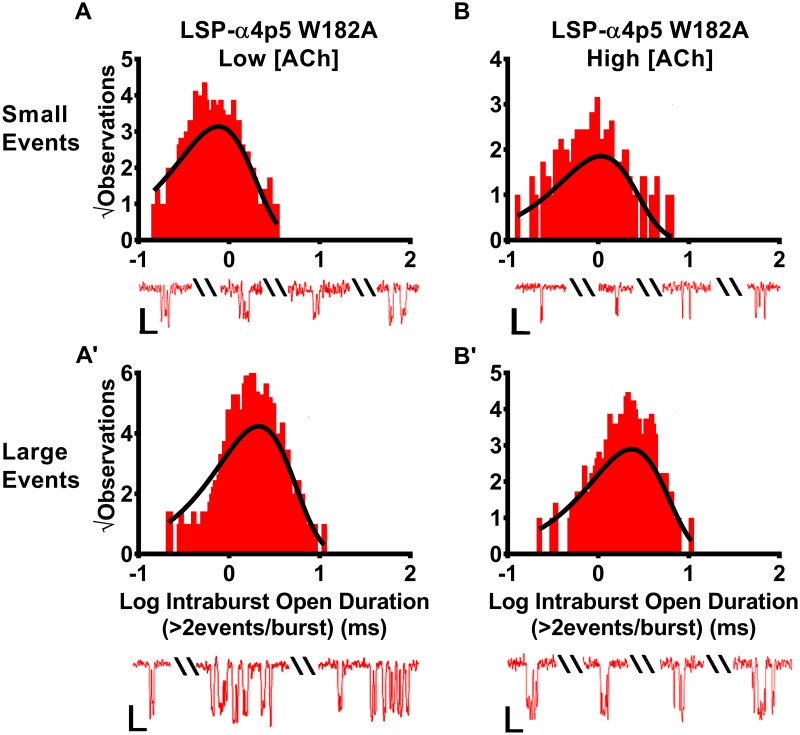
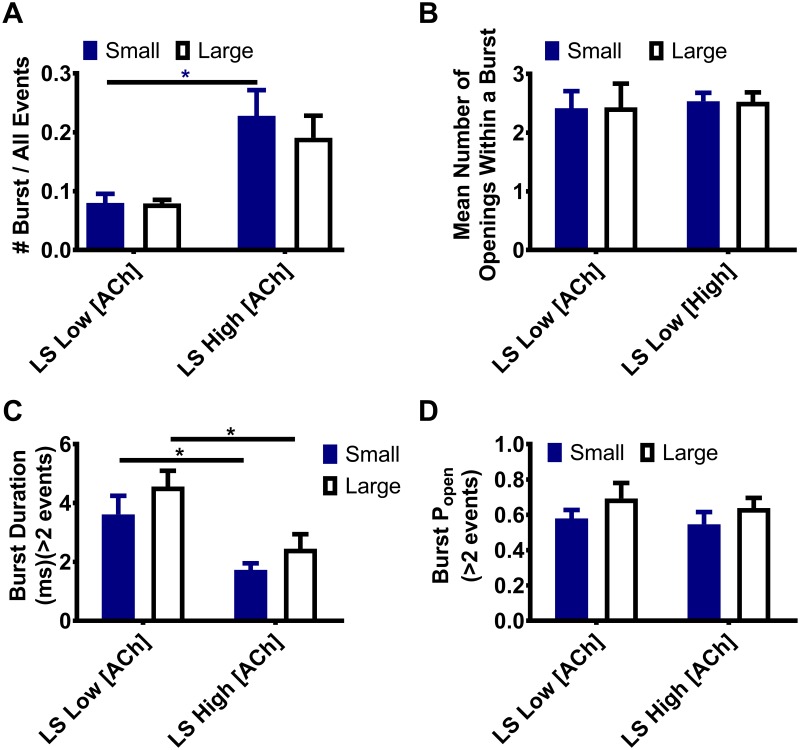
Central nervous system nicotinic acetylcholine receptors (nAChR) are predominantly of the α4β2 subtype. Two isoforms exist, with high or low agonist sensitivity (HS-(α4β2)2β2- and LS-(α4β2)2α4-nAChR). Both isoforms exhibit similar macroscopic potency and efficacy values at low acetylcholine (ACh) concentrations, mediated by a common pair of high-affinity α4(+)/(-)β2 subunit binding interfaces. However LS-(α4β2)2α4-nAChR also respond to higher concentrations of ACh, acting at a third α4(+)/(-)α4 subunit interface. To probe isoform functional differences further, HS- and LS-α4β2-nAChR were expressed in Xenopus laevis oocytes and single-channel responses were assessed using cell-attached patch-clamp. In the presence of a low ACh concentration, both isoforms produce low-bursting function. HS-(α4β2)2β2-nAChR exhibit a single conductance state, whereas LS-(α4β2)2α4-nAChR display two distinctive conductance states. A higher ACh concentration did not preferentially recruit either conductance state, but did result in increased LS-(α4β2)2α4-nAChR bursting and reduced closed times. Introduction of an α4(+)/(-)α4-interface loss-of-function α4W182A mutation abolished these changes, confirming this site's role in mediating LS-(α4β2)2α4-nAChR responses. Small or large amplitude openings are highly-correlated within individual LS-(α4β2)2α4-nAChR bursts, suggesting that they arise from distinct intermediate states, each of which is stabilized by α4(+)/(-)α4 site ACh binding. These findings are consistent with α4(+)/(-)α4 subunit interface occupation resulting in allosteric potentiation of agonist actions at α4(+)/(-)β2 subunit interfaces, rather than independent induction of high conductance channel openings.
中枢神经系统烟碱型乙酰胆碱受体(nAChR)主要为α4β2 亚型。存在两种异构体,具有高或低激动剂敏感性(HS-(α4β2)2β2-和 LS-(α4β2)2α4-nAChR)。在低乙酰胆碱(ACh)浓度下,两种异构体在低 ACh 浓度下表现出相似的宏观效力和效能值,这是由一对常见的高亲和力α4(+)/(-)β2 亚基结合界面介导的。然而,LS-(α4β2)2α4-nAChR 也对更高浓度的 ACh 产生反应,作用于第三个α4(+)/(-)α4 亚基界面。为了进一步探究同工型功能差异,在非洲爪蟾卵母细胞中表达 HS-和 LS-α4β2-nAChR,并使用细胞贴附式膜片钳评估单通道反应。在低 ACh 浓度存在的情况下,两种异构体均产生低爆发功能。HS-(α4β2)2β2-nAChR 表现出单一的电导状态,而 LS-(α4β2)2α4-nAChR 则表现出两种独特的电导状态。较高的 ACh 浓度不会优先招募任何一种电导状态,但确实导致 LS-(α4β2)2α4-nAChR 爆发增加和关闭时间减少。引入α4(+)/(-)α4-界面功能丧失突变体α4W182A 消除了这些变化,证实了该位点在介导 LS-(α4β2)2α4-nAChR 反应中的作用。LS-(α4β2)2α4-nAChR 爆发中,小幅度或大幅度开放高度相关,表明它们源自不同的中间状态,每个状态都由α4(+)/(-)α4 位点 ACh 结合稳定。这些发现与以下观点一致:α4(+)/(-)α4 亚基界面占据导致α4(+)/(-)β2 亚基界面激动剂作用的变构增强,而不是独立诱导高电导通道开放。