Center for Genomics and Systems Biology, Department of Biology, New York University, New York, NY United States of America.
Rice Breeding Platform, International Rice Research Institute, Los Baños, Laguna, Philippines.
PLoS Genet. 2019 Mar 7;15(3):e1007414. doi: 10.1371/journal.pgen.1007414. eCollection 2019 Mar.
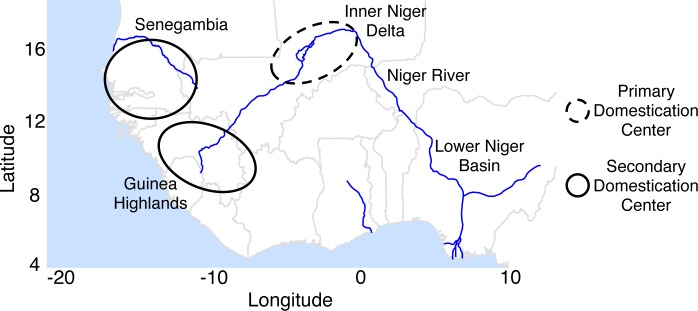
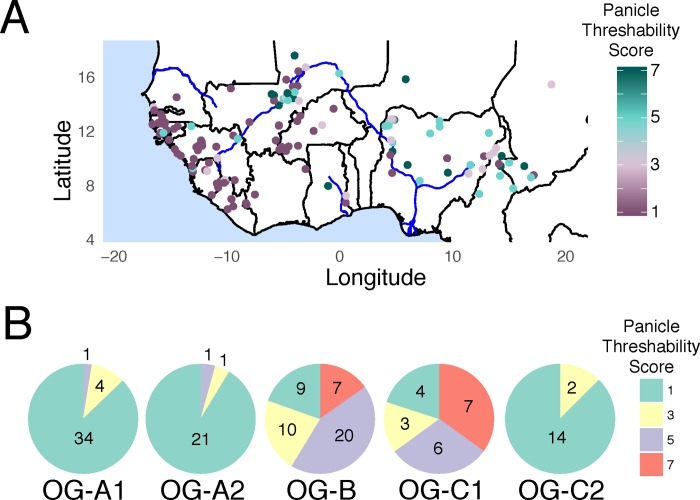
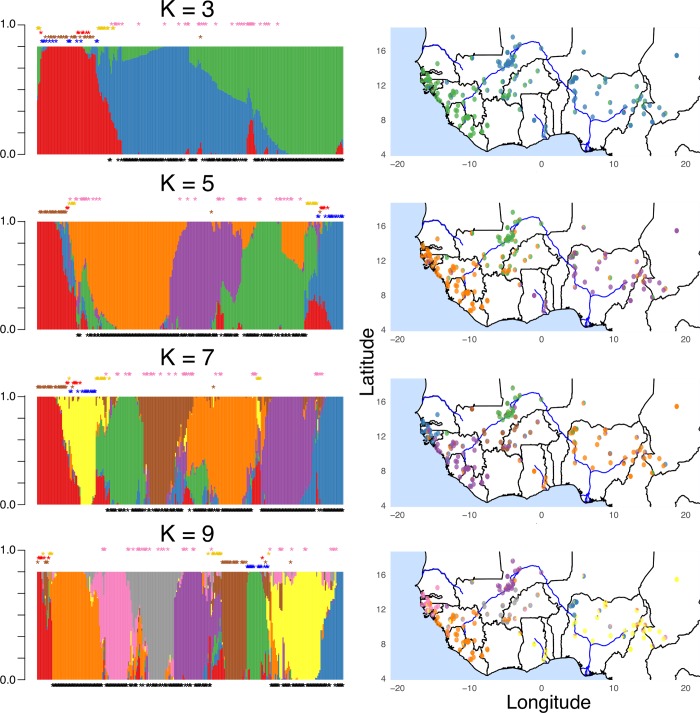
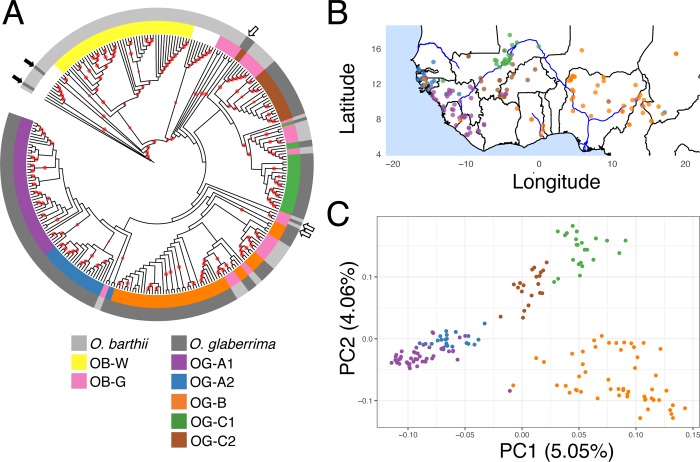
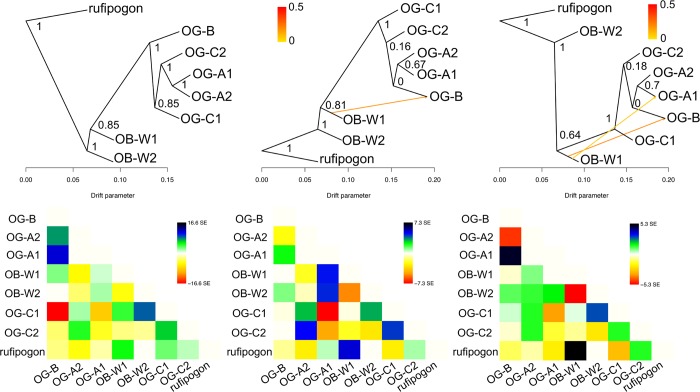
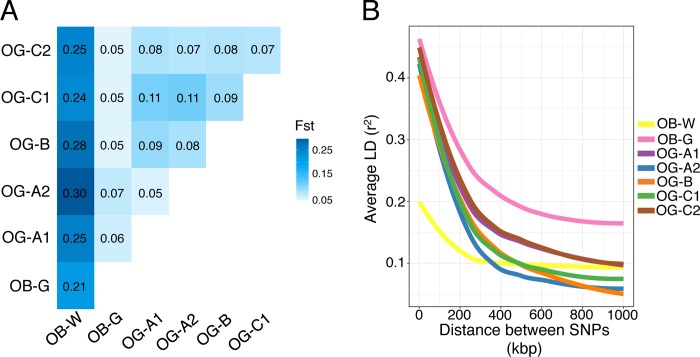
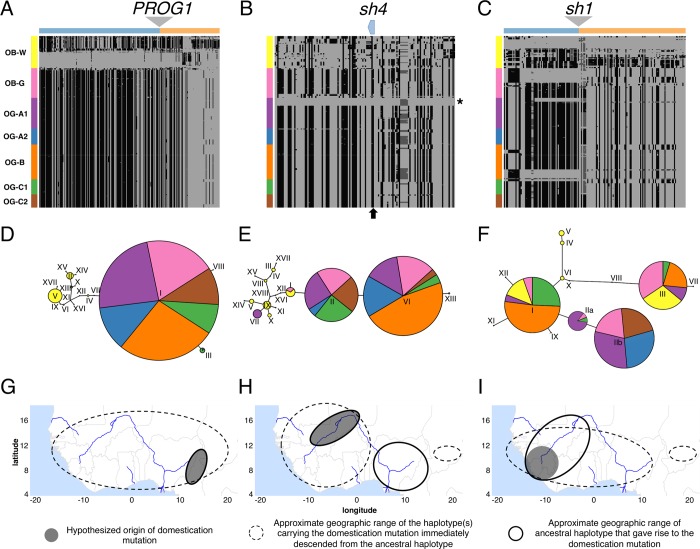
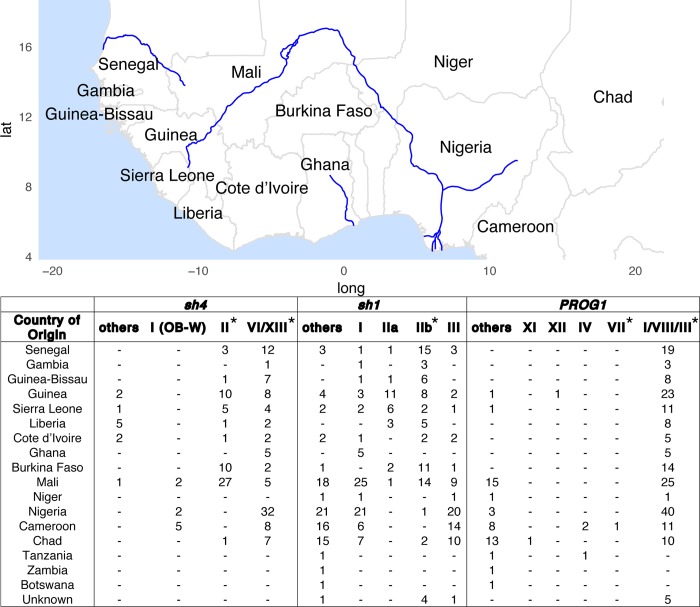
While the domestication history of Asian rice has been extensively studied, details of the evolution of African rice remain elusive. The inner Niger delta has been suggested as the center of origin but molecular data to support this hypothesis is lacking. Here, we present a comprehensive analysis of the evolutionary and domestication history of African rice. By analyzing whole genome re-sequencing data from 282 individuals of domesticated African rice Oryza glaberrima and its progenitor O. barthii, we hypothesize a non-centric (i.e. multiregional) domestication origin for African rice. Our analyses showed genetic structure within O. glaberrima that has a geographical association. Furthermore, we have evidence that the previously hypothesized O. barthii progenitor populations in West Africa have evolutionary signatures similar to domesticated rice and carried causal domestication mutations, suggesting those progenitors were either mislabeled or may actually represent feral wild-domesticated hybrids. Phylogeographic analysis of genes involved in the core domestication process suggests that the origins of causal domestication mutations could be traced to wild progenitors in multiple different locations in West and Central Africa. In addition, measurements of panicle threshability, a key early domestication trait for seed shattering, were consistent with the gene phylogeographic results. We suggest seed non-shattering was selected from multiple genotypes, possibly arising from different geographical regions. Based on our evidence, O. glaberrima was not domesticated from a single centric location but was a result of diffuse process where multiple regions contributed key alleles for different domestication traits.
虽然亚洲稻的驯化历史已经得到了广泛的研究,但非洲稻的进化细节仍然难以捉摸。尼日尔河三角洲内被认为是起源中心,但缺乏支持这一假说的分子数据。在这里,我们对非洲稻的进化和驯化历史进行了全面分析。通过分析 282 个驯化的非洲稻 Oryza glaberrima 和其祖先 O. barthii 的全基因组重测序数据,我们假设非洲稻的起源是非中心的(即多区域的)。我们的分析显示,O. glaberrima 内存在与地理有关的遗传结构。此外,我们有证据表明,先前在西非假设的 O. barthii 祖先生存群体具有与驯化水稻相似的进化特征,并携带了因果驯化突变,这表明这些祖先生存群体要么被错误标记,要么实际上可能代表了野生-驯化的杂种。核心驯化过程中涉及的基因的系统地理学分析表明,因果驯化突变的起源可以追溯到西非和中非多个不同地点的野生祖先。此外,穗粒脱粒性的测量,即种子脱落的一个关键早期驯化特征,与基因系统地理学结果一致。我们认为,种子不脱落是从多个基因型中选择出来的,可能来自不同的地理区域。基于我们的证据,O. glaberrima 不是从一个单一的中心地点驯化而来的,而是一个多区域贡献不同驯化特征关键等位基因的扩散过程的结果。