Laboratory of Oncodermatology, Immunology, and Cutaneous Stem Cells, INSERM U976, 75010 Paris, France.
Institut de Recherche Saint-Louis, Paris Diderot University, Sorbonne Paris Cité, 75010 Paris, France.
Proc Natl Acad Sci U S A. 2019 Mar 26;116(13):6298-6307. doi: 10.1073/pnas.1812471116. Epub 2019 Mar 7.
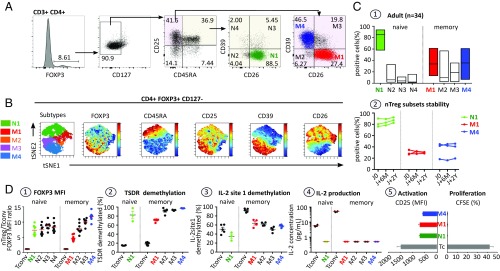
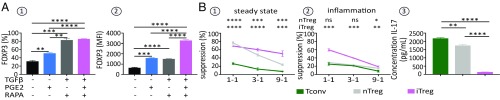
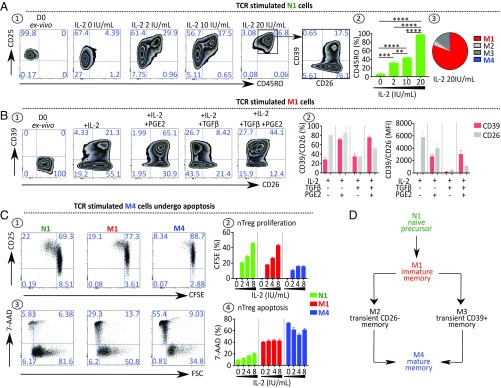
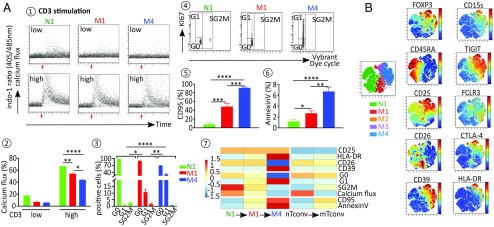
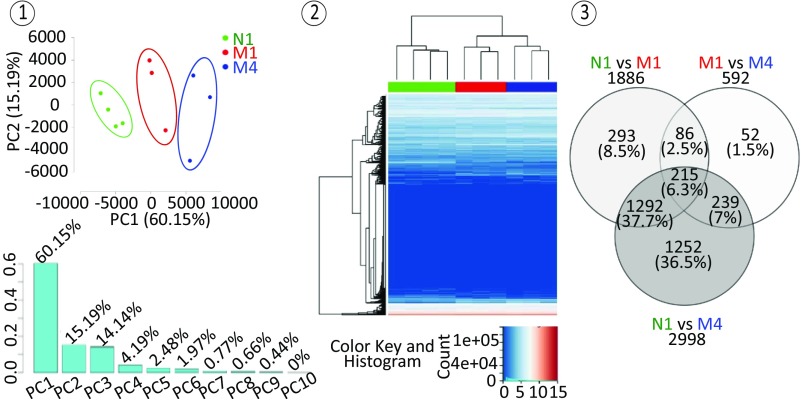
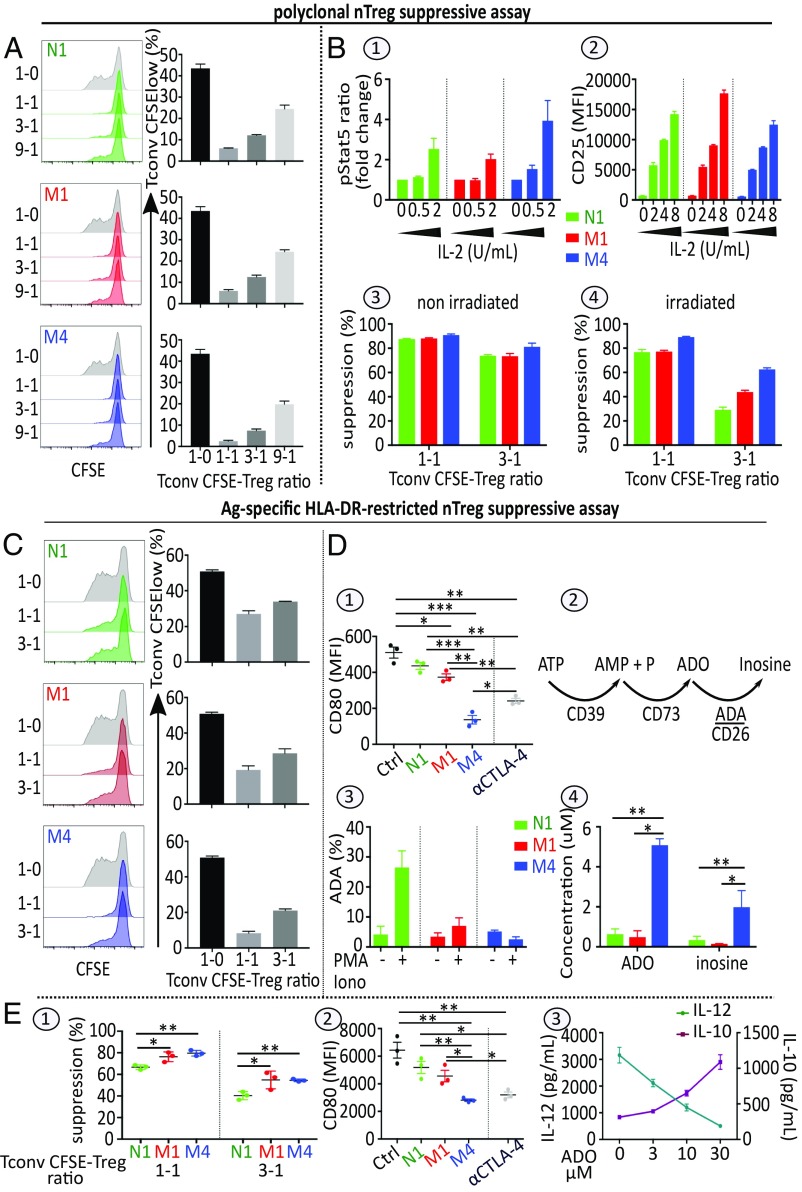
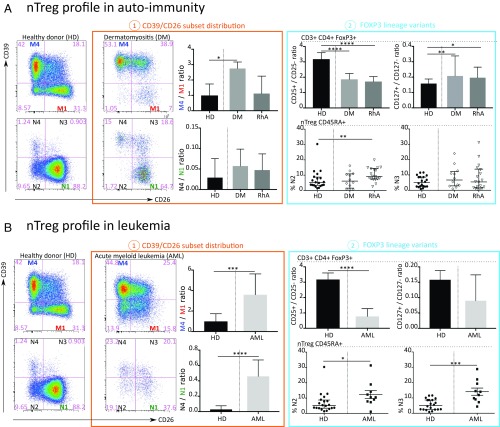
Natural regulatory T cells (nTregs) ensure the control of self-tolerance and are currently used in clinical trials to alleviate autoimmune diseases and graft-versus-host disease after hematopoietic stem cell transfer. Based on CD39/CD26 markers, blood nTreg analysis revealed the presence of five different cell subsets, each representing a distinct stage of maturation. Ex vivo added microenvironmental factors, including IL-2, TGFβ, and PGE2, direct the conversion from naive precursor to immature memory and finally from immature to mature memory cells, the latest being a no-return stage. Phenotypic and genetic characteristics of the subsets illustrate the structural parental maturation between subsets, which further correlates with the expression of regulatory factors. Regarding nTreg functional plasticity, both maturation stage and microenvironmental cytokines condition nTreg activities, which include blockade of autoreactive immune cells by cell-cell contact, Th17 and IL-10 Tr1-like activities, or activation of TCR-stimulating dendritic cell tolerization. Importantly, blood nTreg CD39/CD26 profile remained constant over a 2-y period in healthy persons but varied from person to person. Preliminary data on patients with autoimmune diseases or acute myelogenous leukemia illustrate the potential use of the nTreg CD39/CD26 profile as a blood biomarker to monitor chronic inflammatory diseases. Finally, we confirmed that naive conventional CD4 T cells, TCR-stimulated under a tolerogenic conditioned medium, could be ex vivo reprogrammed to FOXP3 lineage Tregs, and further found that these cells were exclusively committed to suppressive function under all microenvironmental contexts.
天然调节性 T 细胞(nTregs)可确保自身耐受的控制,目前正在临床试验中用于减轻自身免疫性疾病和造血干细胞移植后的移植物抗宿主病。基于 CD39/CD26 标志物,血液 nTreg 分析显示存在五种不同的细胞亚群,每个亚群代表一个不同的成熟阶段。体外添加的微环境因子,包括 IL-2、TGFβ 和 PGE2,可直接将幼稚前体细胞转化为未成熟记忆细胞,最终从未成熟记忆细胞转化为成熟记忆细胞,后者是一个不可逆的阶段。亚群的表型和遗传特征说明了亚群之间结构亲本的成熟,这进一步与调节因子的表达相关。关于 nTreg 的功能可塑性,成熟阶段和微环境细胞因子条件 nTreg 的活性,包括通过细胞-细胞接触阻断自身反应性免疫细胞、Th17 和 IL-10 Tr1 样活性,或激活 TCR 刺激树突状细胞耐受。重要的是,健康人血液 nTreg CD39/CD26 谱在 2 年内保持稳定,但人与人之间存在差异。自身免疫性疾病或急性髓系白血病患者的初步数据表明,nTreg CD39/CD26 谱可作为监测慢性炎症性疾病的血液生物标志物。最后,我们证实,在耐受条件培养基下,TCR 刺激的幼稚常规 CD4 T 细胞可以在体外重编程为 FOXP3 谱系 Tregs,并且进一步发现这些细胞在所有微环境背景下都专门致力于抑制功能。