Department of Neurosciences, Rehabilitation, Ophthalmology, Genetics, Maternal and Child Health (DINOGMI), Università degli Studi di Genova, 16132, Genova, Italy.
Medical Genetics Unit, IRCCS Istituto Giannina Gaslini, 16147, Genova, Italy.
Mol Biol Rep. 2019 Jun;46(3):3477-3485. doi: 10.1007/s11033-019-04713-x. Epub 2019 Mar 7.
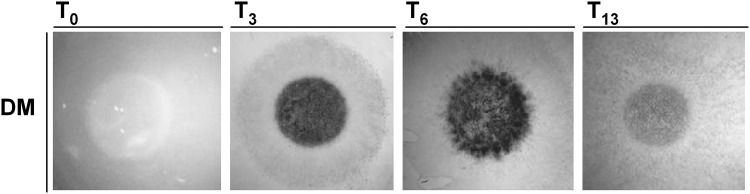
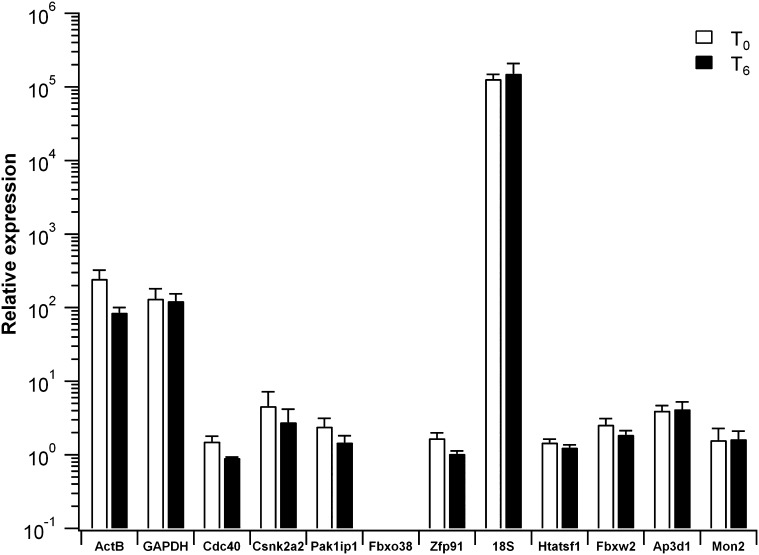
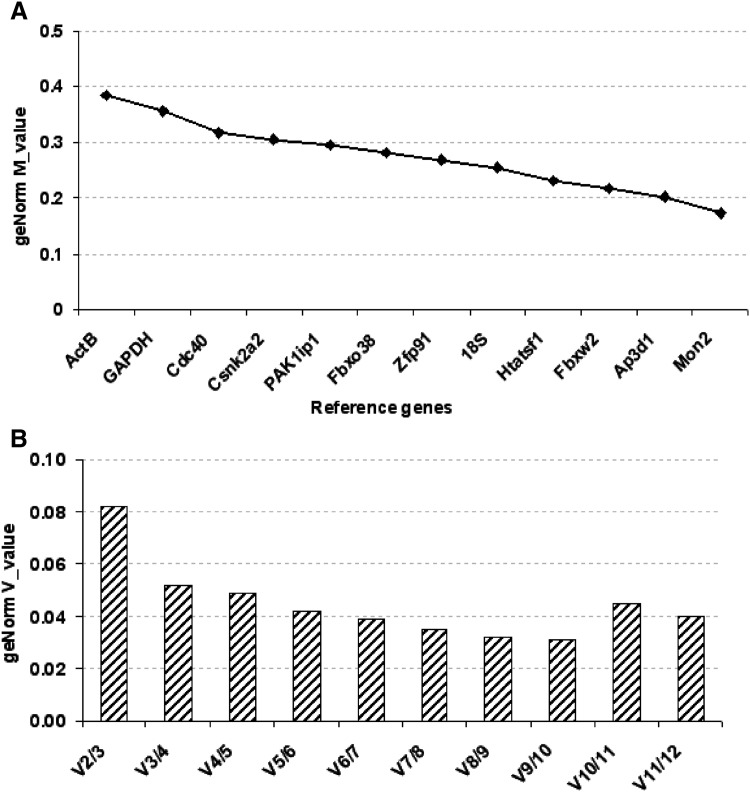
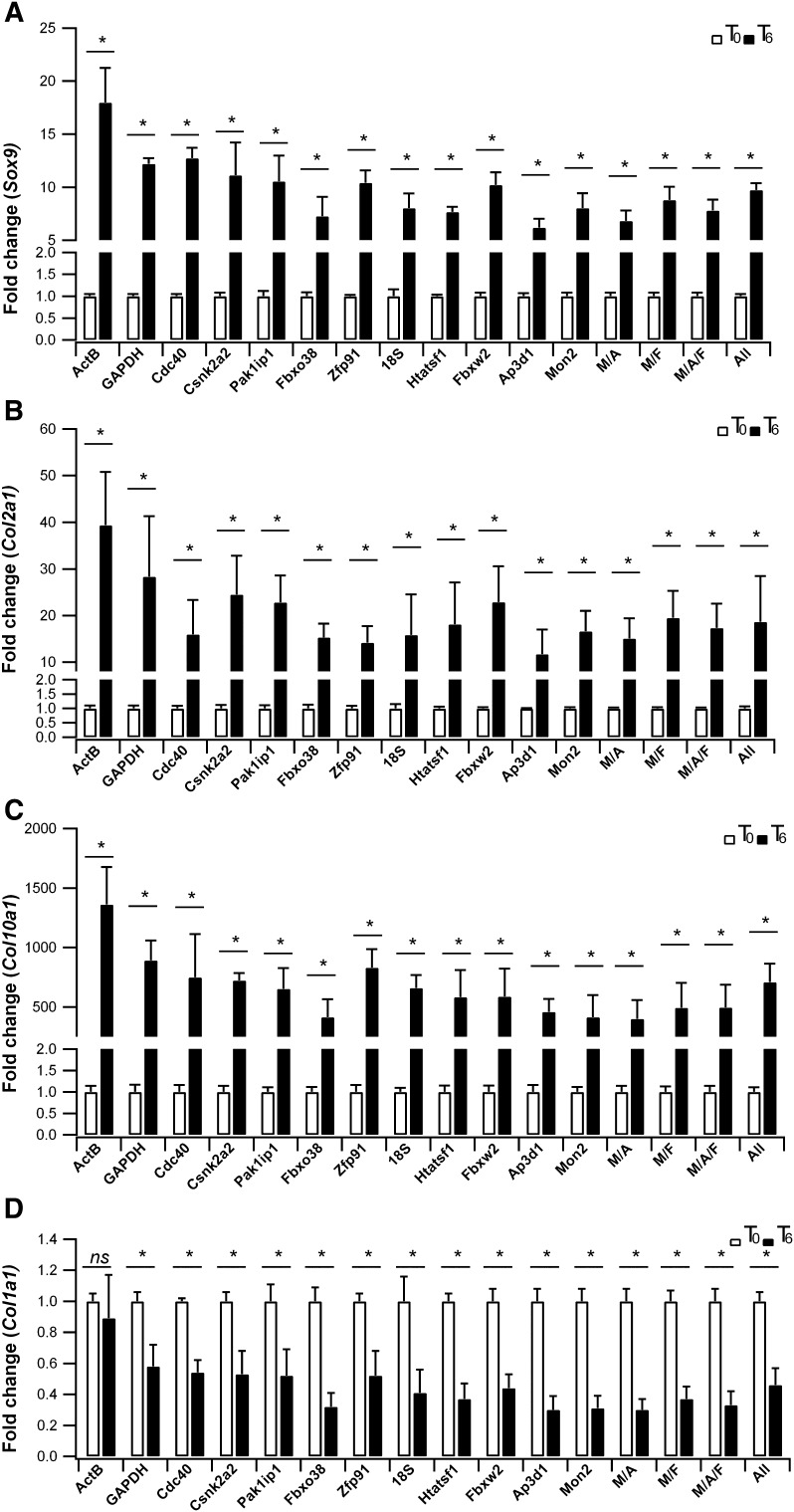
C3H10T1/2, a mouse mesenchymal stem cell line, is a well-known in vitro model of chondrogenesis that can be easily employed to recapitulate some of the mechanisms intervening in this process. Moreover, these cells can be used to validate the effect of candidate molecules identified by high throughput screening approaches applied to the development of targeted therapy for human disorders in which chondrogenic differentiation may be involved, as in conditions characterized by heterotopic endochondral bone formation. Chondrogenic differentiation of C3H10T1/2 cells can be monitored by applying quantitative polymerase chain reaction (qPCR), one of the most sensitive methods that allows detection of small dynamic changes in gene expression between samples obtained under different experimental conditions. In this work, we have used qPCR to monitor the expression of specific markers during chondrogenic differentiation of C3H10T1/2 cells in micromass cultures. Then we have applied the geNorm approach to identify the most stable reference genes suitable to get a robust normalization of the obtained expression data. Among 12 candidate reference genes (Ap3d1, Csnk2a2, Cdc40, Fbxw2, Fbxo38, Htatsf1, Mon2, Pak1ip1, Zfp91, 18S, ActB, GAPDH) we identified Mon2 and Ap3d1 as the most stable ones during chondrogenesis. ActB, GAPDH and 18S, the most commonly used in the literature, resulted to have an expression level too high compared to the differentiation markers (Sox9, Collagen type 2a1, Collagen type 10a1 and Collagen type 1a1), therefore are actually less recommended for these experimental conditions. In conclusion, we identified nine reference genes that can be equally used to obtain a robust normalization of the gene expression variation during the C3H10T1/2 chondrogenic differentiation.
C3H10T1/2 细胞株是一种小鼠间充质干细胞系,是一种众所周知的软骨生成体外模型,可以很容易地用来再现该过程中涉及的一些机制。此外,这些细胞可用于验证通过高通量筛选方法鉴定的候选分子的效果,这些方法应用于针对涉及软骨生成分化的人类疾病的靶向治疗的开发,例如在表现出异位软骨内骨形成的情况下。C3H10T1/2 细胞的软骨生成分化可以通过应用定量聚合酶链反应(qPCR)进行监测,qPCR 是一种最敏感的方法,允许在不同实验条件下获得的样品之间检测基因表达的微小动态变化。在这项工作中,我们使用 qPCR 监测 C3H10T1/2 细胞在微团培养中的软骨生成分化过程中特定标志物的表达。然后,我们应用 geNorm 方法来鉴定最稳定的参考基因,以获得对获得的表达数据进行稳健归一化的合适基因。在 12 个候选参考基因(Ap3d1、Csnk2a2、Cdc40、Fbxw2、Fbxo38、Htatsf1、Mon2、Pak1ip1、Zfp91、18S、ActB、GAPDH)中,我们鉴定出 Mon2 和 Ap3d1 是软骨生成过程中最稳定的基因。ActB、GAPDH 和 18S 是文献中最常用的基因,与分化标志物(Sox9、Collagen type 2a1、Collagen type 10a1 和 Collagen type 1a1)相比,其表达水平过高,因此实际上不太推荐用于这些实验条件。总之,我们鉴定出了 9 个参考基因,这些基因可用于在 C3H10T1/2 软骨生成分化过程中获得基因表达变化的稳健归一化。