Al-Zghoul Mohamed Borhan, El-Bahr Sabry Mohamed
Department of Basic Medical Veterinary Sciences, Faculty of Veterinary Medicine, Jordan University of Science and Technology, P.O. Box 3030, Irbid, 22110, Jordan.
Department of Physiology, Biochemistry and Pharmacology, College of Veterinary Medicine, King Faisal University, P.O. Box 400, Al-Hufof, 31982, Saudi Arabia.
BMC Vet Res. 2019 Mar 8;15(1):83. doi: 10.1186/s12917-019-1827-7.
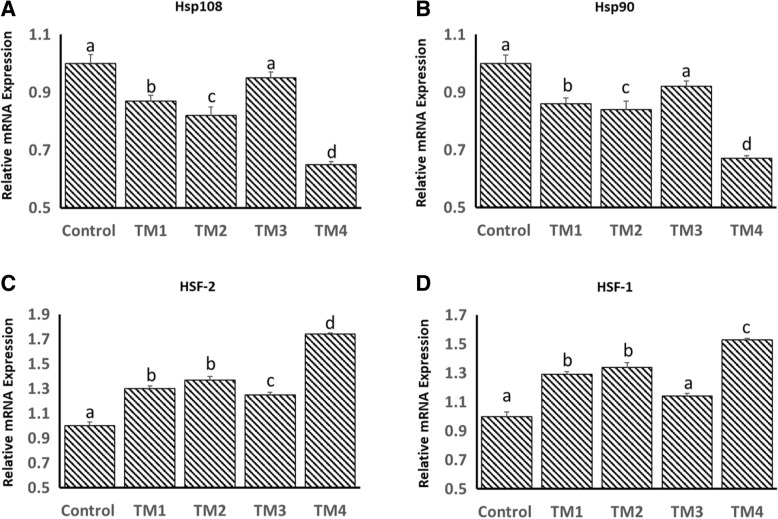
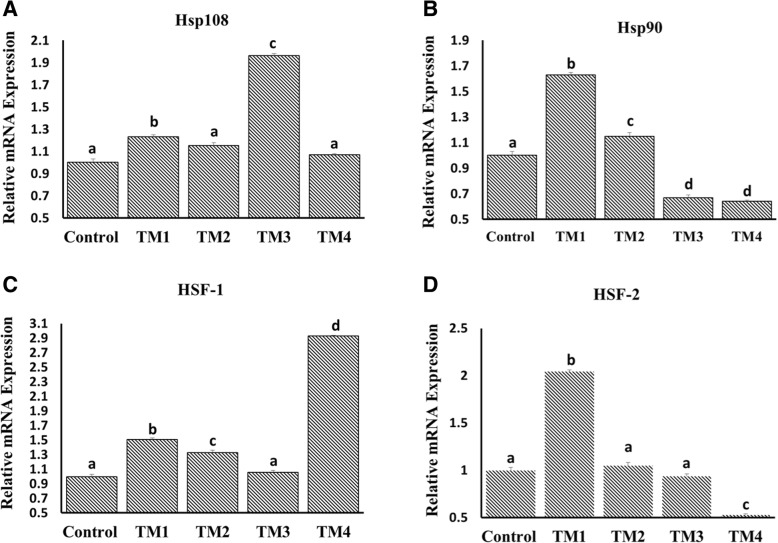
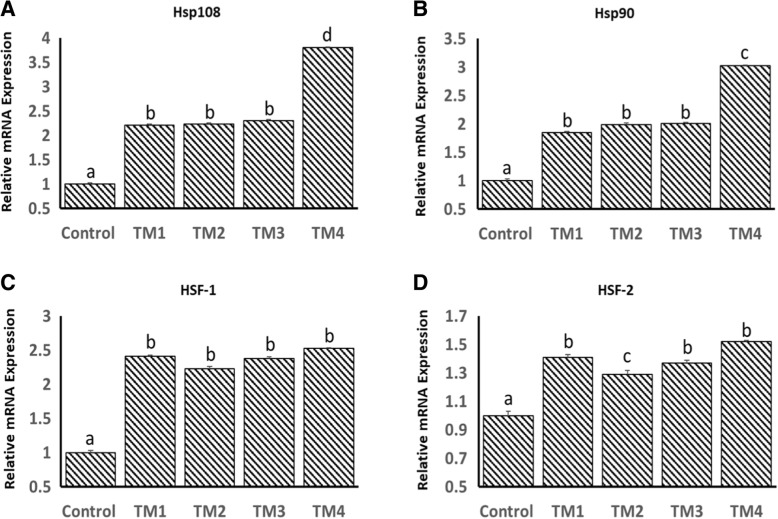
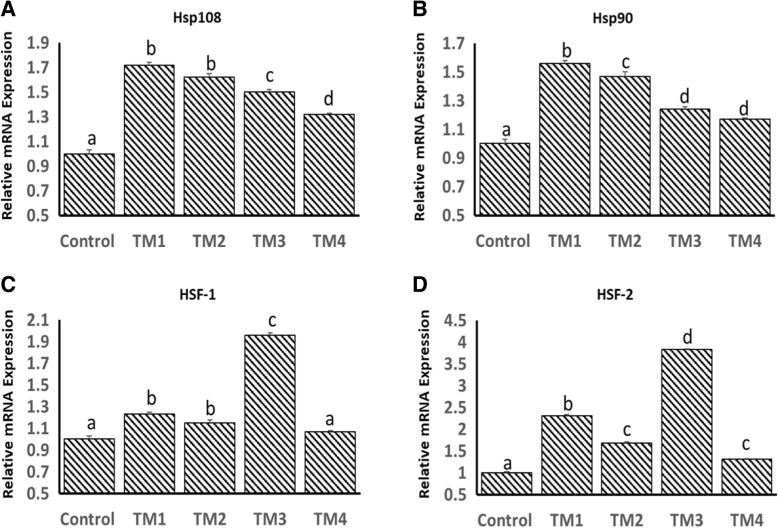
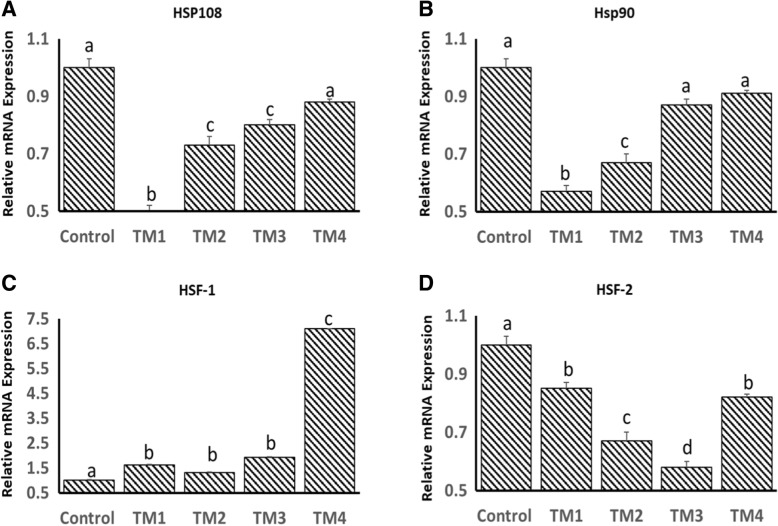
Limited data are available about the kinetics of mRNA expressions of Heat shock proteins (HSPs) and heat shock factors (HSFs) in the thermally manipulated (TM) broiler chicks during acute heat stress. Therefore, this study aimed to investigate effects of thermal manipulation (TM) of broiler chicken during embryonic days (ED) 12-18 on the basal and dynamics mRNA expression of heat shock proteins (HSP108 and HSP90) and heat shock factors (HSF-1 and HSF-2) in the muscle tissue during late embryogenesis, first week of life and during heat stress (HS) on post-hatch days 14 and 28. One thousand and five hundred fertile Ross 315 broiler eggs were randomly allocated to five groups: control group (37.8 °C), TM (38.5 °C for 18 h), TM (39 °C for 18 h), TM (39.5 °C for 18 h) and TM (40 °C for 18 h). Chicks from each treatment group were then randomly sub-divided into two further treatment groups, naïve and thermal challenged (TC). On post-hatch days 14 and 28, thirty chicks from each TC group were subjected to heat stress (41 °C for 6 h), while naïve chicks of each group (n = 30) were kept under regular conditions. The response of chicks to heat stress was investigated by evaluating the change in mRNA expressions of HSP108, HSP90, HSF-1 and HSF-2 in muscle tissue after 1, 3 and 5 h of heat stress.
When compared to the control group, TM resulted in significant increases in the basal mRNA expression of HSPs and HSFs during embryogenesis and altered their dynamic expressions in the muscle tissue after heat stress on post-hatch days 14 and 28.
the current study indicated short- and long-term enhancement of HSPs and HSFs gene expression which was associated with acquisition of improved thermotolerance in thermally manipulated chicks.
关于热应激处理(TM)的肉鸡雏鸡在急性热应激期间热休克蛋白(HSPs)和热休克因子(HSFs)mRNA表达动力学的数据有限。因此,本研究旨在探讨胚胎期(ED)12至18天对肉鸡进行热应激处理(TM),对胚胎后期、出生后第一周以及孵化后第14天和第28天热应激(HS)期间肌肉组织中热休克蛋白(HSP108和HSP90)和热休克因子(HSF-1和HSF-2)的基础和动态mRNA表达的影响。1500枚罗斯315种蛋被随机分为五组:对照组(37.8°C)、TM组(38.5°C处理18小时)、TM组(39°C处理18小时)、TM组(39.5°C处理18小时)和TM组(40°C处理18小时)。然后将每个处理组的雏鸡随机再分为两个处理组,即未处理组和热应激挑战(TC)组。在孵化后第14天和第28天,每个TC组的30只雏鸡接受热应激处理(41°C处理6小时),而每组的未处理雏鸡(n = 30)保持在常规条件下。通过评估热应激1、3和5小时后肌肉组织中HSP108、HSP90、HSF-1和HSF-2 mRNA表达的变化,研究雏鸡对热应激的反应。
与对照组相比,TM导致胚胎期HSPs和HSFs的基础mRNA表达显著增加,并改变了孵化后第14天和第28天热应激后肌肉组织中的动态表达。
本研究表明,热应激处理的雏鸡中HSPs和HSFs基因表达的短期和长期增强与获得更好的耐热性有关。