Department of Hygiene, Epidemiology and Ergonomy, Uniwersytet Mikolaja Kopernika Collegium Medicum, Bydgoszcz, Poland.
Institute for Cellular Medicine, Newcastle University, Newcastle, UK.
BMJ Open. 2019 Mar 7;9(3):e023955. doi: 10.1136/bmjopen-2018-023955.
The aim of this study was to estimate the prevalence of chronic fatigue syndrome/myalgic encephalomyelitis (CFS/ME) and describe illness characteristics in a community population in Poland.
cross-sectional study.
Poland.
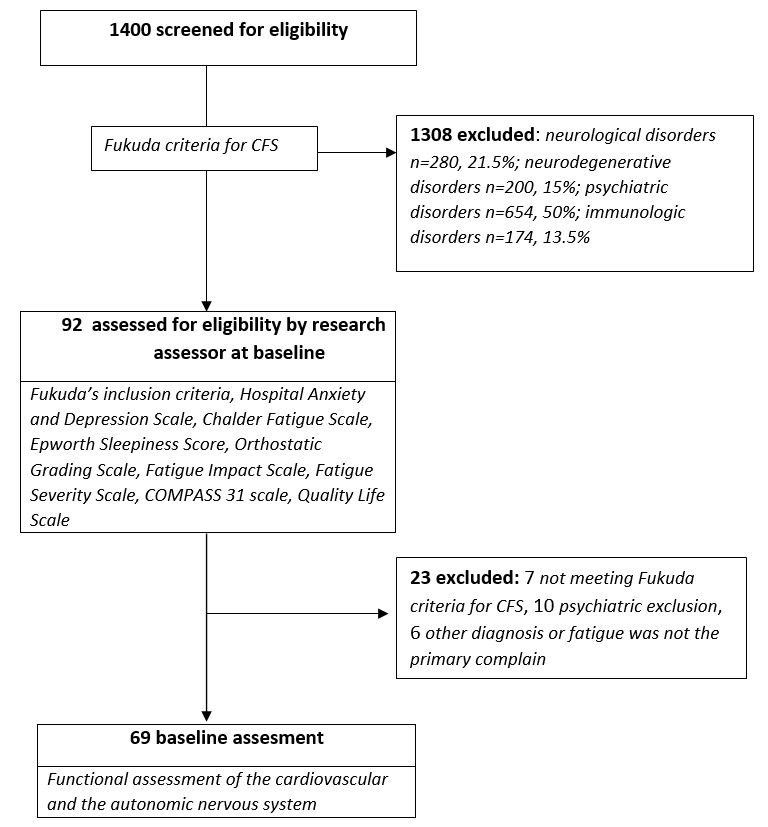
Of the cohort of 1400 who self-presented with fatigue only 69 subsequently were confirmed as having CFS/ME using the Fukuda criteria.
Participants completed the following screening symptom assessment tools: Chalder Fatigue Scale, Hospital Anxiety and Depression Scale (HADS), Epworth Sleepiness Scale (ESS), Composite Autonomic Symptom Score 31 (COMPASS 31), Quality of Life Scale (QOLS). Haemodynamic and autonomic parameters were automatically measured at rest with a Task Force Monitor.
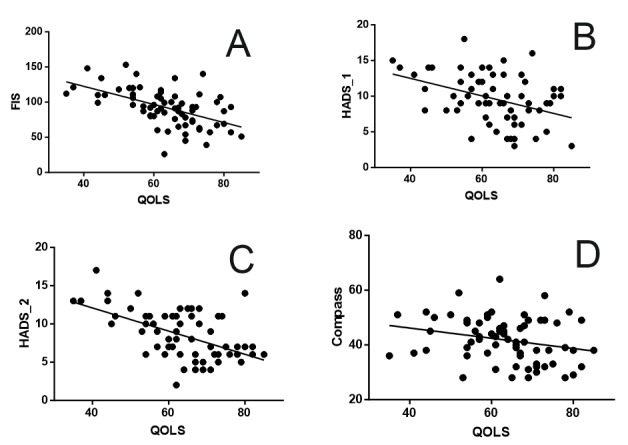
In 1308, from 1400 (93%) individuals who identified themselves as fatigued, recognised chronic conditions were identified, for example, neurological (n=280, 21.5%), neurodegenerative (n=200, 15%), psychiatric (n=654, 50%) and immunologic (n=174, 13.5%) disorders. The remaining 69 participants (mean age 38.3±8.5) met the Fukuda defintion for CFS/ME and had baseline objective assessment. The majority had experienced symptoms for over 2 years with 37% having symptoms for 2-5 years and 21.7% for more than 10 years. The COMPASS 31 indicated that 50% have symptoms consistent with orthostatic intolerance. About 43/69 (62%) had Epworth sleepiness scores ≥10, ie, consistent with excessive daytime sleepiness, 26/69 (38%) had significant anxiety and 22/69 (32%) depression measured by HADS A & D. Quality of life is significantly impaired in those with Fukuda criteria CFS (QLS score 64±11) with significant negative relationships between quality of life and fatigue (p<0.0001), anxiety (p=0.0009), depression (p<0.0001) and autonomic symptoms (p=0.04).
This is the first study to summarise illness characteristics of Polish CFS/ME patients. Our study has confirmed that fatigue is a common and under-recognised symptom affecting the Polish population.
本研究旨在评估慢性疲劳综合征/肌痛性脑脊髓炎(CFS/ME)在波兰社区人群中的患病率,并描述其疾病特征。
横断面研究。
波兰。
在仅因疲劳而自我报告的 1400 名队列中,随后有 69 人使用 Fukuda 标准被确认为 CFS/ME。
参与者完成了以下筛查症状评估工具:Chalder 疲劳量表、医院焦虑和抑郁量表(HADS)、Epworth 嗜睡量表(ESS)、综合自主症状评分 31 项(COMPASS 31)、生活质量量表(QOLS)。使用 Task Force Monitor 在休息时自动测量血流动力学和自主神经参数。
在 1308 名自报疲劳的 1400 名个体中(93%),识别出了已确诊的慢性疾病,例如神经系统疾病(n=280,21.5%)、神经退行性疾病(n=200,15%)、精神疾病(n=654,50%)和免疫疾病(n=174,13.5%)。其余 69 名参与者(平均年龄 38.3±8.5 岁)符合 Fukuda 对 CFS/ME 的定义,并进行了基线客观评估。大多数人经历症状超过 2 年,37%的人经历症状 2-5 年,21.7%的人经历症状超过 10 年。COMPASS 31 表明,有 50%的人有与直立不耐受一致的症状。大约 43/69(62%)的人 Epworth 嗜睡评分≥10,即白天过度嗜睡,26/69(38%)有明显的焦虑,22/69(32%)有 HADS A 和 D 测量的抑郁。符合 Fukuda 标准的 CFS(QLS 评分 64±11)的生活质量显著受损,生活质量与疲劳(p<0.0001)、焦虑(p=0.0009)、抑郁(p<0.0001)和自主症状(p=0.04)呈显著负相关。
这是第一项总结波兰 CFS/ME 患者疾病特征的研究。我们的研究证实,疲劳是一种常见且未被认识到的症状,影响波兰人群。