Takeshima Hideyuki, Ushijima Toshikazu
Division of Epigenomics, National Cancer Center Research Institute, 5-1-1 Tsukiji, Chuo-ku, 104-0045 Tokyo, Japan.
NPJ Precis Oncol. 2019 Mar 6;3:7. doi: 10.1038/s41698-019-0079-0. eCollection 2019.
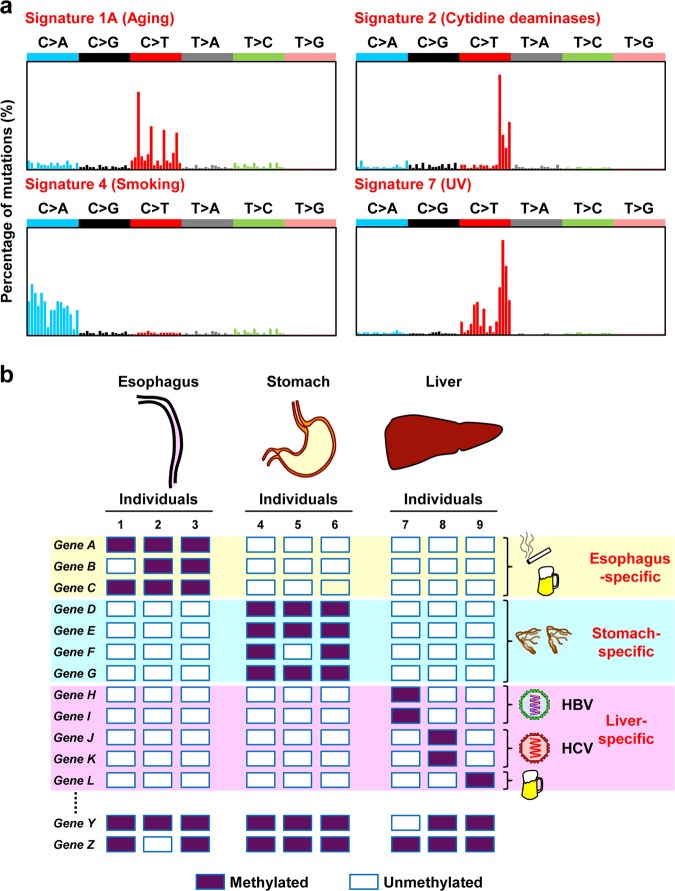
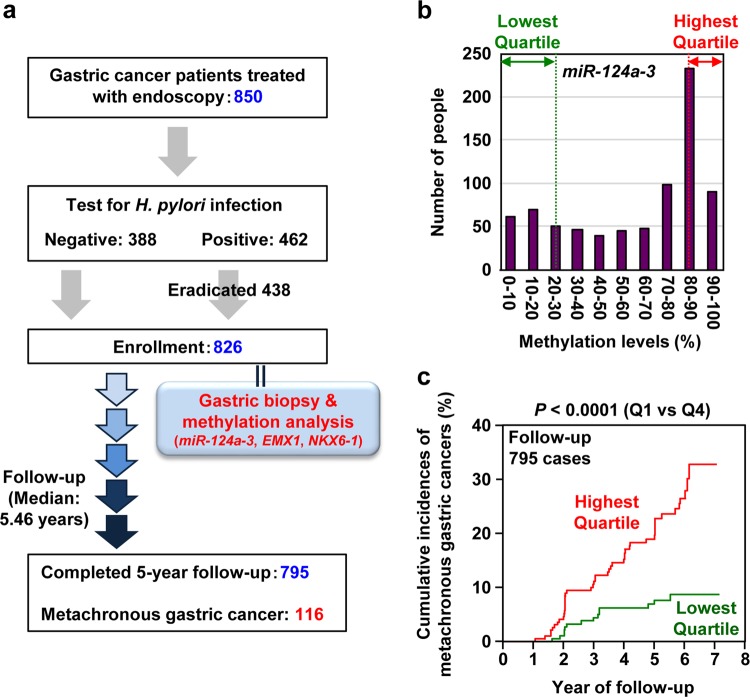
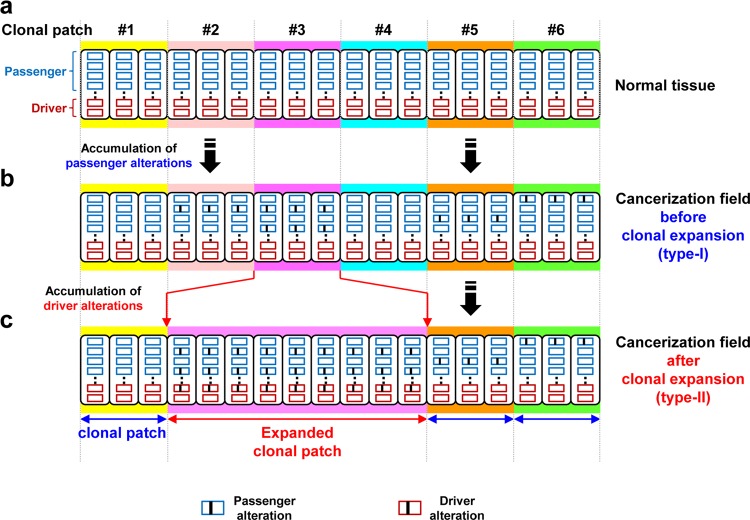
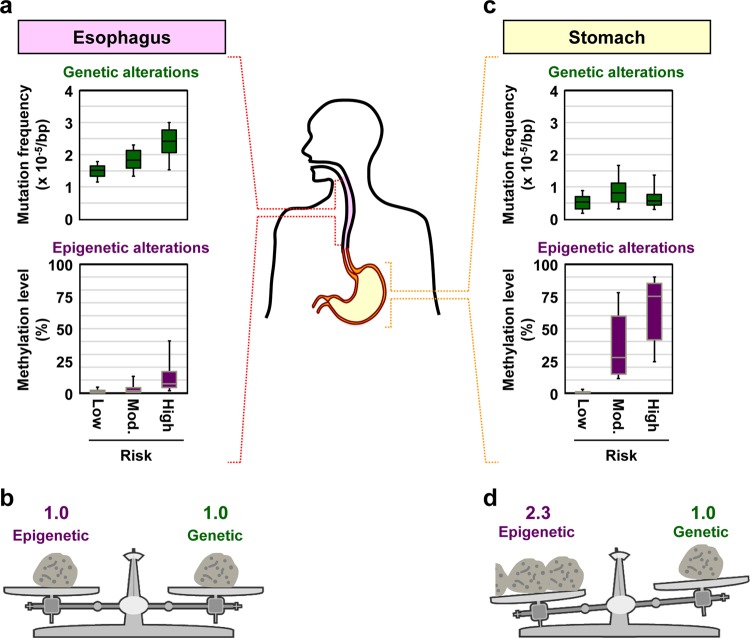
Cancers develop due to the accumulation of genetic and epigenetic alterations. Genetic alterations are induced by aging, mutagenic chemicals, ultraviolet light, and other factors; whereas, epigenetic alterations are mainly by aging and chronic inflammation. The accumulation and patterns of alterations in normal cells reflect our past exposure levels and life history. Most accumulated alterations are considered as passengers, but their accumulation is correlated with cancer drivers. This has been shown for aberrant DNA methylation but has only been speculated for genetic alterations. However, recent technological advancements have enabled measurement of rare point mutations, and studies have shown that their accumulation levels are indeed correlated with cancer risk. When the accumulation levels of aberrant DNA methylation and point mutations are combined, risk prediction becomes even more accurate. When high levels of alterations accumulate, the tissue has a high risk of developing cancer or even multiple cancers and is considered as a "cancerization field", with or without expansion of physiological patches of clonal cells. In this review, we describe the formation of a cancerization field and how we can apply its detection in precision cancer risk diagnosis.
癌症是由于遗传和表观遗传改变的积累而发生的。遗传改变由衰老、诱变化学物质、紫外线和其他因素诱导;而表观遗传改变主要由衰老和慢性炎症引起。正常细胞中改变的积累和模式反映了我们过去的暴露水平和生活史。大多数积累的改变被认为是过客,但它们的积累与癌症驱动因素相关。这在异常DNA甲基化方面已得到证实,但在遗传改变方面只是推测。然而,最近的技术进步使得能够测量罕见的点突变,研究表明它们的积累水平确实与癌症风险相关。当异常DNA甲基化和点突变的积累水平结合起来时,风险预测会变得更加准确。当高水平的改变积累时,组织发生癌症甚至多种癌症的风险很高,被认为是一个“癌化场”,无论克隆细胞的生理斑块是否扩大。在这篇综述中,我们描述了癌化场的形成以及如何将其检测应用于精准癌症风险诊断。