Department of Anesthesiology and Intensive Care, University Hospital of Besancon, 3 Boulevard Alexander Fleming, 25000, Besancon, France.
EA3920, University of Franche-Comte, 25000, Besancon, France.
Cardiovasc Diabetol. 2019 Mar 11;18(1):27. doi: 10.1186/s12933-019-0831-3.
Glycemic variability is associated with worse outcomes after cardiac surgery, but the prognosis value of early glycemic variability after transcatheter aortic valve implantation is not known. This study was therefore designed to analyze the prognosis significance of post-procedural glycemic variability within 30 days after transcatheter aortic valve implantation.
A post hoc analysis of patients from our center included in the FRANCE and FRANCE-2 registries was conducted. Post-procedural glycemic variability was assessed by calculating the mean daily δ blood glucose during the first 2 days after transcatheter aortic valve implantation. Major complications within 30 days were death, stroke, myocardial infarction, acute heart failure, and life-threatening cardiac arrhythmias.
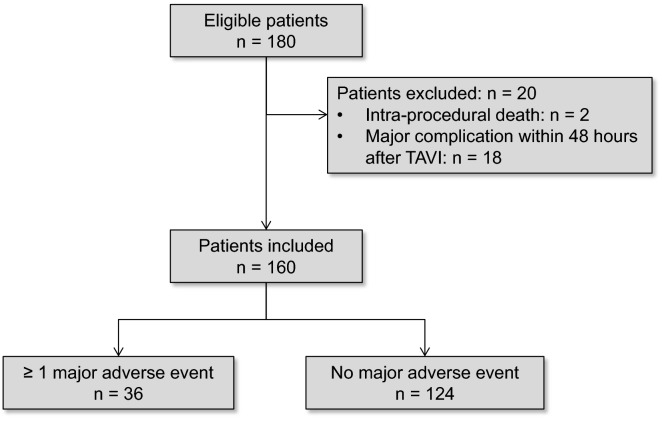
We analyzed 160 patients (age (median [interquartile] = 84 [80-88] years; diabetes mellitus (n) = 41 (26%) patients; logistic Euroscore = 20 [12-32]). The median value of mean daily δ blood glucose was 4.3 mmol l. The rate of major complications within 30 days after procedure among patients with the lowest quartile of glycemic variability was 12%, increasing from 12 to 26%, and 39% in the second, third, and fourth quartiles, respectively. In multivariate analysis, glycemic variability was independently associated with an increased risk of major complications within 30 days after the procedure (odds ratio [95% CI] = 1.83 [1.19-2.83]; p = 0.006).
This study showed that post-procedural glycemic variability was associated with an increased risk of major complications within 30 days after transcatheter aortic valve implantation. Trial registration Clinical trial registration number https://www.clinicaltrials.gov/ ; identifier: NCT02726958; date: April 4th, 2016.
血糖变异性与心脏手术后的不良结局相关,但经导管主动脉瓣植入术后早期血糖变异性的预后价值尚不清楚。因此,本研究旨在分析经导管主动脉瓣植入术后 30 天内血糖变异性的预后意义。
对纳入我们中心 FRANCE 和 FRANCE-2 注册研究的患者进行了一项回顾性分析。通过计算经导管主动脉瓣植入术后第 2 天内的平均每日δ血糖来评估术后血糖变异性。30 天内的主要并发症包括死亡、卒、心肌梗死、急性心力衰竭和危及生命的心律失常。
我们分析了 160 例患者(年龄中位数[四分位间距]=84[80-88]岁;糖尿病患者[n=41](26%);逻辑 Euroscore=20[12-32])。平均每日δ血糖的中位数为 4.3mmol/L。术后 30 天内主要并发症发生率在血糖变异性最低四分位数的患者中为 12%,在第二、第三和第四四分位数中分别增加到 12%、26%和 39%。多变量分析显示,术后 30 天内血糖变异性与主要并发症风险增加独立相关(优势比[95%可信区间]=1.83[1.19-2.83];p=0.006)。
本研究表明,经导管主动脉瓣植入术后血糖变异性与术后 30 天内主要并发症风险增加相关。
https://www.clinicaltrials.gov/;标识符:NCT02726958;日期:2016 年 4 月 4 日。