National Food Institute, Technical University of Denmark, 2800, Kongens Lyngby, Denmark.
Microb Cell Fact. 2019 Mar 11;18(1):51. doi: 10.1186/s12934-019-1091-3.
Delactosed whey permeate (DWP) is a side stream of whey processing, which often is discarded as waste, despite of its high residual content of lactose, typically 10-20%. Microbial fermentation is one of the most promising approaches for valorizing nutrient rich industrial waste streams, including those generated by the dairies. Here we present a novel microbial platform specifically designed to generate useful compounds from dairy waste. As a starting point we use Corynebacterium glutamicum, an important workhorse used for production of amino acids and other important compounds, which we have rewired and complemented with genes needed for lactose utilization. To demonstrate the potential of this novel platform we produce ethanol from lactose in DWP.
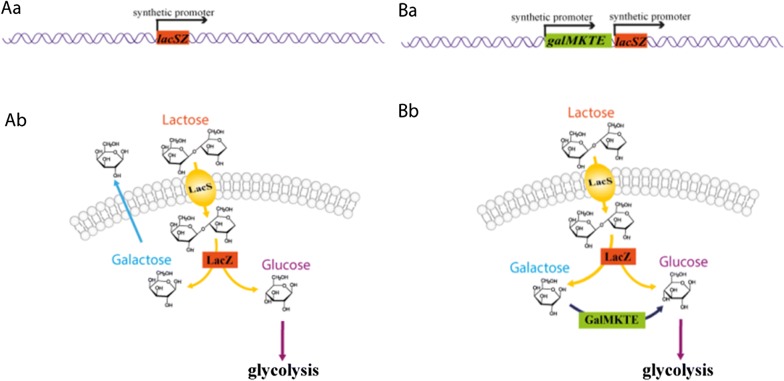
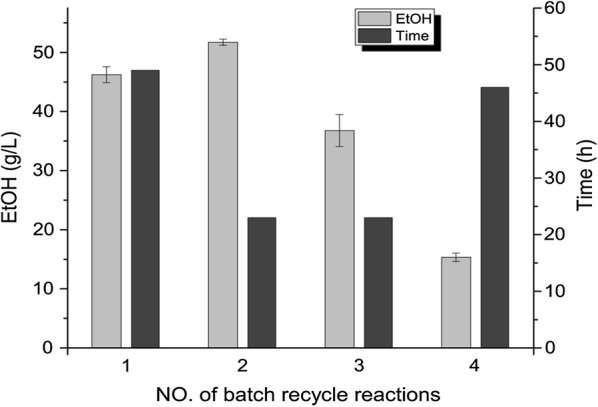
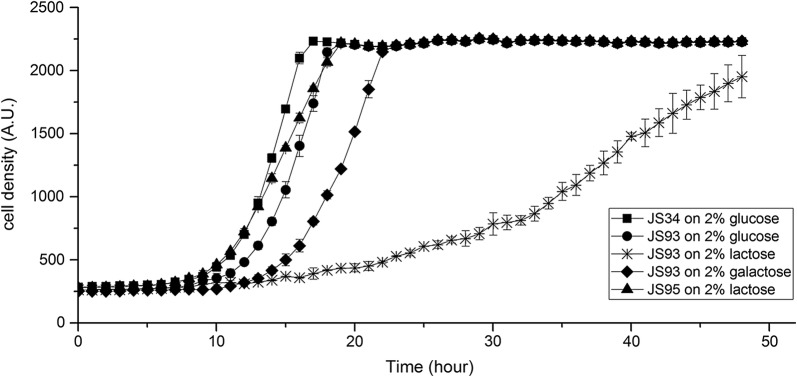
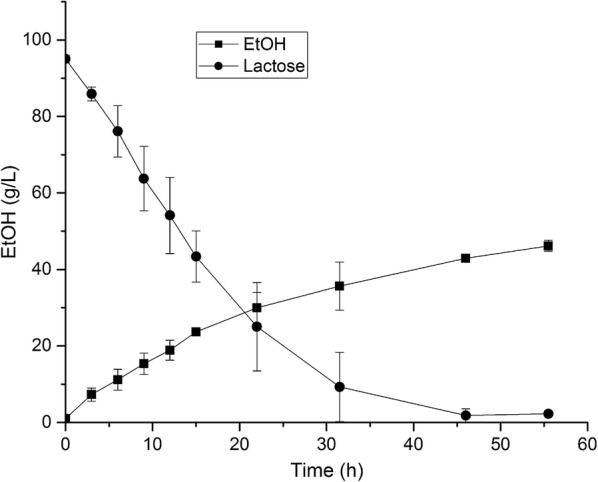
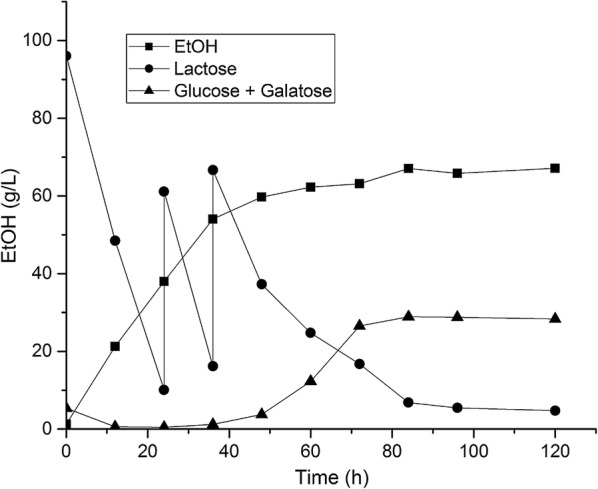
First, we introduced the lacSZ operon from Streptococcus thermophilus, encoding a lactose transporter and a β-galactosidase, and achieved slow growth on lactose. The strain could metabolize the glucose moiety of lactose, and galactose accumulated in the medium. After complementing with the Leloir pathway (galMKTE) from Lactococcus lactis, co-metabolization of galactose and glucose was accomplished. To further improve the growth and increase the sugar utilization rate, the strain underwent adaptive evolution in lactose minimal medium for 100 generations. The outcome was strain JS95 that grew fast in lactose mineral medium. Nevertheless, JS95 still grew poorly in DWP. The growth and final biomass accumulation were greatly stimulated after supplementation with NH, Mn, Fe and trace minerals. In only 24 h of cultivation, a high cell density (OD of 56.8 ± 1.3) was attained. To demonstrate the usefulness of the platform, we introduced a plasmid expressing pyruvate decarboxylase and alcohol dehydrogenase, and managed to channel the metabolic flux towards ethanol. Under oxygen-deprived conditions, non-growing suspended cells could convert 100 g/L lactose into 46.1 ± 1.4 g/L ethanol in DWP, a yield of 88% of the theoretical. The resting cells could be re-used at least three times, and the ethanol productivities obtained were 0.96 g/L/h, 2.2 g/L/h, and 1.6 g/L/h, respectively.
An efficient process for producing ethanol from DWP, based on C. glutamicum, was demonstrated. The results obtained clearly show a great potential for this newly developed platform for producing value-added chemicals from dairy waste.
脱乳糖乳清渗透物(DWP)是乳清加工的副产物,尽管其乳糖残留量通常为 10-20%,但仍常被丢弃为废物。微生物发酵是最有前途的利用富含营养的工业废物流的方法之一,包括那些由乳制品厂产生的废物流。在这里,我们提出了一种专门用于从乳制品废物中生成有用化合物的新型微生物平台。作为起点,我们使用谷氨酸棒杆菌(Corynebacterium glutamicum),这是一种用于生产氨基酸和其他重要化合物的重要工程菌,我们对其进行了重新布线,并补充了用于乳糖利用的基因。为了展示这个新型平台的潜力,我们使用 DWP 中的乳糖生产乙醇。
首先,我们从嗜热链球菌(Streptococcus thermophilus)引入了 lacSZ 操纵子,该操纵子编码乳糖转运蛋白和β-半乳糖苷酶,从而在乳糖上实现了缓慢生长。该菌株可以代谢乳糖的葡萄糖部分,而半乳糖则在培养基中积累。在用乳球菌(Lactococcus lactis)的 Leloir 途径(galMKTE)补充后,完成了半乳糖和葡萄糖的共代谢。为了进一步提高生长速度并提高糖利用率,该菌株在乳糖最小培养基中进行了 100 代的适应性进化。结果是 JS95 菌株在乳糖矿物培养基中快速生长。然而,JS95 在 DWP 中的生长仍然很差。在补充 NH、Mn、Fe 和痕量矿物质后,生长和最终生物量积累得到了极大的刺激。仅在 24 小时的培养中,就获得了 56.8±1.3 的高细胞密度(OD)。为了证明该平台的实用性,我们引入了一个表达丙酮酸脱羧酶和醇脱氢酶的质粒,并设法将代谢通量导向乙醇。在缺氧条件下,非生长悬浮细胞可以将 100 g/L 的乳糖转化为 46.1±1.4 g/L 的乙醇,理论得率为 88%。休眠细胞至少可以重复使用三次,获得的乙醇产率分别为 0.96 g/L/h、2.2 g/L/h 和 1.6 g/L/h。
基于谷氨酸棒杆菌(Corynebacterium glutamicum),我们展示了一种从 DWP 中高效生产乙醇的方法。结果清楚地表明,这个新开发的平台在从乳制品废物中生产有价值的化学品方面具有巨大的潜力。