Department of Microbiology and Immunology, University of North Carolina School of Medicine, Chapel Hill, North Carolina 27599, USA.
Department of Microbiology and Molecular Genetics, Vaccine Testing Center, Larner College of Medicine, University of Vermont, Burlington, VT 05405, USA; Cellular, Molecular, and Biomedical Sciences Graduate Program, University of Vermont, Burlington, VT 05405, USA.
EBioMedicine. 2019 Mar;41:465-478. doi: 10.1016/j.ebiom.2019.02.060. Epub 2019 Mar 8.
Acute viral infections induce a rapid and transient increase in antibody-secreting plasmablasts. At convalescence, memory B cells (MBC) and long-lived plasma cells (LLPC) are responsible for long-term humoral immunity. Following an acute viral infection, the specific properties and relationships between antibodies produced by these B cell compartments are poorly understood.
We utilized a controlled human challenge model of primary dengue virus serotype 2 (DENV2) infection to study acute and convalescent B-cell responses.
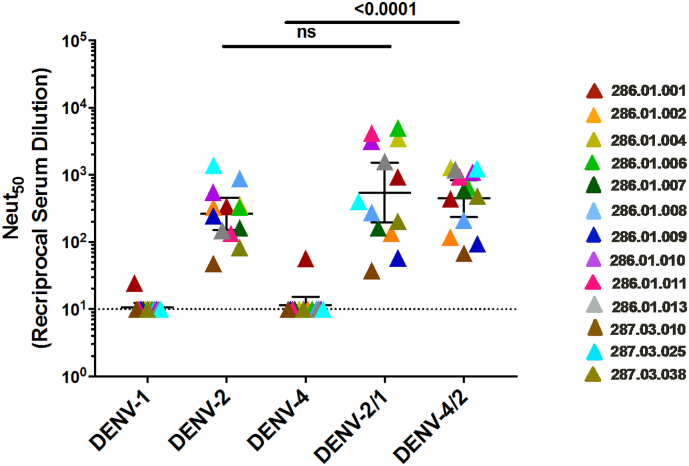
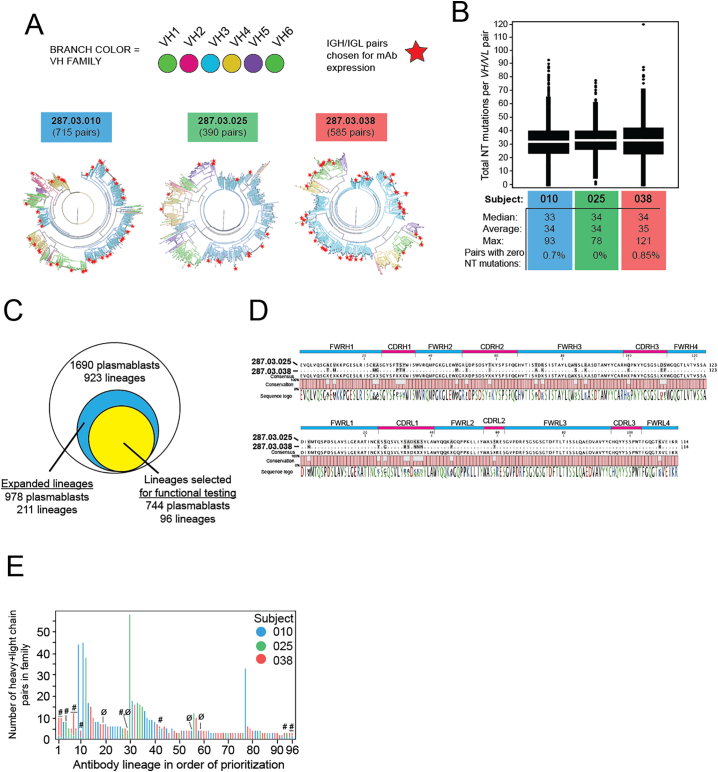
The level of DENV2 replication was correlated with the magnitude of the plasmablast response. Functional analysis of plasmablast-derived monoclonal antibodies showed that the DENV2-specific response was dominated by cells producing DENV2 serotype-specific antibodies. DENV2-neutralizing antibodies targeted quaternary structure epitopes centered on domain III of the viral envelope protein (EDIII). Functional analysis of MBC and serum antibodies from the same subjects six months post-challenge revealed maintenance of the serotype-specific response in both compartments. The serum response mainly targeted DENV2 serotype-specific epitopes on EDIII.
Our data suggest overall functional alignment of DENV2-specific responses from the plasmablast, through the MBC and LLPC compartments following primary DENV2 inflection. These results provide enhanced resolution of the temporal and specificity of the B cell compartment in viral infection and serve as framework for evaluation of B cell responses in challenge models.
This study was supported by the Bill and Melinda Gates Foundation and the National Institutes of Health.
急性病毒感染会导致抗体分泌性浆母细胞迅速短暂增加。在恢复期,记忆 B 细胞(MBC)和长寿浆细胞(LLPC)负责长期体液免疫。在急性病毒感染后,这些 B 细胞区室产生的抗体的特异性和关系尚不清楚。
我们利用原发性登革热病毒 2 型(DENV2)感染的受控人体挑战模型来研究急性和恢复期 B 细胞反应。
DENV2 复制水平与浆母细胞反应的幅度相关。对浆母细胞衍生的单克隆抗体的功能分析表明,DENV2 特异性反应主要由产生 DENV2 血清型特异性抗体的细胞主导。DENV2 中和抗体针对病毒包膜蛋白(EDIII)中心的四元结构表位。对同一受试者在感染后六个月的 MBC 和血清抗体进行功能分析表明,两个区室均保持血清型特异性反应。血清反应主要针对 EDIII 上的 DENV2 血清型特异性表位。
我们的数据表明,在原发性 DENV2 感染后,从浆母细胞到 MBC 和 LLPC 区室的 DENV2 特异性反应总体上具有功能一致性。这些结果更详细地解析了 B 细胞在病毒感染中的时间和特异性,为挑战模型中 B 细胞反应的评估提供了框架。
本研究得到了比尔和梅琳达盖茨基金会和美国国立卫生研究院的支持。